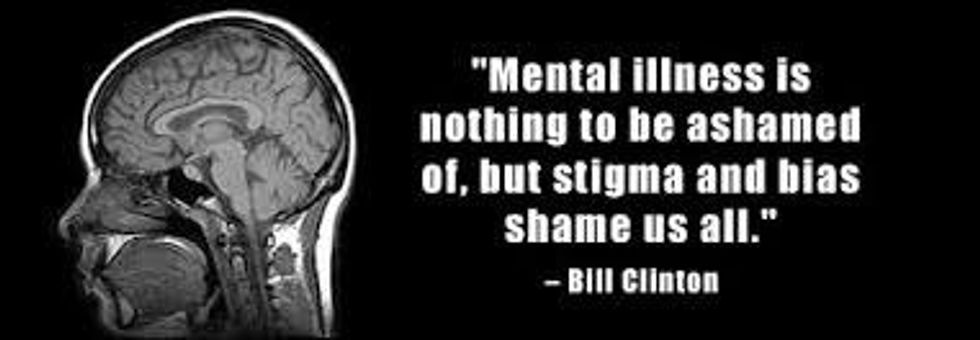
Mental health is a taboo topic that usually doesn't come up in daily conversation. It's unlikely that one would reveal a mental illness to a stranger, or maybe even to a close friend, because of shame or embarrassment. Mental illnesses are kept hidden away in the depths of someone's mind, and it may be difficult for an individual to accept the fact and seek help due to the stigma that has been created in society.
Stigma places a target on someone's back. It creates an atmosphere of alienation and prejudice because someone is different than the majority of the public. As if an individual doesn't already feel isolated due to his/her illness, stigma caused by the public creates a social barrier between the ill and the healthy. The healthy may make comments or remarks about an illness, or how someone with an illness is just "crazy" and that's that, not realizing that the person sheepishly standing next to them secretly suffers. Now, the ill person has been victimized and has labeled himself "crazy" due to the ignorance of others. The person will further hide the illness away from others, because who wants to be known as the "crazy person?" How will he ever get the help he may need if he is ashamed of who he is?
When a person is labeled by an illness, he/she is automatically discriminated against. In lieu of treating someone by personality or by the kindness of heart, the illness is the only thing that people think of. The mentally ill are often reluctant to get help or reveal the illness at all. In fact, three out of four people who have mental disorders have reported being victims of its stigma. This is extremely hindering when help is necessary. The lack of support from the public makes it difficult to come to terms with an illness if it's treated as something so taboo. Not only does stigma create tension between people and families, it may make the disorder worse. As a result of this discrimination, people may fall into depression (if it doesn't already exist). This places even more internal struggle on the individual.
What can you do to stop the stigma of mental illness?
The first thing that must be recognized is that mentally ill people are not "crazy." It is not an individual's fault that he/she is ill. Often, these disorders are caused by biological, social or environmental factors. In fact, mental illnesses are more common than you think; one in five adults experience some type of them. You probably know a friend or even a family member who suffers from some form of mental illness.
Furthermore, the ill must not be alienated or discriminated against. They are no more violent or dangerous than anyone else -- they just are perceived as such. Exclusion is not the answer; in fact, it only increases the stigma and worsens the disorder. Understand that the mentally ill are people just like you and want to be a functioning component of society; not defined by a disorder. Therefore, treat them the same as anyone else and provide a positive, accepting environment. Allow the individual to feel comfortable and help him/her seek proper therapy if necessary. While this person may think differently than you or have quirky tendencies, at least try to understand what may be going through his/her head. Sometimes, all someone needs is another person to openly confide in.
Do not take mental illnesses lightly. Too often in society, people will say insensitive things that can really hurt someone with an actual disorder. So no, your tendency to organize your room on occasion does not make you "so OCD." Not every thin individual is "anorexic." Just because you were super happy yesterday and a little upset today does not make you "bipolar." Understand that what you say as a joke may be what someone is secretly struggling with and you may be the reason why someone never speaks up. Watch what you say; mental health is not something to joke about.
Finally, support project semicolon. Project semicolon is a non-profit organization geared towards supporting those with mental illnesses. By becoming involved with this organization and demonstrating it's values of love and support to the struggling, we can slowly create a society that is accepting of all. We can create a society where it isn't taboo to talk about mental illnesses and anyone can feel comfortable sharing these struggles in seek of unconditional encouragement.
Above all, love everyone; don't be part of the stigma.