

At 10 years old, I started blinking uncontrollably. By the time I was 12, this had escalated to blinking, arm and stomach spasms, and making strange gulping noises in my throat. After consulting a neurologist, I was diagnosed with Tourette syndrome, a neurological tic disorder that affects one in 360 children.
I recently volunteered at Camp Twitch and Shout, a week-long summer camp for children with Tourette syndrome. Working as a camp counselor not only helped me provide a safe space for those affected by the disorder but also showed me that there are many things that most people — even people with Tourette's — don't know about the disorder.
1. Vocal tics are a key part of it, but it involves more than cursing.
In 2007, Comedy Central aired an episode of South Park that focuses on Tourette syndrome. In the episode, Cartman uses Tourette's as an excuse to say whatever he like, using all kinds of obscenities without punishment. While the episode emphasizes that Tourette's is more than yelling swear words, this is the most resonating aspect of the disorder in popular culture.
This type of tic, saying curse words and other obscenities, is called coprolalia. While it can be a symptom of Tourette's, only about 15 percent of people with Tourette's experience it. More common are vocal tics that involve gulping, chirping or grunting.
The vocal tic separates Tourette's from other tic disorders. According to the Centers for Disease Control, diagnosis with Tourette syndrome requires the presence of at least two motor tics, such as excessive blinking or snapping, and at least one vocal tic.
2. The tics aren't involuntary and can be affected by anything.
Before I was first diagnosed, I had trouble articulating the fact that I had to tic or else face extreme physical discomfort. With Tourette's and other tic disorders, the compulsion to blink your eyes or gulp is like an itch — a physically uncomfortable sensation that only ticcing can relieve. Most people with Tourette's describe the sensation as a buildup of pressure or tension.
Not only that, but this pressure can become worse in different situations. Tics are often worse when the person in question is fatigued or under stress, and can appear to go away when the person is relaxed or heavily concentrating on one specific thing. For example, when I did band in middle and high school, my tics never acted up while I was playing my instrument.
At Camp Twitch and Shout, surrounded by over 100 children with Tourette's, my tics were amplified to an extreme degree.
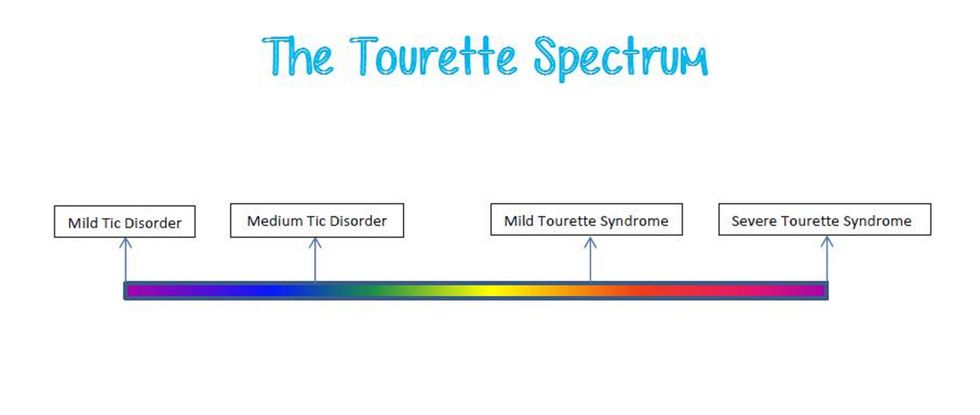
3. Tics can range from minor to debilitating.
One of the greatest lessons I have learned about tics is that they can manifest in many strange ways. My experience is limited to minor tics like blinking and gulping, but many of the people I met at camp had tics that caused them to knock things over or even fall to the ground. About 36 percent of people with Tourette syndrome experience tics like these, and can be dangerous if left unchecked. At camp, children with severe tics were given special attention and were allowed to take as long as they needed to recover. In an environment where the majority of people have Tourette's, they were able to tic in a place where everyone understood what they were going through.
Even though I do have Tourette syndrome, my experience is not the only one. Many people deal with debilitating tics that are amplified under stress and in situations that call attention to them.






 man running in forestPhoto by