

It was a normal Sunday afternoon in mid-October; my sorority was sitting in our weekly chapter meeting and as usual, we were chatting and sharing stories about our weekend completely unaware of the devastating news we were about to hear. Our president began the meeting like she always did, reading the ordinary minutes, until her tone changed and she said, “I have a letter from a sister who wants us to know why she’s been home.”
Megan had been away from school for an entire week but most of us didn’t know why. I texted her during the week, asking if she’d be at an event, and she replied, “No, I’m sorry. I had a death in the family.” Of course, I sent my love and prayers but didn’t ask any further questions out of respect. None of us were even remotely prepared for what we were about to hear: “My younger brother took his own life.”
On Sunday, February 21, my sorority, Sigma Gamma Phi, is co-hosting a Mental Illness Walk with Phi Kappa Psi, in memory of Megan’s brother, Michael Jr. Today, major issues revolving around mental illnesses are the lack of awareness and the negative stigma behind being diagnosed with a mental illness. The purpose of this walk is to shed a more positive light on mental illnesses and build a community of peers who support each other whether or not they have a mental illness or know someone with one. The truth is you never really know what someone is going through unless they tell you and even then you may not be able to put yourself in their shoes. Also, it’s important to keep in mind that just because they haven’t told you, even if you’ve been best friends for over 10 years, that doesn’t mean they aren’t battling horrible demons. It’s important to be supportive and sensitive to everyone around you.
Another concerning issue is the correlation between being undiagnosed and committing suicide, like in Michael Jr.’s case. His death came as a shock to his friends and family. Even months after his passing, his family still cannot fill in all the blanks. However, that isn’t their fault. Like I mentioned before, most of the signs are not flashing before your eyes.
It’s hard to diagnosis individuals who cannot ask for help. Do not blame them or take it personally. It isn’t their fault. If they are struggling with telling their friends or family, they probably aren’t seeking medical attention either. It’s much easier for them to plaster a smile on their face, bury their thoughts and feelings, and pretend like there isn’t a heavy weight on their shoulders or a voice whispering in their head. This is why it is so important to be aware. Be aware of the wide range of mental illnesses. Be aware of the symptoms. Be aware of your resources. And especially, be aware of those around you.
There is a chance of you catching the signs and symptoms of depression or suicide. Perhaps someone actually attempts to get your attention because they desperately need your help. Do not ignore them! If this is something you’ve never dealt with before, you probably don’t know how to react. Therefore, it’s easier for you to turn your head the other way. But, this is a serious problem that cannot go ignored, and another reason why you should know your resources. There is a National Suicide Prevention Lifeline, call it: 1 (800) 273-8255. Or if you have any questions, there is a National Alliance on Mental Illness hotline, 1-800-950-NAMI (6264). At the very least, reach out to a peer or elder you trust.
This article mainly focuses on depression and suicide but there are so many other mental illnesses to be aware of. Please, do your research and do your part. Do this not only for your family and friends but for yourself as well. If you’re in Oneonta, please stop by the walk to learn more and to be surrounded by those willing to spread awareness and protect their peers.
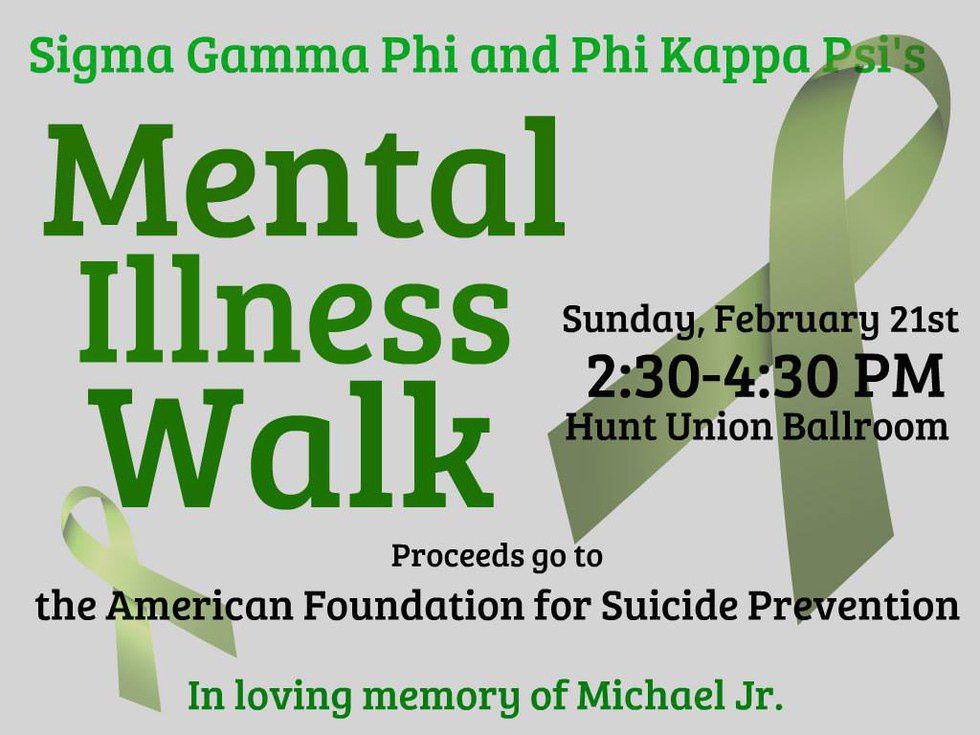
Special thanks to everyone who has helped make this event possible including Sigma Gamma Phi, Phi Kappa Psi, NAMI, Psi Chi, SUNY Oneonta's Counseling Center, and all participants!