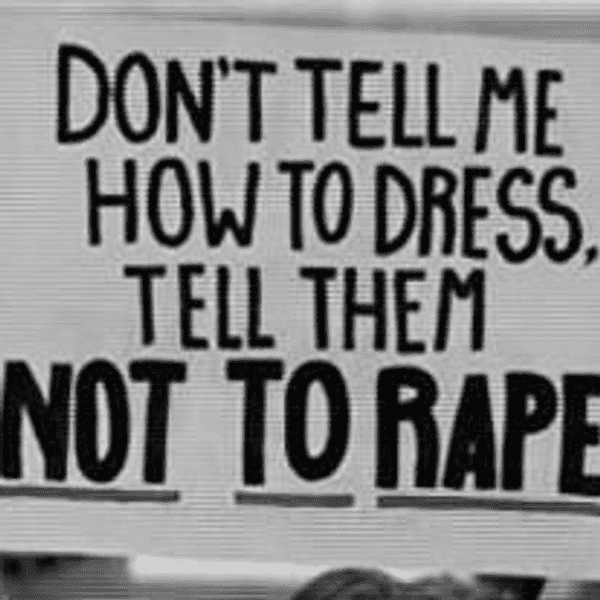
It always starts off as an innocent quip-- A wink, an air kiss, or even a provocative light touch. Most times, the general population won't see the action as the threatening gesture towards another being.
Sexual harassment starts off sneaky.
When I was 18, I was sexually harassed and bullied by someone during my training as a Hospital Corpsman in the Navy. This is my perspective of the micro-aggressions that cultivated a culture of sex discrimination and the rape culture.
Everyone assumed I liked the attention.
When it happened to me, everyone assumed that I liked being talked to that way by my offender. When other people would talk about how he spoke to me, he would say "Oh she likes it." Most people would just laugh and walk away, feeling like there was no need to speak against it.
Really what my offender meant when he said that, was that I stayed silent when he bullied and degraded me, and that my silence equals me liking it.
He turned me into "the bad guy."
Besides saying that I had "liked" his sexual innuendos and advances, he had also turned me into "the cheating girlfriend" persona. At the time this was going on, I was in a committed relationship with someone back home, and he was painting me out to be the one who was approaching him for sexual favors. Because he was much more popular than I was, and a whole hell of a lot more personable, the rumor had spread across the campus.
Truthfully, my offender wanted to deflect the attention off of him, letting him maintain his "Man Card status" as the guy who can really get any woman he wants, even the committed ones.
He made me feel like if I didn't say anything, it will just go away.
In fact it was just the opposite. By staying silent, I gave my harasser the opportunity to continue sexual advances at me because he knew he could get away with it.
He made me feel like I owed him something for helping me out.
My harasser made it a point to always tell me that "boy, was I something special, unlike any other girl out there, so really you should take my words as a compliment." He made me feel like this is how all boys act towards girls -- whether or not the girl likes it, the girl should accept the compliment and repay it with sexual favors.
When he was finally turned in, the school administrators made him apologize to my face. In a private room. Alone.
This was by far one of the hardest things I had to do -- face my harasser after months of relentless torture. As punishment for his continued unwanted advances, the school administrators said he had to verbally apologize to me. In a private room where we were alone. He acted all shook up, and even choked back some tears for show. The apology did not make me feel like an empowered individual, it put me right back into the hands of the harasser, with me forced to listen to his word vomit. The whole ordeal reminded me of two toddlers who just got in a fight and the teacher forced one to say sorry to the other.
When the incident was finally investigated, I was told to think long and hard about the ramifications.
When my case was reviewed, I was told to reflect on why I was coming forward with my case and if I was aware of the implications it could have on my life. It was assumed that my committed relationship would be hurt, and the idea that I was at fault continued throughout the investigation.
Essentially, I was told that because I was 18 years old, I hadn't "figured out what I wanted in life," and if I were to go forward with charges, I'd have to face my partner and tell him what was going on.
I was basically called a floozy by my own investigator.
Because I was so discouraged from taking action, my offender ended up walking free. The months of degrading and unwanted speech got him a slap on the wrist, and a transfer to another class where, undoubtably, he continued his lewd behavior.
We need to not only raise awareness about how widespread unwanted sexual behavior is, but we need to talk about what it is. 16 percent of women don't even know what sexual harassment looks like.
According to this article, 88 percent have experienced unwanted sexual harassment in the workplace. 88 percent. If there is one thing the entire incident has taught me, it is that if offenders still get away with bad behavior and investigators don't take the accusations of victims seriously, then we still have a continued systemic problem in society. Only by bringing to light the seriousness of sexual harassment, in any setting, will we effectively create change and bring justice to those who offend. There also needs to be recognition of the signs of sexual harassment when we see it, no longer are the days of the overtly sexual coworker. Sexual harassment has shape-shifted into more covert forms like private messages, unsolicited pictures, or social media networks. If it hadn't been for one male classmate who recognized something was wrong with me, my offender might've continued to harass me until the day I graduated.
Finally, if anyone is in a position to investigate these incidences, they need to be taken seriously. Every time. Even if it is more than once.
Sexual harassment already contributes to a variety of ill's including depression, anxiety, sexual mistrust in relationships, and even PTSD. Providing a thorough, unbiased investigation as well as encouraging the victim to seek resources of a victim advocate can greatly assist in the debriefing process.
My hope is that in the future, we can redefine the rape culture and how we look at sex discrimination, or at least empower those who have similar stories to mine.