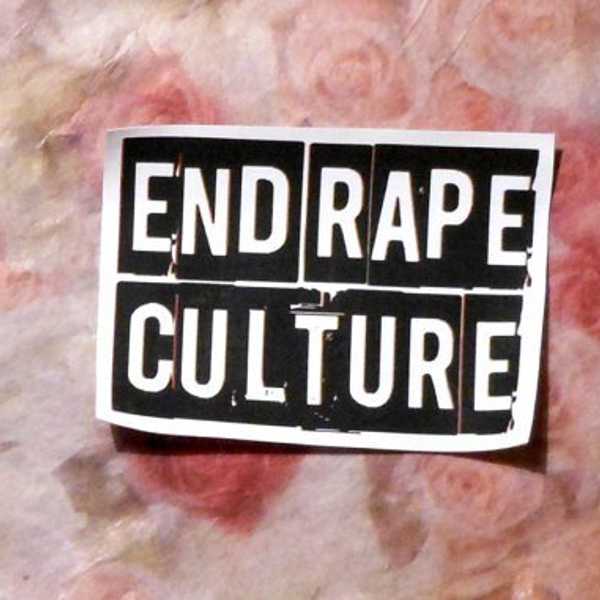

This past week has been a sickening firestorm of reports regarding sexual assault on all possible levels. First, I read a beautifully written piece by my colleague regarding the allegations of rape by former UT players, superstar A.J. Johnson and Michael Williams. I have read article after article detailing the accusations following America's favorite quarterback, Peyton Manning, during his time at UT. Here's Sarah Spain's view on this incident. A sad and potentially biased case of assault between members of the boys' basketball team of my hometown, Ooltewah, Tennessee, is one of the most talked about topics on my Facebook feed. I have so many questions, but my first is very simple: How do we change this environment where sexual assault is not only allowed to continue, but often times ignored?
First, I think we need to look at how we view athletes in America. After Kobe Bryant, Ben Roethlisberger and Jameis Winston, just to name a few, were accused of rape, little to nothing was done to hinder the progress of their athletic careers. Jameis Winston continued to play (but more importantly, win) for Florida State and was drafted first overall in the NFL draft. Though not sexual in nature, the brutal beating Ray Rice inflicted on his wife was initially only granted a two-game suspension. This was then extended when video evidence was released and there was a public outcry to cut Rice. Johnny Manziel hit his then-girlfriend so powerfully that he allegedly ruptured her eardrum. There is an on-going investigation into this assault. I am not attempting to imply that professional athletes should be cut or suspended at the first news report of misconduct, but we should consider the statistic that only about two-eight percent of rape reports end up as false reports. How do we expect young athletes to behave when these are their role models?
This brings me back to my high school basketball team. No one may ever truly know why this assault took place, but it saddens my soul to see such senseless violence all in the name of "hazing." News outlets in Chattanooga have taken this incident and ran with it, running stories declaring that there is a "Code of Silence" when accusations are made, reporting that they're simply brushed aside. I can only question, however, how much our culture is at fault. Maybe this "Code of Silence" is a problem, but I can assure you it stretches much farther than a single high school in a small town.
I am exceptionally proud to say I go to the University of Tennessee, despite the recent stories suggesting I think otherwise. Last year, my first year at UT, I would open my email to find the story of yet another victim of sexual assault almost every week. It became too ridiculous to think that someone was being raped or touched without their consent on my own campus. Apparently, I wasn't the only one who thought so. UT began a university-wide awareness program. I began receiving emails informing me what was and was not appropriate, how I could report something to the proper authorities, and reminding me that if something horrible happened to me, I wouldn't be fighting the battle alone. Posters popped up defining consent, some reading "Indecision Does Not Mean Yes," and that all sexual acts must be met with a "clear and enthusiastic 'yes!'" Since the university decided to take a stand, I have gotten far fewer emails. I have heard far fewer sad stories.
Tennessee saw a problem. While not eradicated, it has certainly diminished. Change doesn't happen overnight. Change takes time, effort, and perseverance. It's on us to stop sexual assault. As a society we have to ask ourselves: How much longer are we willing to let this go on?