
Sexual violence is any type of unwanted sexual contact, including words and actions of a sexual nature, against a person’s will and without their consent. Anyone can experience sexual assault no matter their gender, age, race, or ethnicity, and the perpetrator of abuse can be an acquaintance, family member, close friend, or stranger. So many of us hear about instances of sexual assault and how often it is happening, but it seems that so few people know of the things they can do about it, when in reality there are a lot of different options to help prevent and stop sexual assault.
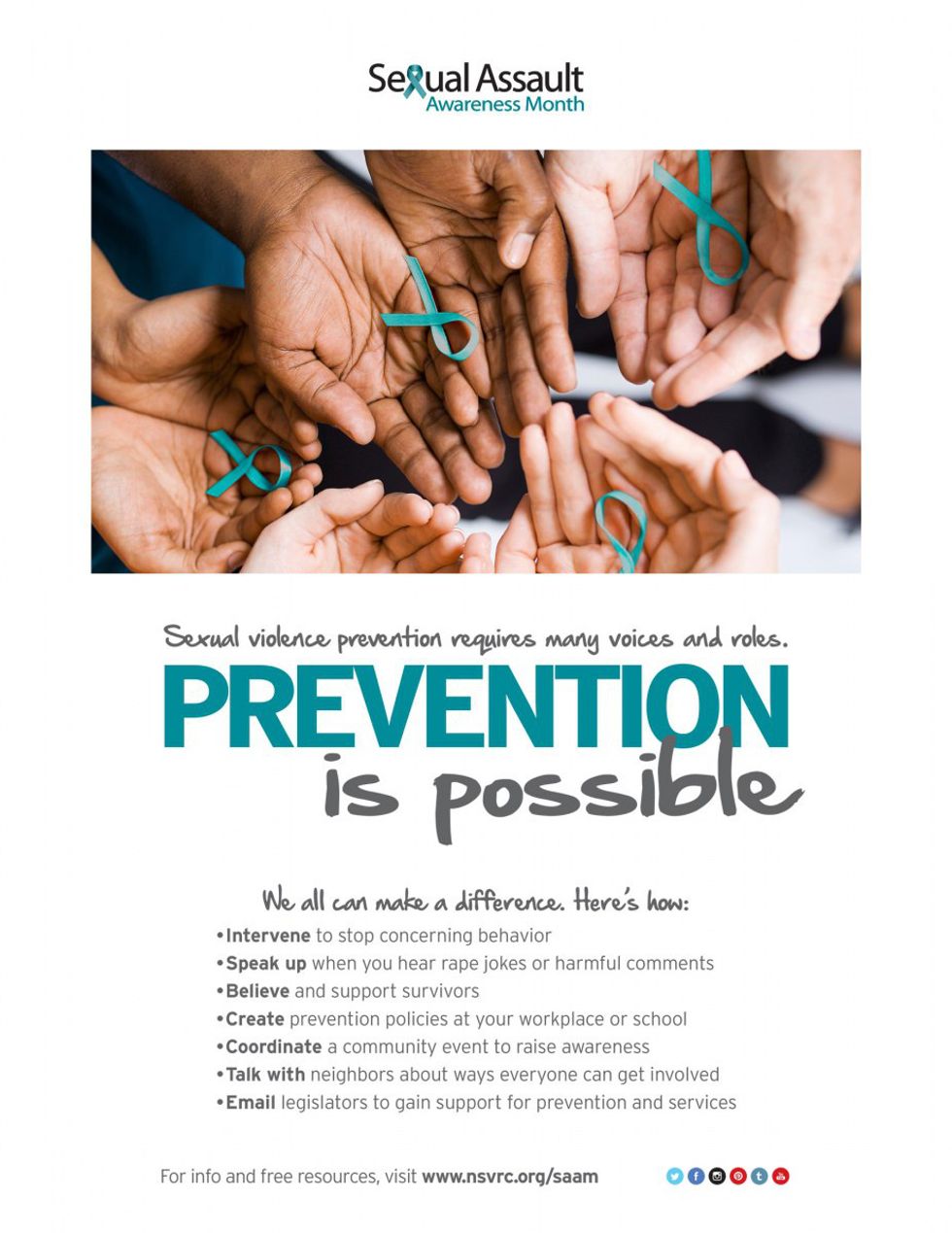
April is Sexual Assault Awareness Month, and the National Sexual Violence Resource Center campaign this year revolves around prevention of sexual assault by sharing how individuals and communities can take action to promote safety, respect, and equality. Prevention starts with challenging harmful attitudes and the societal acceptance of rape. People must address the roots of sexual assault and all forms of oppression, as it creates a culture in which inequality thrives, violence is overlooked and viewed as normal, power is okay to be used over others, and unfair treatment and harm is excused.
So where can you start? As an individual, you can promote and model healthy attitudes, behaviors, and relationships. This means not making jokes about sexual assault, rape, sexism, or racism and addressing others if they do. You should display safe relationships with others and seek help if you need to get out of a harmful relationship. When you go out with friends, look out for each other and have their back. It is crucial to intervene and stop problematic and disrespectful behavior when you see it happening, no matter who the victim is. You can do this by getting help from others so you aren’t alone, causing a distraction or redirecting the conversation to get the person out of that situation, or calling the police if the circumstances require it. Intervening sounds like such a clear and easy thing to do; however, there have been hundreds of instances when people saw a form of sexual assault happening and turned the other cheek because intervening is more intimidating than it sounds. Also, you should always have a plan before heading anywhere, and it is important that you and your friends only leave with the people you arrived with. Assess the risk of the environment and be alert wherever you go. Although it sounds obvious, trust your gut. If a situation or person doesn’t seem right to you, remove yourself and your friends for your safety. Lastly, it is always vital to believe victims if they tell you they have experienced sexual assault and assist them in finding resources. Don’t discourage them or make them feel like it was their fault, they’re overreacting, or no one can help them. Local sexual assault centers or counseling centers are a great place to start. The National Sexual Assault Hotline, 1-800-656-4673, is available to anyone 24/7 and is completely confidential.
Prevention is everyone’s responsibility, and the time to act is now. So, what are you going to do to play your part in preventing sexual assault?
For more information on what you can do about understanding, preventing, or reporting sexual assault, you can visit http://www.nsvrc.org/ or https://rainn.org/.