


In America, particularly New York City, we are open to discussions of sexual health more than ever. We care about body image more than ever. We acknowledge the multi-ethnic cityscape more than ever. So it’s fitting that, for the first time, the ads we see on our subway commutes speak to our diverse society.
To match today’s active discourse about politics and social standards, subway advertisements, in comparison with those of several years ago, have transformed to keep up with our conversations. As social media has fostered a desire for novelty that immediately captures our attention, companies and organizations wanting to be heard had no choice but to develop innovative marketing strategies.
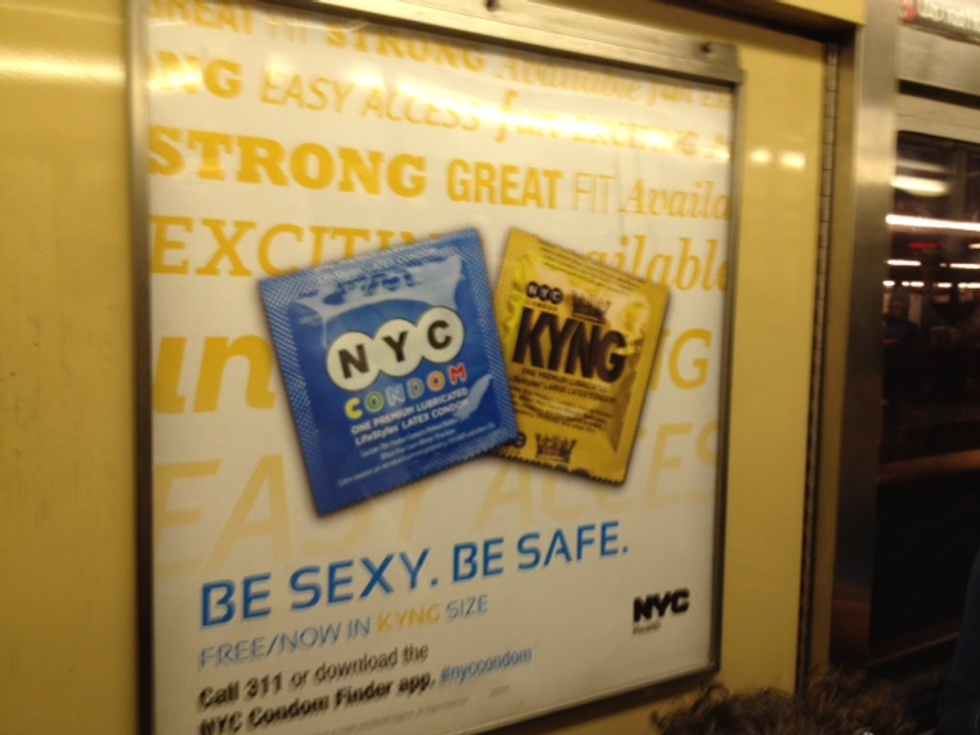
In the past year, the New York City Health Department advertised their program of providing free condoms with the slogan “be sexy, be safe” in both English and Spanish. The posters are plastered with two packaged condoms surrounded by active words such as “exciting” and “great fit.” And even more recently, the Health Department released a series of ads to raise awareness for H.I.V. and AIDS prevention. It campaign includes stills of couples in an intimate embrace, with phrases such as “we play sure.”
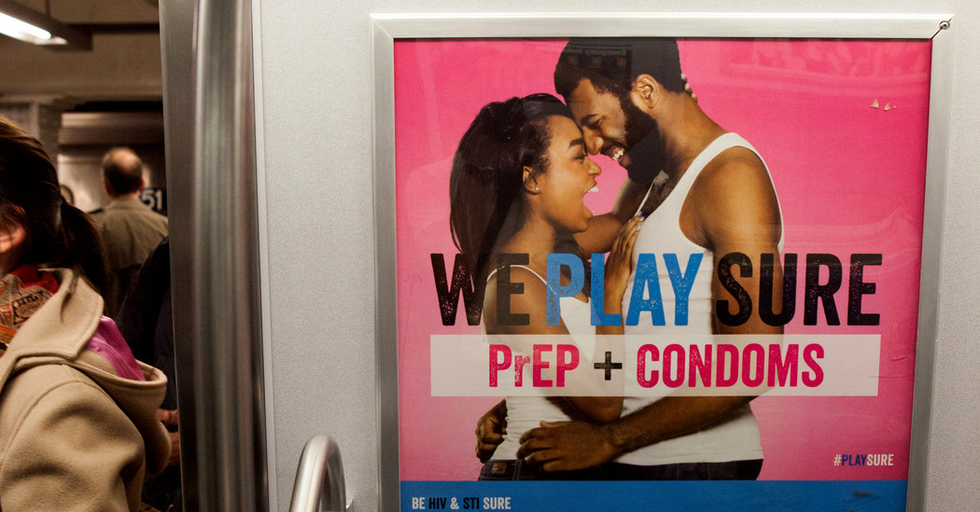
With these strategies that wouldn’t have been plausible a few years ago, the government conveys the urgency sex education among all ages. As many high school students take the subway to school, as I did a few years ago, they are given the sex talk by the Health Department during their morning and afternoon commutes. These ads take a step in removing the taboo surrounding discussions of sex, perhaps making these talks less awkward for parents and teens.
Ads like these prove that subway space is prime real estate for cultural definition. We saw the emergence of ads that were boldly defiant of criticism, that screamed “I live for today.” And no company has demonstrated that better than Thinx, a company that makes period-proof underwear for women. The marketing strategy nods to modern feminism, a movement that pervades through every slit of the American scene to become a household name. The ads suggest that menstruation is a natural phenomenon, that we shouldn’t be afraid to discuss what’s natural.

Placing aside their content for a moment, the aesthetics of these ads are brilliant. The contrast of light and dark colors are well-juxtaposed; the minimalist designs capture the eye. A grapefruit sliced in half appears in one ad, and egg whites dripping from the edge of a table in another, both suggestive of female anatomical features.

This attention to aesthetics has also changed the way subway ads reflect changing social values. Compared to tacky colors of some advertisement designs from five years ago, today’s subway ads are sharp and self-aware. They’re pundits of pop and political culture; they push the boundaries of what we can say in public. A recent series of brilliant ads entitled “The Muslims are Coming” is currently plastered on walls of subway platforms, intentionally named to draw second looks. They promote a documentary that follows Islamic comedians as they perform and travel around America. The film, which attempts to change negative public perception of Muslims, acts as a mirror of the current attitude toward Muslims in parts of this country and the world.
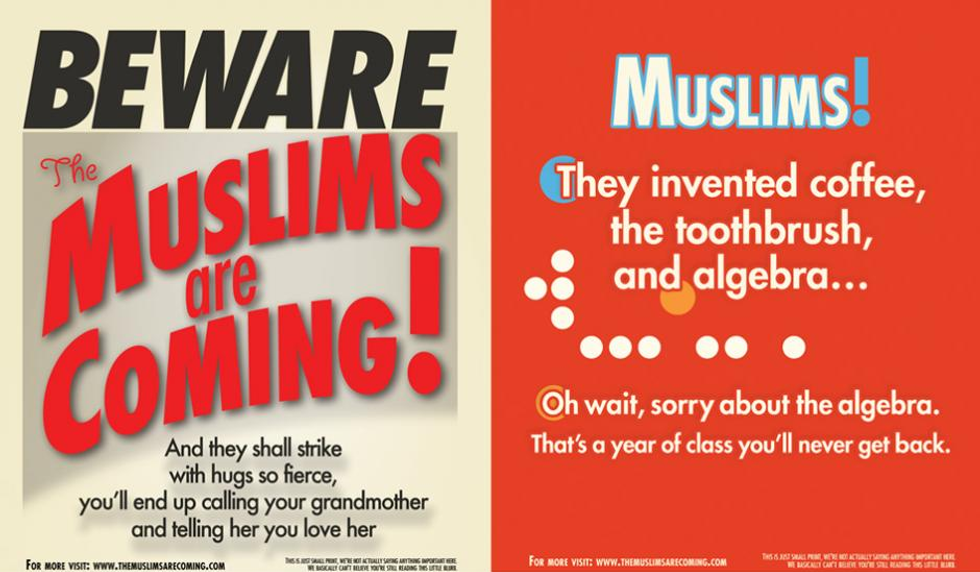
One ad says, “Muslims! They invented coffee, the toothbrush, and algebra… Oh wait, sorry about the algebra. That’s a year of class you’ll never get back.” Another says, “Facts about Muslims: Muslims invented the concept of a hospital. Grownup Muslims can do more pushups than baby Muslims. Muslims invented Justin Timberlake.” These ads convey an underlying tone of urgency for correct representation of Muslim culture.