Visiting Taiwan was, is, and always will be an absolute joy. Not only is it a great time to visit my grandparents, aunts, uncles and cousins, most of whom are on my mother’s side, but it is also a great time to connect with my culture. On previous trips I always hoped that I’d discover something deeper, another side of me.
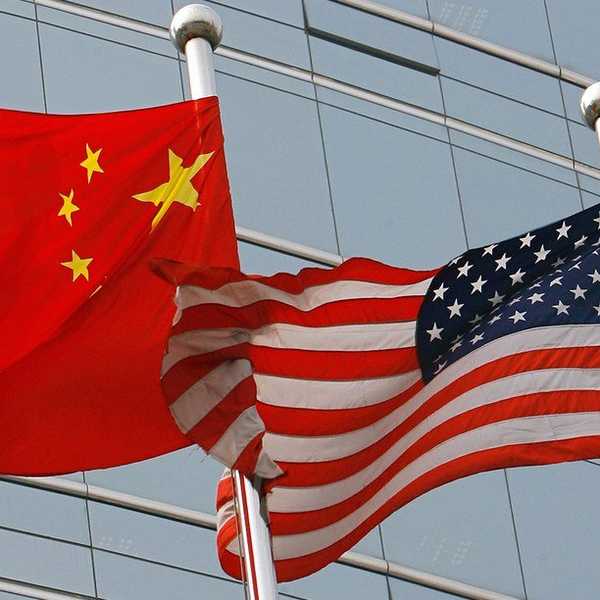
I am what most Chinese people call an “ABC,” or “American Born Chinese.” It insinuates that I am an American hiding underneath a Chinese or Taiwanese façade. I do consider myself American: I was born here, I consider it my home, and – despite all its flaws and fuck-ups – I still genuinely love living here. But I also love Taiwan. I love its culture, its food, its people. But I can never be one of them, it seems. I can’t be true at heart. I had hoped to change that. I had hoped that, in some arbitrary and possibly farfetched way, this night market might be the answer.
The latest trip to Shìlín exposed these inner thoughts and made me self-conscious of my discrepancy: the Taiwanese on the outside, the American on the inside. The night market, despite the contentedness of it all, still shoots me with moments of clarity and realization. I would bump into people left and right, brushing shoulders or clipping heels. I would let out a rushed “duì bu qǐ” (dwei bu chi), “I’m sorry.” They would respond with “méi guān xì” (may guan she), “It’s okay.” I say I’m sorry for bumping into them, but I’m also sorry for this act I put on. An American in the middle of Taiwan wearing the mask of a native Taiwanese.
A scared wolf in cheaply-made sheep’s clothing.
It’s a Thursday night, 10 minutes from 10 p.m. We take the Taipei Metro from Zhongshan Junior High School Station, near my grandparents’ apartment, all the way to Jiantan Station. We switch from Wenhu to Bannan before finally taking Tamsui (formerly known as Danshui, which is a lot more fun to say, since I always thought the literal translation was “egg-water.” But I am not too far from the actual translation, which is “fresh water”). We arrive at Jiantan, with a ding-dong coming from the PA system that precedes a “Welcome to Jiantan Station” message.
I see the bright multi-colored neon signs and street lamps lighting up the black hair of the crowds. A faint smell of sweet barbecue pork made its way over to us. A primarily smoky fragrance that had hints of honeyed sweetness and saltiness. That aroma – with many others like and unlike it – would grow stronger as we made our way closer.
A fan of all things culinary, my focus turns to the food vendors, an easy task to accomplish. Bright lights and large Chinese characters painted in red force my eyes to dart around from stall to stall, as I tell myself repeatedly, “I want to try that first! Wait, no that! No, this!” I finally settle on something called “dà cháng bāo xiǎo cháng” (da chahng bao shiao chahng) its literal translation being “a small sausage wrapped in a large sausage.” The “small sausage” is actually a sweet-and-savory Chinese sausage, and the “large sausage” is a bun made out of sticky rice. It’s basically a hot dog, but so much more and so much better. It’s an American food made Chinese.
It’s my favorite food.
I go back for seconds, but not thirds, because I still need to sample more delicious fare. Over the course of the next few hours, I would discover some of my favorite street food, stuff that I long for even as I write this: “zhū xiě gāo” (tzu shreh gao), “pig’s blood cake,” a steamed rectangle of sticky rice and pig’s blood, that tastes overwhelmingly of blood (almost metallic), but manages to balance it well with a slight sweetness from the rice. “Môa chî” (mwa chi), “mochi,” a traditionally Japanese fare, which are sweet rice balls made from glutinous rice paste and usually filled with something sweet, like red bean paste, sesame paste, or peanut butter. My second favorite, however, would be “chòu dòufu” (tzo do fu) “stinky tofu,” simply tofu brined in fermented milk and spices before being fried. Yes, it did smell of something awful, but it tasted of something delightfully and uniquely Chinese.
The food helps me to forget. For a moment, it helps me overlook the fact that I am surrounded by genuine Taiwanese and Chinese, and that I am merely an intruder in their world. A welcome intruder (if ever there was one), sure, but an intruder nonetheless. The variety of options provides me escapes from my questions and doubts, a venture into the sweet and salty and spicy and sour in which I am only myself. In those moments, I just forget. In those moments, I am just enjoying myself, my food. In those moments, I am neither American nor Chinese.