"Samantha, what do you want to be when you grow up?"
"That's easy. A mermaid. I want to have red hair just like Ariel, too."
I was four years old and, obviously, going through my Disney princess phase; since that early age, I swore my life wouldn't be boring, at least when it came to choosing a career.
I grew up in Tampa, which is surrounded by theme parks. I went on field trips to Busch Gardens. Rode front row on all the roller coasters. Saw the animals. Had fun.
I spent summers at Adventure Islands. Jumped off the high jump. Rode tall water slides. Had fun.
So it's no surprise that in fourth grade, I begged my mom to take me to Discovery Cove, the exclusive SeaWorld resort, to celebrate my 10th birthday.
Please. I've always wanted to swim with the dolphins. I'm finally old enough now. I can miss school. Don't worry.
So one sunny day in February of 2009, I traded education for paradise.
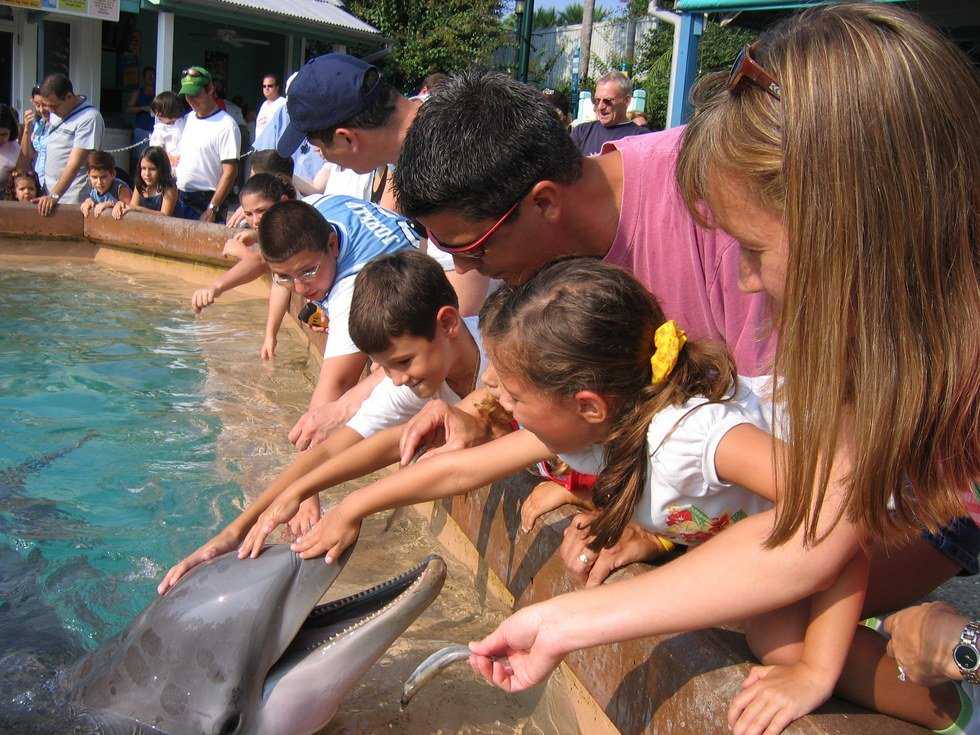
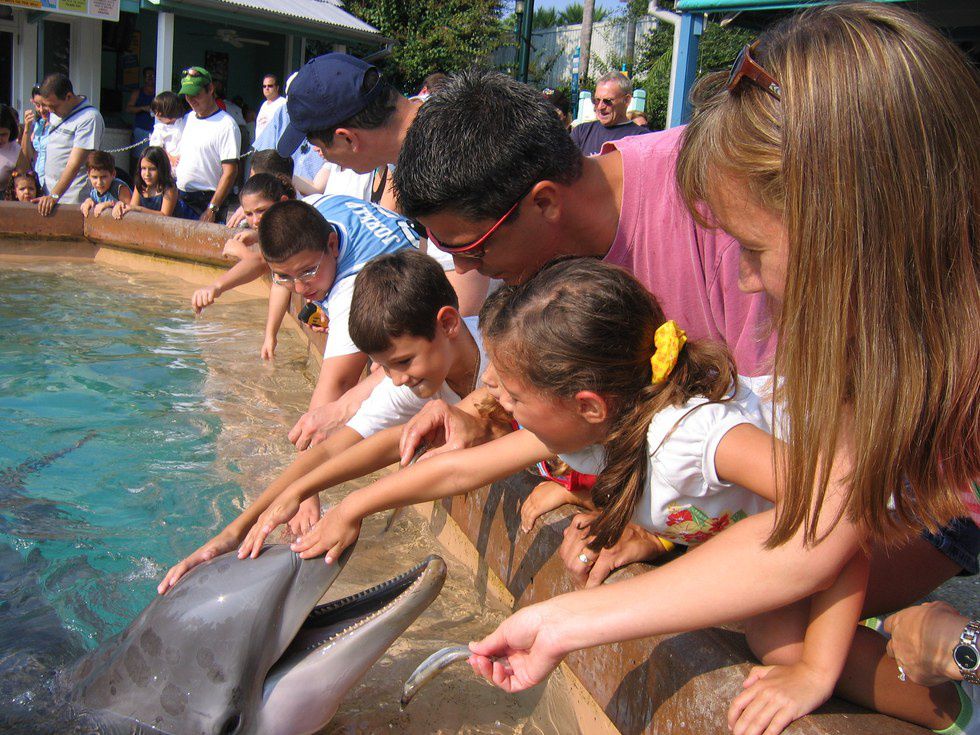
I'll never forget that feeling of swimming beside a dolphin for the first time. I had the biggest, goofiest smile on my face.
"MOM DID YOU SEE THAT? I CAN'T BELIEVE THAT JUST HAPPENED. DID I REALLY DO THAT?"
I came out of the crystal-clear salt water a changed person.
These dolphins must be so happy. They’re always smiling. I’m going to be a dolphin trainer. I love dolphins.
So I told my parents the good news, that I had it all figured out at the wise old age of 10.
But then I became obsessed with killer whales.
SeaWorld seems to be the epitome of controversy these days, but it wasn’t always that way. Several years ago, you couldn’t ever beat taking me to SeaWorld. It was the happiest place on earth. Screw Disney.
Over winter break the following school year, my mom, brother and I made a special trip out to Orlando. My exams were finished. It was almost Christmas. This was a time to celebrate, to take advantage of our SeaWorld passes. To have fun.
That day changed my life.
The park was packed. I wanted to see Believe, the Shamu Show. Shamu Stadium was sold out. I was bummed. My mom suggested lunch.
"Hey, what about this?" she said, pointing to an advertisement: Dine with Shamu.
We ended up getting a reservation. Like Discovery Cove, this was expensive. This was special. We would only do it once.
Dine with Shamu was an all-you-can-eat buffet extravaganza event that gave guests a look at what goes on "behind the scenes" during public performances. Literally. We ate beside one of the back pools and watched the orcas swim around in their little circles, waiting for showtime cues.
Music starts. Gate opens. Whale swims. Gate closes. Whale performs. Audience cheers. Gate opens. Whale swims back. Gate closes. Whale chills.
Afterward, as part of the dining package deal, four female trainers did an interactive session with one of the largest stars of Believe.
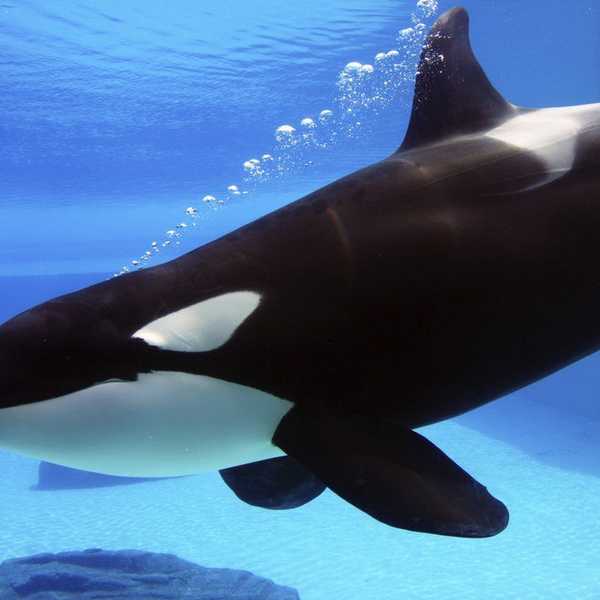
"This is Tilikum everybody, the biggest orca we have here at SeaWorld. Tilly is about 23 feet and 12,000 pounds, which makes him the largest whale in captivity. We'll be working on some behavioral skills with him today."
For some reason, I felt special knowing the name of this one, very large whale. I didn’t sound like a random person. I was like the trainers. I could identify Tilly, specifically by his collapsed dorsal fin.
She said the trainers never swam with him because he was so big. It just had to be that way. She didn't mention that there were any strict rules, that only select, experienced trainers could work with him.
I was in awe.
Tilly was so powerful. And smart; contrary to popular belief, he knew what he was doing. He knew what was going on.
My mom took my brother and I to the very last show of Believe that day. I remember seeing the trainers in the water with all the other whales. I remember seeing them smile, and the whales also seemed to be smiling too. It was all so happy.
They were the most incredible creatures--so large, so graceful, so peaceful. It was the first time that I really saw them. And it was like they saw me too, like they were staring into my eyes, my soul.
I'm going to be a whale trainer. Dolphins are cute, but orcas are SO AWESOME.
On the car ride home, I announced yet again that I had it all figured out at the almost age of 11.
For real this time.
I was so determined, so set on being an animal trainer, that I began preparing myself for a career path soon thereafter. I was in fifth grade. My peers thought I was crazy.
I never second-guessed it. In my heart, I believed it was what I was destined to do.
Only a couple weeks later, over MLK weekend, my mom, brother, and I decided to take another trip to SeaWorld. Like always, we rode all the rides, saw all the animals and went to all the shows.
Except something wasn't quite right at Shamu Stadium that day.
The show was delayed. Which isn't supposed to happen. A trainer stepped out. The music wasn’t playing.
He announced that the orcas were "not cooperating.” They were mischievous things. He was "sorry for the delay" and hoped that we "folks would stay patient" while they "worked things out."
He made it very clear that the whales weren’t forced to perform; they make the choice to do so. It’s up to them.
15, agonizing minutes later, the music started. The crowd applauded.
The show must go on.
Tilly still came out and splashed everybody at the end.
That's my whale.
That was toward the end of January, and before I knew it, I was 11 years old and gorging on all the Necco Sweetheart’s Valentines Day candy I could get.
But the month of love soon turned into a month of hell. On February 24, 2010, just a couple weeks after what I witnessed happened with Believe and only a little under two months after I attended Dine with Shamu, Dawn Brancheau was killed by Tilikum, my Tilly. Guests -- adults and children -- watched her drown to death. At Dine with Shamu.
She was a senior trainer at SeaWorld. One of the most experienced.
I was at school when it happened. My mom broke the news to me.
Yes, I recognized her. Yes, I had seen her perform.
Was it really Tilly who did it though? What's going to happen? Are the other trainers okay? Is Tilly okay? Will SeaWorld be okay?
Nobody knew yet.
I excused myself, went outside and rode my Razor scooter up and down the sidewalk, trying to avoid it all.
This was just a rare case. A freak accident. It had to be.
I didn't realize what was to come.
SeaWorld suffered. Profits dropped. Restrictions were placed on trainer-orca interactions. They weren't allowed in the water with any of the whales anymore. Bars were installed around the pools at one point. Nothing like this could ever happen again.
The years passed. The tragedy lingered. I occasionally visited SeaWorld. I still wanted to be a whale trainer.
Until Blackfish aired on CNN in 2013.
I wanted to watch it but avoided having to do so alongside my family. I was almost 15 years old; I needed to "play it all cool." I didn't want them to see my reaction.
"When you look into their eyes, you know someone is home..."
I thought about fifth grade, that one moment when I saw the orcas and they saw me. My heart was slowly breaking.
During a commercial break, I ran to my room, which just happened to be SeaWorld-themed (God only knew how many stuffed whales were in there): a giant flag that displayed the Believe logo hung on my wall, a Discovery Cove dolphin buoy that read “Happy 10th birthday Samantha!” and a blown-up picture of myself in sixth grade, standing beside a trainer, waving to two whales.
I pulled out the book, Starting Your Career As a Marine Mammal Trainer, I had bought on a class trip to the Florida Keys, the third and last time I swam with the dolphins. One of my friends ran over to me afterward, with the biggest, goofiest smile on her face and said:
"Now I know why you want to do this [be an animal trainer] so badly."
I smiled. That was her first time.
But sitting there in my room, I wasn't so sure anymore. Those dreams were slipping away from me. I cried. It was all a blur.
Maybe this documentary had some flaws. Maybe it hyperbolized some situations. Maybe they didn't interview the right people. Maybe the sources lied. Maybe it was biased. I don't know. Regardless, it made a valid argument.
Sure, any marine mammal trainer truly loves and cares for the dolphins and whales; I saw that in Dawn.
She was everything that I hoped to be one day. Just thinking of the way she spoke about the animals -- her job -- in interviews and promotional clips turned my tears to sobs.
"Gosh do I love coming out here every day and having the audience just love what we're doing with the animals. How do I make this animal as beautiful as they are and have people walk away loving this animal and they're touched and they're moved and I feel like I made a difference to them."
She was so genuine. SeaWorld lost that in the years following her death.
It started becoming more superficial. More political. The courts got involved. Records were released. Different courts an activists groups got involved. Blackfish was created. There was an image to protect now; several years ago, Ask SeaWorld and SeaWorld Cares never existed. Because then, they never needed that.
Sure, there's nothing easy about this career. Trainers work both early and late hours. Their job is physically demanding. They're only paid minimum wage.
Sure, conservation education can be beneficial. Who wouldn't want to learn how to save the animals and our planet? But does attending some theatrical dolphin or whale show--sitting in the audience, watching them flip and splash--really educate guests about current environmental threats?
Sure, SeaWorld has a great rescue, rehabilitation and release program that really reinforces the whole conservation message outside of their theme parks. I'm all for saving otters and sea turtles.
But they're a for-profit company.
There is a difference between, for example, the Clearwater Marine Aquarium, which is nonprofit, and SeaWorld.
Here's the truth: Dolphin and whale species alike have a complexity humans cannot even process. They have hemispheres of the brain we lack. And they're also a lot like us, being emotional and social creatures.
As much as it is desirable to have the opportunity to work these incredible creatures in an up-close, interactive environment, their lives shouldn't be wasted away in swimming pools, exploited for entertainment purposes.
Because no matter what we want for them, no matter how much we admire them, their lives -- their beauty, intelligence and magnificence -- are worth far more than any ticket or photo op.