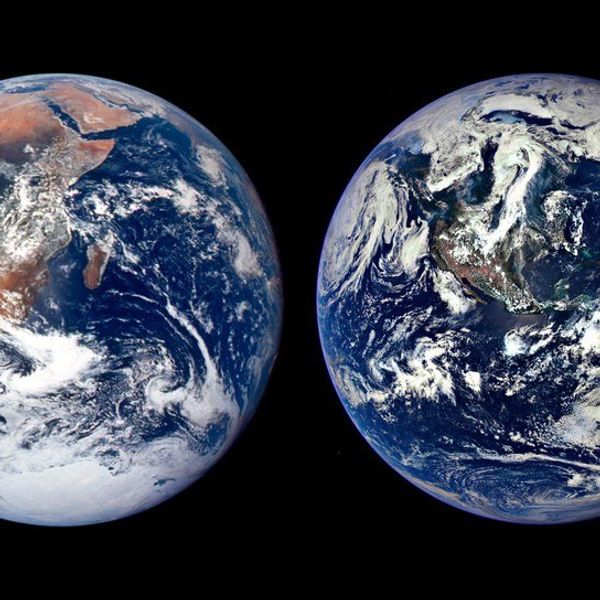
When I was in elementary school, the cause I dedicated myself to was saving the environment. I educated myself by reading article after article about climate change and renewable energy. I encouraged my family members to recycle more often and turn the lights off whenever they left a room. My heart broke for endangered animals, the victims of the deteriorating planet.
Saving the Earth also saves people, of course, considering that we live on this planet. As a child, that wasn’t my main concern. But even for adults dedicated to the environmental movement, the cause doesn’t really seem to be about people. We breathe the air and drink the water that environmentalists are trying to save, but the movement isn’t people-centric at all.
The argument is often that society is too anthropocentric, and we need to focus on nature and the balance of ecosystems without prioritizing the wastefulness of human society. While this might be true, people don’t realize that environmental problems actually affect people a lot more than we would generally think—and most importantly, they affect some people more than others.
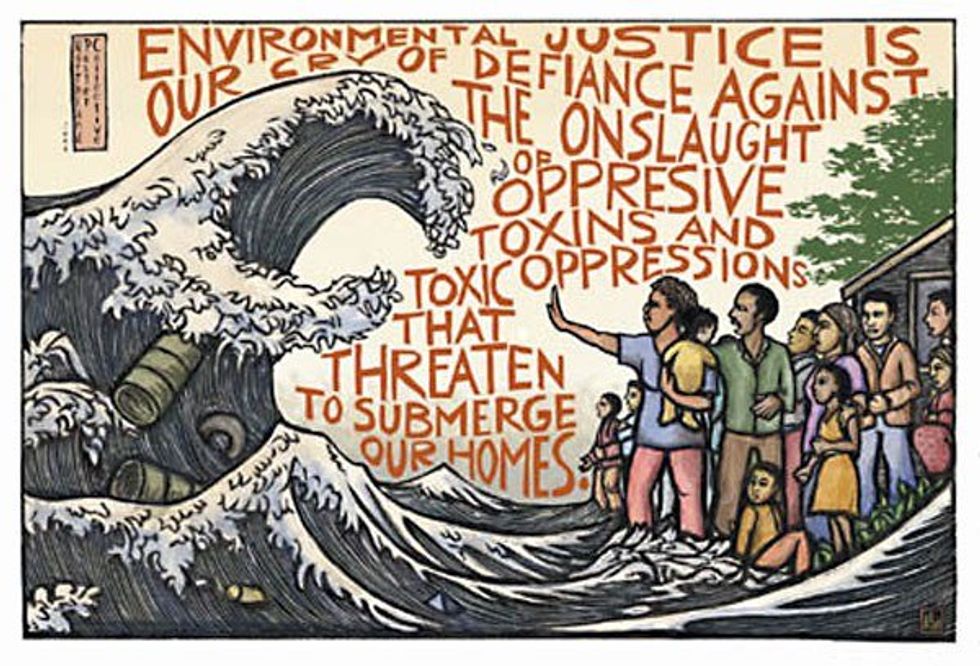
The Environmental Justice Movement
The environmental justice movement emerged in the 1980s as a "social movement whose focus is on the fair distribution of environmental benefits and burdens" (Wikipedia). The idea is that environmental harm affects certain groups of people—racial minorities and those living in poverty—more than others. The location of industrial plants and sites of fracking, which lead to pollution and sickness, are all more likely to occur in poor areas with high populations of racial minorities.
Racism plays a huge role in all of this. According to the New York Times, “[environmental racism] refers to the disproportionate exposure of blacks to polluted air, water and soil. It is considered the result of poverty and segregation that has relegated many blacks and other racial minorities to some of the most industrialized or dilapidated environments.”
The Flint Water Crisis
By now everyone has heard of the water crisis in Flint, Michigan. Due to a polluted river, the water that citizens of Flint had to use was contaminated with lead. The photos shocked everybody, and the response of the state to its residents lacking access to clean, potable and usable water was outrageous.
A look at the demographics of the city helps us learn the truth: The population of Flint, Michigan, is 57 percent black. Furthermore, 42 percent of the city lives below the poverty line. The disaster in Flint is a racial, socioeconomic and environmental problem.
Hurricane Katrina and its Aftermath
The aftermath of Hurricane Katrina is another well-known example of environmental injustice. While the above video, where Kanye West claims that "George Bush doesn't care about black people," was treated as a joke by many, others will agree that he has a point. The government response to the devastation of Katrina in Louisiana and elsewhere was slow and neglectful, and media coverage of the situation often portrayed desperate victims as looters or troublemakers. Many of the victims of Katrina were poor African-Americans.
The environmental movement is mostly full of very white and very affluent people. The implications are everything from white veganism to issues of environmental racism being widely ignored. Often times, it is hard for poor people of color to involve themselves in environmental efforts because their priorities are living day to day, not recycling or buying swirly light bulbs.
The environmental movement is important. Climate change is a real problem. The balance of the ecosystem is significant, and people are not the only creatures that inhabit this Earth. All of this is valid and important to address. But even a movement that seeks to focus itself on nature needs to care about people—especially when the people mostly affected by the issues you are fighting against are different from and less privileged than the people who make up the mainstream movement.
As someone with a fair amount of privilege, I can't care about polar bears dying in the Arctic when there are people without clean water to drink in my own country. The people of Flint can't really "take back the tap" right now, can they? The conversation about environmental injustice must take a place at the forefront of the environmental movement.