
Before I start this off, let me just say that no one should be living in ignorance of how the environment works. Many people like to save time by avoiding learning things that they don’t need to know, but, unfortunately, this isn’t one of those things; you need to know about the environment.
What is the environment?
To give a very broad and inclusive definition, the environment is, for all intents and purposes, everything around you. It’s the air you breathe, the food you eat, the ground you walk on, the water you fish in, etc.
Why is the environment important?
Because one time a river caught on fire. How does that even happen?
It’s what you live in. When you own fish, you need to make sure that their water is clean, at the right temperature and filled with dissolved oxygen. If you don’t do this, your fish are going to die somewhere in the near future. Your environment works the exact same way, albeit on a larger scale. You need clean air to breathe and the right temperatures to live (and many other things).
There have been many examples of what happens when the environment is not properly cared for. The easiest way to put all of them together is to give you a visual displaying the change in air pollutant concentration over time.
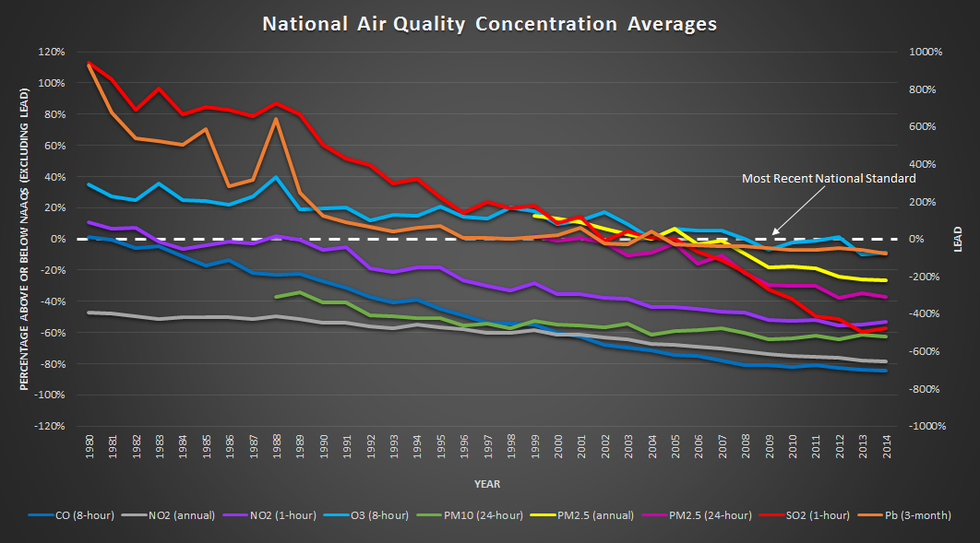
To simplify this graph, the average concentrations of air pollutants such as lead, carbon monoxide and sulfur dioxide in our breathing air has decreased over time. What caused the decrease? Some ridiculous people have ridiculous answers, but the most obvious answer is our increasing air pollution regulations.
So why is this stuff important? Because it’s what you interact with at every moment of your life. If your air quality is poor, you are more prone to develop issues with your respiratory system. If your water quality is poor, you’re more likely to develop issues when you drink it (as evidenced by Flint, Michigan). There are many other ways that the environment is important to you, but you get the point.
Global Climate Change.
This topic is one of the biggest in terms of the environment right now. To quickly summarize it, we’re putting a bunch of carbon in the atmosphere which is preventing more and more sunlight from leaving earth and, in turn, is causing an increase in temperature. This temperature increase is a fact, as we’ve measured the temperature of the earth and we know that it is increasing. The debate comes with what’s causing this change.
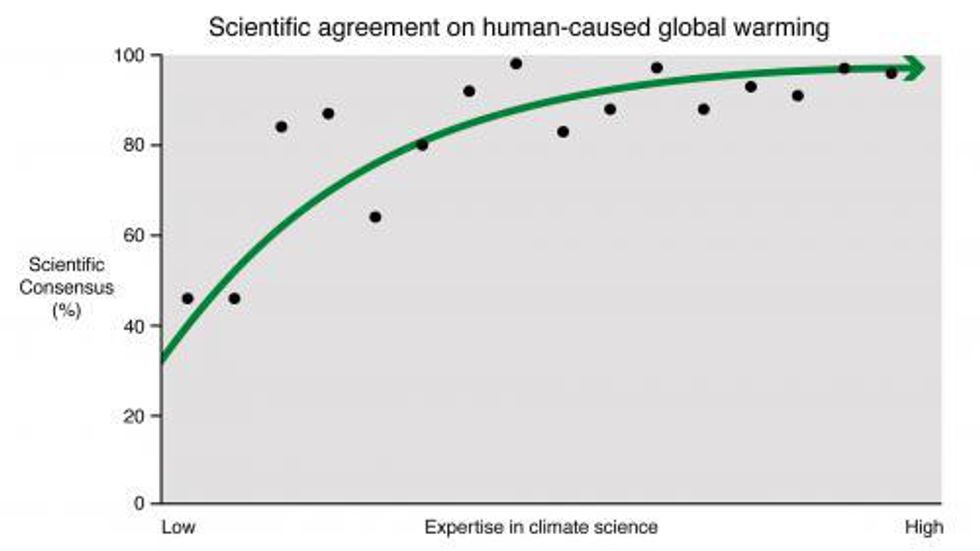
What this graph says: the more you know about how the climate works, the more likely you are to agree with the idea of human-caused climate change. In fact, 95 percent of climate researchers agree. On the other side of the spectrum, corporate spokespeople are often fighting the notion. These corporations are often making money in areas that would lose profits if proper preventative measures to combat climate change were to occur.
This has happened before. Decades ago, corporate spokespeople denied claims that CFCs were destroying the ozone layer. They were wrong. Lead company spokespeople, for ages, fought the idea that lead-containing products were dangerous. They were wrong. In each of these instances, the scientists invested in protecting people from harm were the majority and were right. Isn’t that interesting?
Learn more about climate change from NASA here.
Don't trust me or NASA or 95 percent of the climate scientist community? Do your own research! The Internet is full of people with very fancy graphs, good sources and wonderful writing skills. Utilize this large pool of information to be more informed and more secure in your opinion!
What can be done?
Eliminating your carbon output is your best bet at fulfilling your environmental duties concerning climate change. The average American’s carbon footprint is massive. There are many ways to reduce our individual footprints, and, if you’re interested, you can find them here. You can calculate your footprint here.
While there are ways to reduce our carbon footprints effectively on our own, there are many ways which we can’t. Things like mass-transport of goods in our nation hold us back from ever being able to have a footprint as small as the global average. To solve this, we need a coordinated effort. Follow politics and support politicians who have an actual plan on tackling climate change. Though one’s actions may seem small, the actions of many together can change so much.
What can I do to help the environment in general?
I’ll just list off some things that come to mind.
- Be active in your community’s efforts to help the environment.
- Do more research. That takes effort, but if you made it this far into the article, I promise you that you have what it takes.
- Be mindful of what you waste. Everyone wastes things every now and then, but it’s important to try not to waste things. Your waste = someone else’s loss.
- Follow the environmental laws despite lack of enforcement. For example, don’t throw things out of your window when you’re driving down the highway.
In order to keep this from being too long, I’ll cut it there. I promise you that you’ll never run out of ways to help your environment. Looking things up online is your best bet to help. Know the facts in order to make better decisions in your everyday life.
Sources.
Click on the graphs to be taken to their sources.
If you're too cool for that:
https://www3.epa.gov/airtrends/aqtrends.html
http://www.skepticalscience.com/graphics.php?g=244