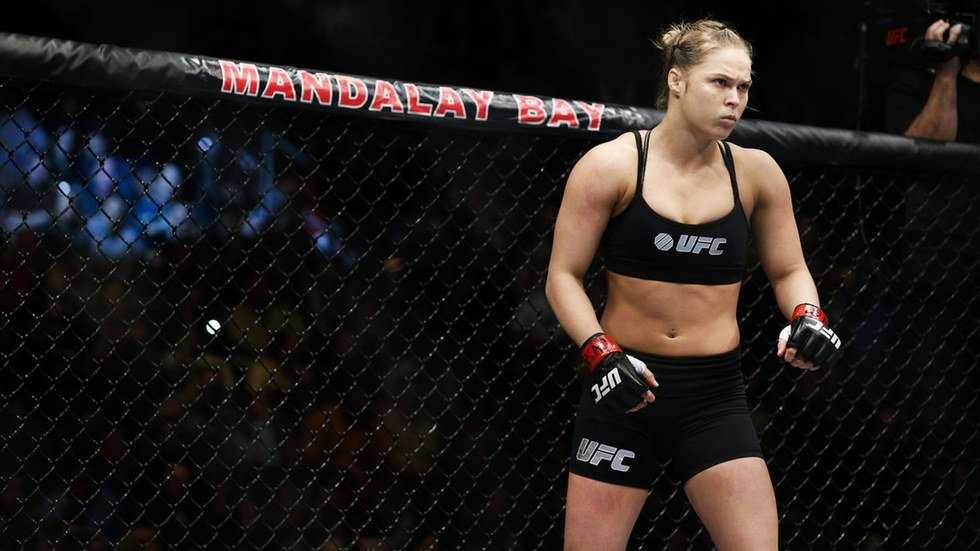
After watching a commercial for the upcoming Holly Holm and Miesha Tate UFC fight, along with the release of Ronda Rousey's 2016 Sports Illustrated cover, I reflected on the idea of Ronda's fame and what people think of it.
After Rousey’s third straight knockout in less than a minute against Beth Correia on Aug. 1, UFC commentator Joe Rogan exclaimed, “Once in a lifetime doesn’t apply to Ronda Rousey. It’s once ever in human history.” Although she later experienced her first loss to new champion Holly Holm in UFC 193 on Nov. 15, Rousey still remains a popular fighter for UFC fans and is one of the most recognized fighters in the world.
With over 10 million “likes” on Facebook, seven million followers on Instagram (myself included), two million on Twitter, about 48,000 members of Armbar Nation, The Official Ronda Rousey Club and the hundreds of thousands of viewers that tuned into to UFC 193, it is quite obvious that Rousey has attracted a wave of followers. “Since making her UFC debut in 2013, she has emerged as more than the best female MMA fighter in the world: Rousey is now an author, actress, magazine cover model, fashion icon and sought-after TV guest” (UFC 2015). This begs the question: has Rousey’s media coverage given her the fame she holds today?
Prior to her MMA fighting days, Rousey spent her childhood, and up to the age of 21, as a highly successful and decorated judoka. She qualified for the 2004 Olympic Games in Athens, and then went on the become a bronze medalist in judo at the 2008 Olympic Games in Beijing. Rousey’s UFC days began in 2012, when UFC president Dana White announced that she had signed a contract to fight in the UFC. In her first fight, at UFC 157, Rousey utilized her famous arm-bar to defeat Liz Carmouche. In fact, nine of her 12 victories have been by arm-bar, hence the creation of her fan base, “Armbar Nation.”
What is most interesting, besides her impressive record so far, is her quick rise to fame with the UFC fan base. One glaring reason for this fame is the simple fact that she is a woman in a sport that is not only male-dominated, but also seen as very masculine. The only females you would normally see on the television screen during a UFC fight are the card girls that wear practically nothing (the terms sexualization and objectification are pretty obvious here, and something we have discussed in class).
Her appearance in the octagon, along with her impressive and dominating victories, is something that stuck out like a sore thumb; viewers found her different and entertaining to watch. In an article for the Daily Telegraph, Jordan Baker writes, “I find this threatening, but not because she’s 25, or blonde, or happily poses with few clothes on to show off her perfect body. It’s nothing to do with her enormous career success, or the fact that she’s about to smash a glass ceiling for women in sport. It’s because she likes to break other women’s arms.” Women, like Baker, have been drawn in to witness Rousey’s success. I would say that I have been inspired to “fight like a girl,” which really just means kick ass like Rousey does, and I am sure there are plenty of younger girls out there who do the same.
And while many give Rousey credit for her fame, there are several articles that argue that the media is the main reason her career took off so quickly.
In an MMA Fighting article, Marc Raimondi recounts what Chael Sonnen said about Rousey on an ESPN Radio show: "Things should become clear -- after you see them. I wasn't good at predicting this one, either. The thing with Ronda is she is created by the media. That was a media sensation. You did have a lot of fighters coming out and saying, 'I want a Ronda Rousey technique video, because I want to learn those skills.' She has great skills, but so does everybody else on the roster." Sonnen’s belief comes from an idea that others toss around as well: the division is small, and the media created a lot of hype and belief for one person in a small pool of similar athletes.
Although she excels in a sport where the fighters go home sore, bloody and bruised, her femininity still shines through. For example, she has appeared on magazine covers. “Magazine profiles and TV interviews play up what they call contrasting qualities, as if none could mutually exist: an attractive woman excelling in a bloody sport; friendly and laid-back in person while exhibiting brute force against opponents; masculine in physicality while relying on her sexuality to sell magazine covers” (Grinberg, 2015).
She appeared in the 2012 ESPN Magazine’s body issue, wearing nothing but a smile and hand wraps covering her breasts, leaving much to the imagination of those who viewed it. She has appeared a few times in scant clothing, and although her body is much more muscular than what society claims is the “ideal” female body, fans still gawk because it is a woman’s body.
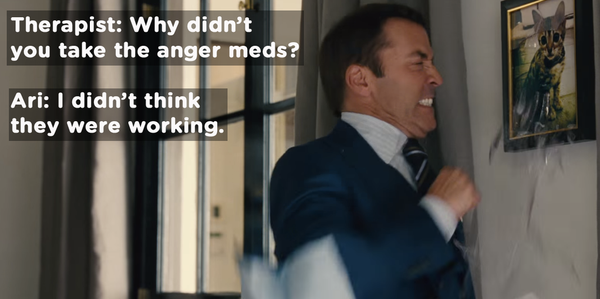
Rousey has also appeared in movies and books. In between fights, from February to August last year, Rousey appeared in "Furious 7;" she also made an appearance in the "Entourage" movie and published her autobiography “My Fight/Your Fight." These three things included various red carpet events, advertisements, commercials and other social events.
Rousey is also known for her trash talking, which is something that, again, many do not believe fits the “ideal” standards society has created for women. One of her most famous remarks is after she won the 2015 Best Fighter EPSY award: “I wonder how Floyd [Mayweather] feels being beat by a woman for once.” Mayweather is not the only one who has been hit by “Rowdy’s” statements. With today’s technology, especially social media, remarks like this are put out for the world to see instantly, and this creates a lot of talk. People either love or hate what comes out of Rousey’s mouth, but either way they are sharing the posts, thus giving her a higher profile.
After reading various articles, both applauding Rousey’s career and mocking it, I can say that I still believe that Rousey’s the reason for her own fight. While the media has given her ample amounts of coverage, I firmly believe that it is her talent and personality that led her to stardom in the first place.
She was already among the best in the world in the art of judo, and her arm-bar had already become notorious in the MMA world before she stepped in the UFC octagon. What made it unique is that she knew that she was stepping into a “man’s world” by signing on with the UFC, and she took it all with confidence, strength, talent and maybe a little cockiness.
We see that in many sports today. Rousey used her personality and her skills to make herself successful not only in the octagon but outside of it as well. She continues to fight the idea that women do not have to hold up cards after each round in a bikini; they can be fighting and winning those rounds as well. I think that’s outstanding and highly motivational for women and young girls, and it was herself, not her media coverage, that got her to that point.
Although Rousey has just recently received her first loss in the UFC, I think there is still much to come from this shining star. I guess we will have to see what the media says about that.