

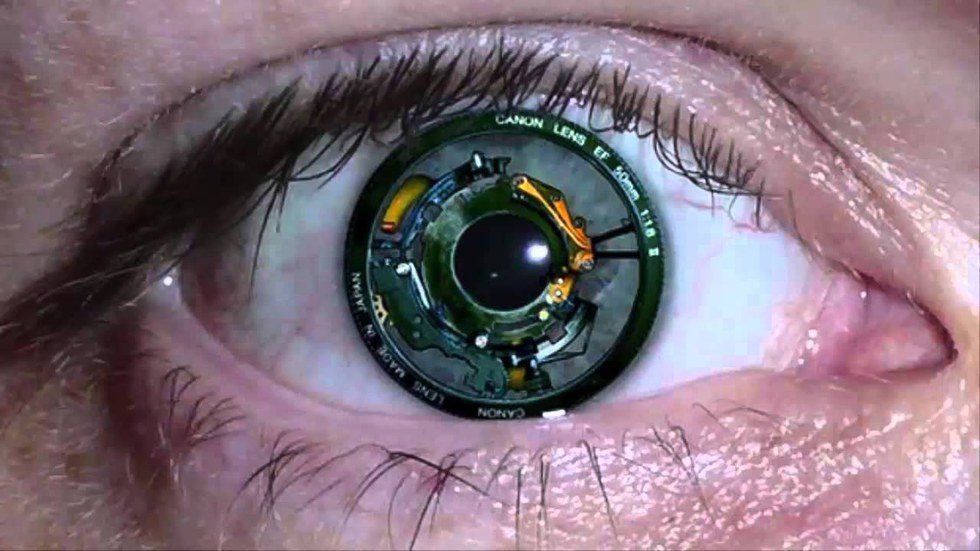
Visual impairment is one of the most common forms of physical
disability on the planet. According to the World Health Organization, almost
300 million people around the world can be described as “visually impaired,” and of those around 40 million are completely blind.
Though this is a health problem that largely affects those
of a more advanced age -- more than half of all the visually impaired people on
the planet are over the age of 50 -- there is also a problem with visually
impaired and even blind children. Due to the fact that the amount of people
surviving to old age is growing every year, a higher and higher population of
the world is starting to suffer from visual impairment.
 Again according to the World Health Organization, most cases
of visual impairment are preventable or correctable, but many of those in poor
and developing countries lack access to the resources necessary to correct
their vision. And there is a high percentage of people whose blindness wasn’t
preventable and can’t be corrected.
Again according to the World Health Organization, most cases
of visual impairment are preventable or correctable, but many of those in poor
and developing countries lack access to the resources necessary to correct
their vision. And there is a high percentage of people whose blindness wasn’t
preventable and can’t be corrected.
But new advances in the fields of medicine and science are
hard at work doing the impossible, fixing the unfixable and correcting the
uncorrectable. One of the many solutions put forward has been the
implementation of prosthetics -- bionic and robotic eyes.
These bionic eyes are limited so far. They aren’t able to
grant somebody perfect 20/20 vision, but they’re an amazing leap forward -- they
can return some amount of sight, no matter how small, to people who had been
resigned to blindness.
 Here’s how they work -- a small camera, attached to glasses or
something similar, takes live video, which it can then transmit to an implant
inside the eyeball. This implant then sends the information to the brain
through the same channel that a healthy, functioning eye would, the optic
nerve.
Here’s how they work -- a small camera, attached to glasses or
something similar, takes live video, which it can then transmit to an implant
inside the eyeball. This implant then sends the information to the brain
through the same channel that a healthy, functioning eye would, the optic
nerve.
And bionic eyes aren’t the only solution to blindness that
scientists have been working on lately. Recently, researches at Australia’s
Melbourne University have announced that they have developed an entirely new
way to not just replace the non-functional eye, but help it to repair itself.
 By attaching corneal cells to a thin biodegradable film, and
then implanting that directly onto the cornea inside the living eye of an
animal, the researchers were able to encourage the animal’s body to repair the
cornea itself, healing the existing damage and allowing the animal to,
apparently, see again. The biodegradable film dissolved naturally, and the eye
repaired itself.
By attaching corneal cells to a thin biodegradable film, and
then implanting that directly onto the cornea inside the living eye of an
animal, the researchers were able to encourage the animal’s body to repair the
cornea itself, healing the existing damage and allowing the animal to,
apparently, see again. The biodegradable film dissolved naturally, and the eye
repaired itself.
Human trials haven’t been done yet, but the research looks
promising. Like the bionic implants, this solution might not be perfect. It
probably won’t give patients their full vision back, but it should be able to
return significant amounts of it, enough to seriously help with their day to
day lives.
With all of these modern advancements in the field of medicine, more and more disabilities and physical handicaps are looking like they might very soon become a thing of the past. In the near future, we might finally be able to look at a patient, earnestly and honestly use the words “we can rebuild him - we have the technology.”