The sermon was about the Road to Emmaus, when Jesus appears and walks with some of his disciples, but somehow they don’t recognize him. In the sermon, the pastor wondered what stories they told to Jesus, who was just a stranger to them, traveling along the same road. Later, I wondered what stories they told each other before Jesus joined their party. I wondered what they remembered about him. Did they say, “Remember the miracles? Remember when he gave the blind sight? Remember when the lame walked, and the water turned to wine?” Or did they talk about the company he kept, “Remember when we hung out with the prostitutes? Remember how much we learned?” And what about the moment when Jesus spoke those life-changing words, “Follow me”? Did they wonder if the rush and exultation they felt at that utterance was just misled adrenaline that brought them to their current shattered hopes. Did they voice their fear, or did they put on a brave face, offer an unstable smile and whisper, “It’ll be alright. We’ll be alright, won’t we?”
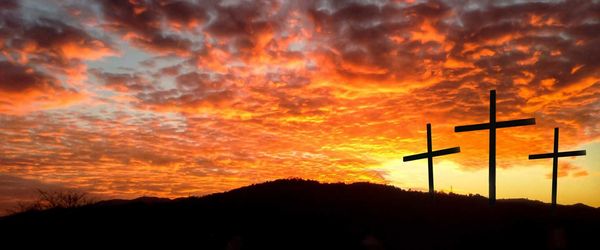
When they walked to Emmaus, did they wipe dribbling tears from their cheeks, because for the first time since it happened, they were able to talk about the crucifixion? For the first time since it was finished, they could bring themselves to remember. What did they say? Did they remember abandoning him in the garden, running when the Roman soldiers and threat of death showed up? Did they remember how tired he looked after his night with the Sanhedrin? How he tried not to cry out during his flogging, but his face blanched with pain and soon moans of agony scraped through his dry throat. How he cried tears of blood twice when blood dripped from his crown into his eyes. Did they remember the cry of relief when the Roman soldiers lifted the cross from his shoulders and made Simon bear the load? Did they whisper, with tears lingering on their wet lashes, “Remember when they nailed him to the cross? Remember how he screamed? Remember how he bled?” A shudder might run through them as they recalled the man they once called “Messiah” struggling against a square metal spike being forced through muscle and ligament.
“Remember how he screamed?” I didn’t like this train of thought. I didn’t like to think of my pristine, innocent Savior writhing in his own blood and torn skin. Except he wasn’t pristine. He wasn’t “innocent,” at least not by their, or our, standards. He hung out with the prostitutes and tax collectors. He didn’t hand out flyers about safe sex and inner healing and seven easy steps to get to heaven. He ate meals with them, got to know their names and their children and their stories. He loved these women with his whole heart. And the tax collectors, he loved them, too. He even loved the Pharisees, and probably had a good amount of fun with their somewhat complicated relationship, at least before they decided to kill him.
“Remember how he bled?” God shouldn't bleed. God shouldn't hurt. God certainly shouldn't die. God is immovable, like an oak tree in a field, planted by a stream. Trees don’t bleed. The tree he hung on that day had plenty of blood on it, though - all of it from the so-called Savior.
I want to go back to the way things were, when God was something bigger than life, not someone whose life could be beaten and flogged and nailed and bled out of him. Not someone who screamed. I could take God being anything but mortal, anything but human. I could handle him being loving and kind and gracious and powerful and holy. But not human, not vulnerable, not mortal. Anything but that. Anything but one of us.