
May 20th is National Bike to Work Day. Is it a good idea to bike to work?
Imagine living in a world where instead of cars, people owned bikes. Imagine as if there is no other option. The roads were flooded with bicycles. Think about how much this would change the world we live in. Here are some of the most prominent effects of this hypothetical change:
CONS:
People would be forced to work closer to home.
In the United States, the average commute time is 25.4 minutes. In a car, this amount of time allows you to travel on average between about 12.5 miles (going 30mph) and 16.68 miles (going 40mph). On a bicycle traveling at an average speed of 20mph, a 25 minute communte would take you about 8.3 miles. This means that the new average commute length would almost be cut in half, and people would most likely work closer to home.
It would force us to live simpler lives.
This could be both a blessing and a curse.
People wouldn't be able to purchase everything in bulk without renting a larger mode of transportation or getting it delivered. People wouldn't be able to move large items such as furniture, building supplies, or a boat as easily. Maybe it prevents you from making a risky purchase.
The inability to buy everything in bulk would force people to live more by necessity and less by excess due to the limited capacity a bicycle can carry. Which do I need more: the 24 pack of water bottles or the 24 pack of paper towels? There are bike trailers, you could still buy things in bulk, just not everything. This would cause people to cut out unnecessary items on their shopping list, prevent a risky purchase, and maybe it would even cause them to start look more closely at the items they are purchasing. This could include, for example, home-growing certain foods and using cloth towels instead of paper towels. Overall, it would save money at the cost of exercise.
People wouldn't be able to travel long distances independently.
No more fun road trips with lots of people or too much stuff packed in a car.
PROS:
Public transit would improve.
Road trips would now be held on public transit. Trains, planes, boats, all of those would be forced to improve.
Eliminate the need to rent a car when you travel.
You can just bring your bicycle with you! Again, saving $$$ at the expense of exercise.
A WORLD WITHOUT GASOLINE!
You heard it. Zero gas. Bicycles run off of sweat and water. One less payment to make.
A more environmentally friendly and fit world.
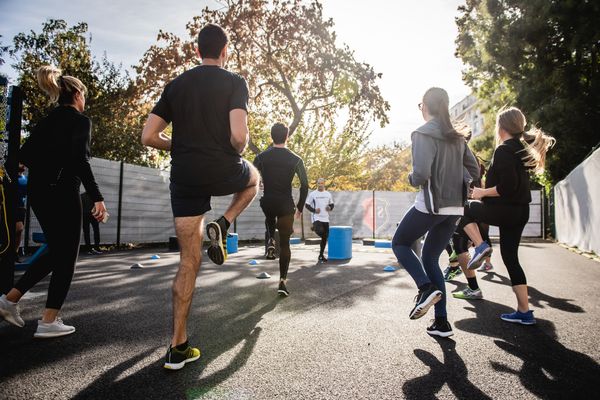
This would be a great way to fight obesity, and also to improve the health and physical strength of people. An article titled "The Incredible Benefits of Regular Exercise" states that exercise strengthens your bones, increases delivery of nutrients to your skin, reduces the amount of stress hormones in the body, and fights depression. Exercise has been shown to also have a positive influence in decreasing the impact of diseases common in the elderly. Plus, no exhaust would be let out into the environment.
It's easier to fix a bicycle than fix a car.
No more $500-1000 charges from your mechanic. With a bike, it is much easier to become your own mechanic. Replacement parts are cheap, and bicycles are much easier to learn how to fix.
Parking.
No vast parking lots to get lost in. Parking areas would not need to be so huge. Bike racks are much more space efficient than parking lots. Parking is easier and free.
More time to talk to strangers while commuting!
And these people will be HAPPY! Endorphins make people happy. If people biked the same route every day with the same people, they would get to know each other, and what better way
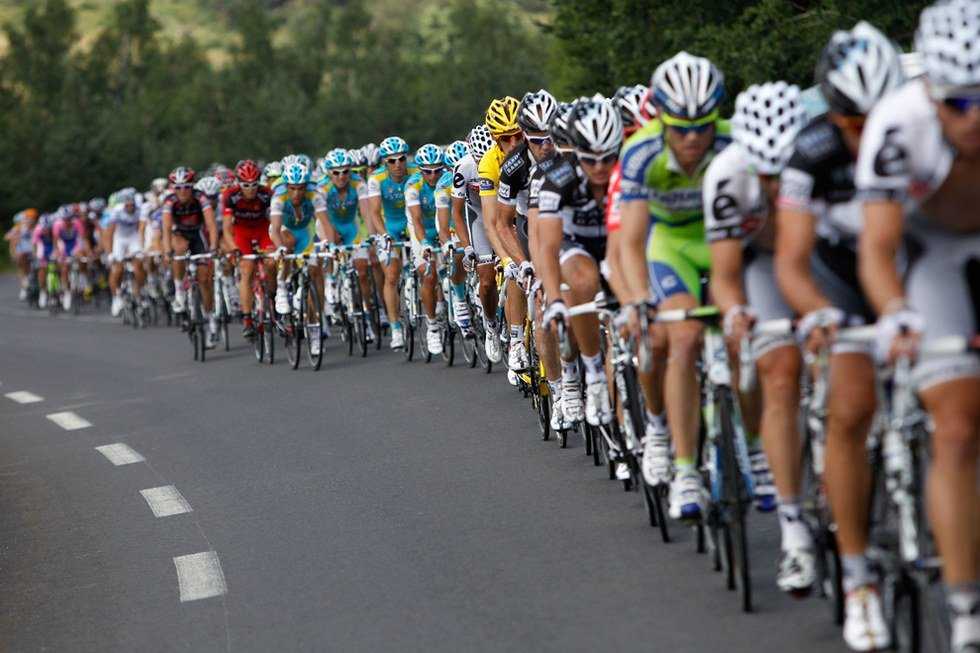
It would be like Tour de France or the Pan Mass challenge, but EVERY DAY.

No cars on the road. So many bikes. Water stations. Friendly conversation. Health. Saved Money. What else could you ask for from a commute?
Now, I totally understand that this isn't meant for everyone. Some people hate biking. Some don't know how to ride a bike. Some like the efficiency of cars. What about rain, snow, sleet, and wind? You don't want to get to work all sweaty. Bicycles can be inconvenient sometimes. However, I think that more times than not bicycles could be used to replace cars. The consequences of doing so aren't anything too drastic or intolerable, and the benefits have potential in improve the quality of life for most people drastically.
Just some food for thought.