
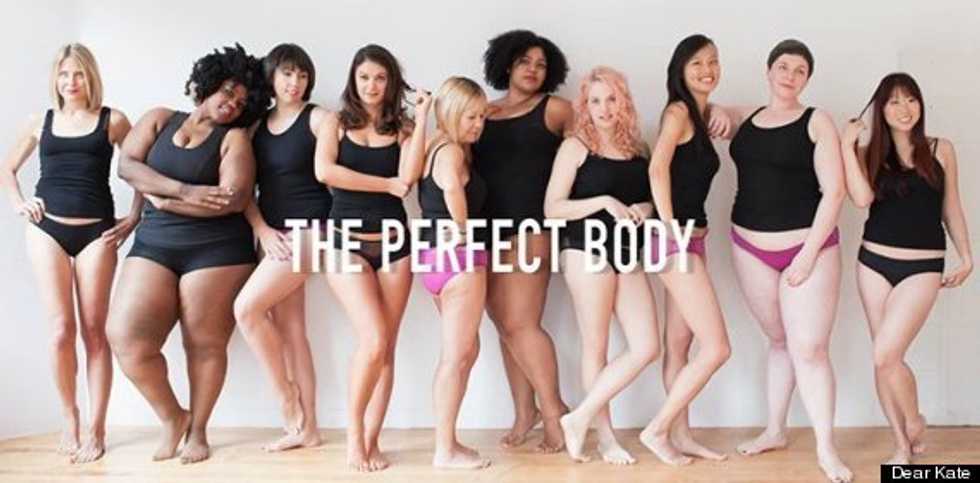
It is a common misconception that it’s primarily the media setting beauty standards we buy into at a young age. On the runway, sample size models seem to come in hoards. As a much younger girl, I thought that anyone could look like that if they put enough effort into fitting that image. However, body types are not one and the same. Most people believe that magazines and television perpetuate a certain body type, which is the leading cause of eating disorders in people ages 13-25. That is not wholly true.
While people in these occupations have to look a certain way, it is definitely not the only thing that affects self-esteem and body image. Back in high school, I witnessed boys watching girls in class or the hallway and heard them call others names like “cow”. That is not close to the worst that I have heard. Kids in high school are terrible to each other quite a lot, so the pressure stemming from bullying and nasty words has a huge impact on how one sees themselves. At least in my case, the words of others played a large role in my eating disorder. As a teenager, I never looked at a billboard with a thin model and thought “that’s what I want to look like, so I’m going to stop eating”.
Parents, depending on the circumstances, are supposed to be the leading role models for their children. Unfortunately, a good majority of girls have tried dieting before the age of 14. Mothers and fathers can set an example for their children’s body image. A young girl may look up to her mother for everything, but watches her force herself into dieting and mentioning her body in a negative way.
The daughter is witnessing this and over time with enough repetition, will likely start to develop the same negative thoughts. I obviously have no experience with this from a male perspective, but the pressure is not just put on the girls. Parents can even be a bully themselves. I have friends who are star athletes, so they are very fit, healthy and in-shape. Their parents would still tell them that they are fat, that they should eat certain things or even eat less. In turn, these girls developed terrible body dysmorphia because of the words of their parents.
Despite the ever-prevalent thin image, certain outlets of the media are taking towards more representation. Recently Sports Illustrated featured plus-size model Ashley Graham on their cover, which broke away from their typical mold of thin and busty models. American Eagle has been using models of every size in their advertising campaign, which is fantastic. They are not only representing naturally thin girls or those considered plus-size but every size in between. In France, it is illegal to hire models that are underweight, to promote their own health and not an unhealthy image. Not exactly huge strides but the attempts are being made. The best attempts by the media to better body image are those promoting health. It is something we do not focus on too much because that seems to be reflected inwards and not so much on the surface.