“I don’t see color. I just see people.”
Have you ever heard anyone say something like this? The first time I heard this sentiment expressed was a handful of years ago while watching an episode of Ellen. She said, “I don’t like labels, I don’t see color. I’m like a Cocker Spaniel in that way.” And I remember not only thinking Ellen would make the cutest Cocker Spaniel, but also That’s such a cool, progressive attitude, good for her.
But then a few years later, I took this class called #identity (all hail liberal arts colleges), and I realized that saying you don’t see color isn’t so cool or progressive.
Now, I’m not trying to make people who say they are racially colorblind out to be some kind of villain, trying to promote their secret racist agendas through statements like this, all the while twirling their greasy, racist mustaches. People who say they don’t see color hate racism just as much as the next self-respecting person and want to show they will treat everyone with equality and fairness.
They’re just going about the issue in the wrong way.
Look at it this way. I think we can all agree that the grand, overarching problem we are dealing with here is, and drum roll please, you guessed it, racism. Declaring racial colorblindness as the solution means believing the best course of action involves being blind to races, pretending races don’t exist. It means treating skin color as something best ignored, best hidden, best regarded as something of which to be ashamed. So by upholding racial colorblindness, we’re saying skin color is the root of the problem, and that eradicating skin color from our perspectives is the root of the solution. It means when we’re saying “I treat everyone equally, regardless of skin color,” we’re really saying, “I treat everyone equally, despite their skin color.”
Here’s the thing, though. The problem isn’t skin color. The problem lies in the prejudices people harbor against skin color. Believing otherwise doesn’t just neglect the true issue, it promotes this pesky little mentality that the only hope for equal treatment is found in the hope that people won’t notice non-white skin. Meaning non-white skin is something that shouldn’t be noticed, meaning non-white skin is something you should be embarrassed to have. It means stripping people of a defining part of their identities and telling them to go sweep it under a rug.
Not so cool.
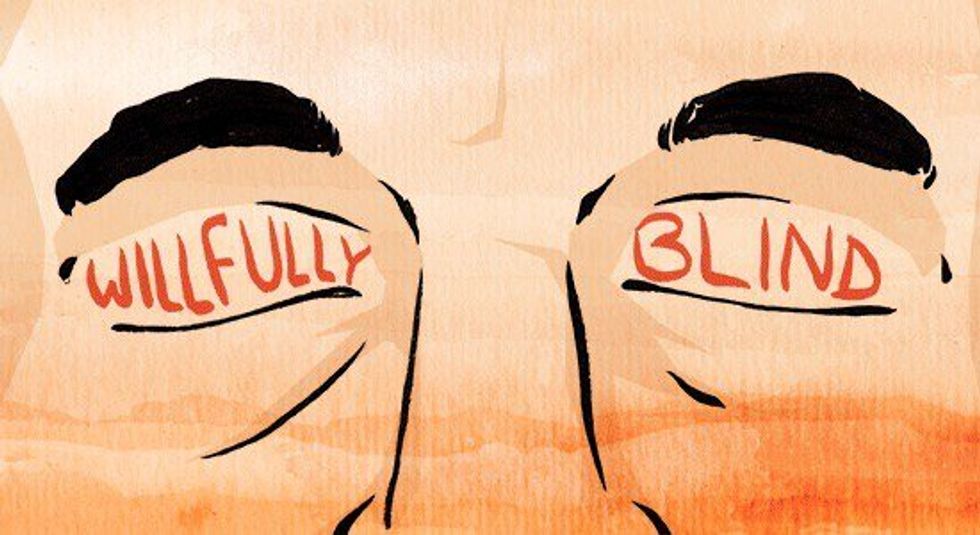
I also think it’s kind of important to mention that you can’t just “not see color.” You can’t will yourself out of your social context. Our country gorges itself on white privilege and racial stereotyping, and that’s not something you can just shake off, even if you want to. It’s naïve to think otherwise, and this type of thinking avoids the real issue by ignoring the racial biases we have subconsciously inherited just by being American. It totally sucks, but the first step toward recovery is admitting there’s a problem (she says like a cliché life counselor).
So what’s the alternative?
Well, there is this beautiful thing called multiculturalism. It’s a mouthful, but shortening it to multicult has this creepy ring to it, so we’re stuck with the longhand. Multiculturalism essentially embraces and celebrates racial differences. It’s diversity’s number one fan. Instead of trying to make us all the same, multiculturalism recognizes that there is value in our differences and wants to highlight them.
That sounds pretty cool and progressive to me.
Now, obviously racism is a huge and complex issue, and just deciding that you’re going to be a supporter of multiculturalism isn’t going to instantly make the problem go away. But spreading the mentality that racial differences are not only okay, but also are to be celebrated, is an important step toward fighting that giant, mustached monster.