
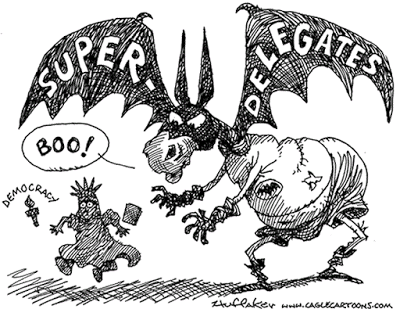

When Vermont Senator, Bernie Sanders, won the New Hampshire primary a couple of weeks ago, it showed the country that former Secretary of State, Hillary Clinton, was not the only one in this fight. There is something very troubling when looking at not just the numbers from that state, but also more importantly the number of delegates.
Delegates are people that pledge themselves to the winner of their state's primary or caucus. A candidate needs a specific number of delegates to win the parties nomination, 2,383.
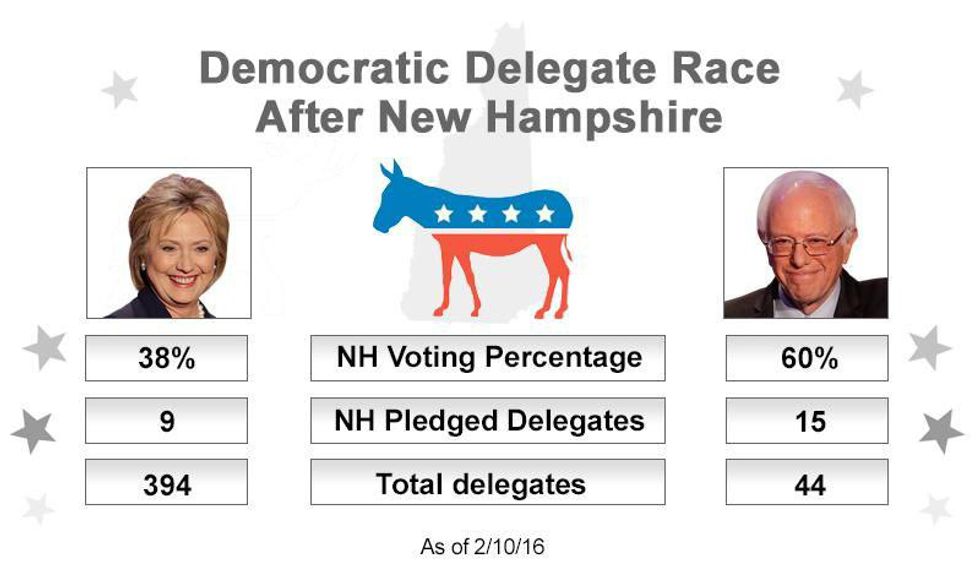
Sanders swept Clinton in terms of voting numbers, 60.4 percent to 38 percent, but that is not what wins nominations, delegates do. After winning the primary, Sanders came out of the state with 15 delegates, and the badly defeated Clinton came out with a measly…15. Wait what?
With only 38 percent of the state voting for her she received the same amount of delegates as Sanders, all as a result of “Superdelegates.” While Clinton only gained nine delegates for coming in second, six of the state’s superdelegates backed Clinton.
So this leads everyone to ask, usually every four years, what is a superdelegate? According to CBS News: “unlike the rest of the delegates -- who are pledged to certain candidates based on the outcomes of their state's primaries or caucuses -- superdelegates are unbound, meaning they can support any candidate they choose. They can also switch their support at any time, right up until the actual nomination at the convention.” These delegates make up 15% of the overall delegates needed to gain the democratic nomination
I can’t help but think that this whole process is “rigged” this season in favor of Hillary Clinton, and I’m not the only one who thinks so. On CNN’s “The Lead” Jake Tapper asked Democratic National Committee chair Debbie Wasserman Schultz what she would say to all the people thinking that both Sanders and Clinton walking out of New Hampshire with the same number of delegates.
“Unpledged delegates exist really to make sure that party leaders and elected officials don’t have to be in a position where they are running against grassroots activists,” Schultz said.
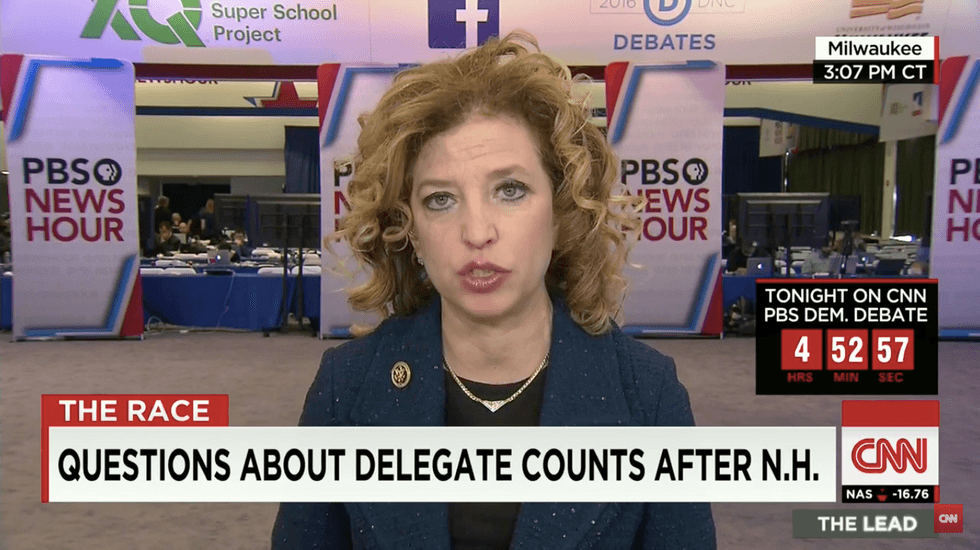
Tapper responded by saying “I’m not sure that, that answer would satisfy an anxious young voter,” and he is right. Looking at how this is playing out, it seems to me that the Democratic Party is picking their own nomination for November. And if that is the case I have lost all hope in the election process.
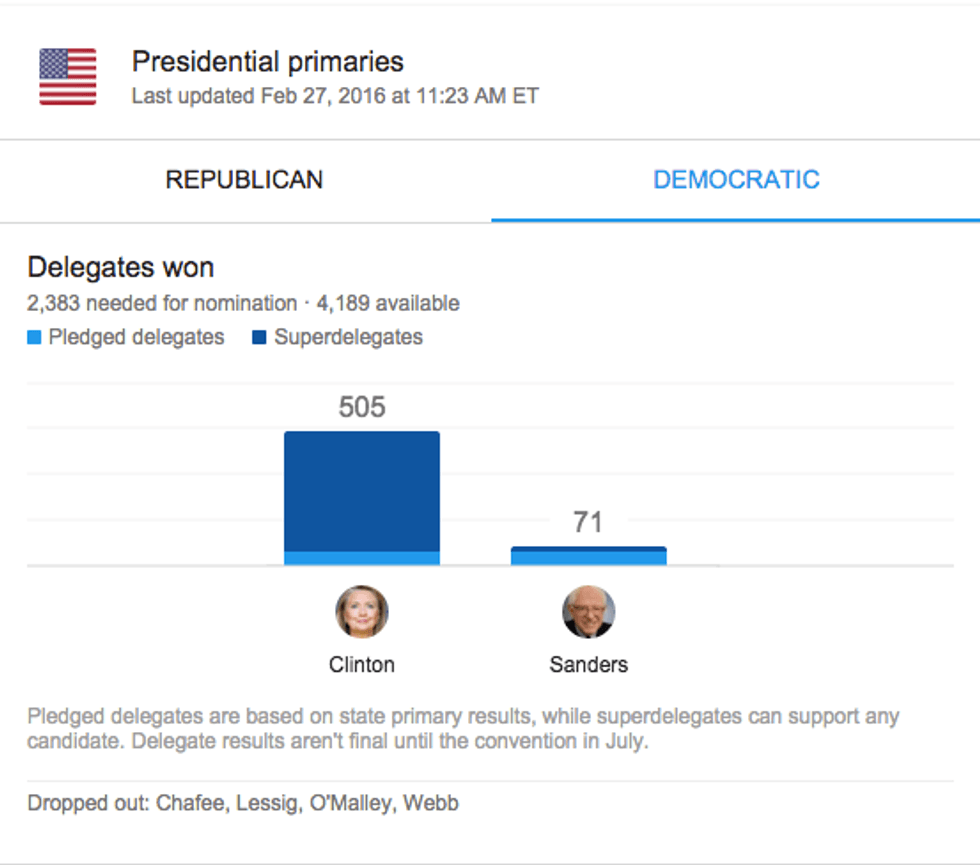
Bernie Sanders will have to sweep essentially every state on Super Tuesday, March 1, in order to be the nominee. As of right now, after a tied caucus, a Sanders primary win, and a Clinton caucus win, Sanders has 71 delegates while Clinton has 504. Why don’t you make the decision for yourself whether puppet masters are manipulating this damn election.