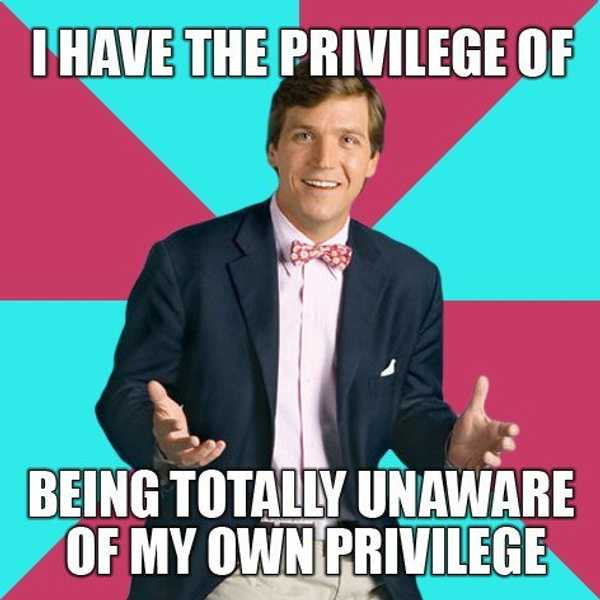
We hear the term “privilege” thrown around all the time, and those who are active in social movements constantly tell us to “check our privilege.” However, we rarely discuss what exactly it means to have privilege. Privilege, in the social justice context (in my own words) is being able to go about your life without feeling threatened or oppressed due to your race, gender, sex, religion, etc. Many people deny that social privileges exist because all people face struggles, and because of systems that were put in place to protect and serve minorities. Although life is unfair for just about everyone, it’s even more unfair for oppressed individuals.
Privilege comes in many shapes and forms. If you’re a Christian, you probably have the privilege of walking into a mall and seeing decorations for the holidays that you celebrate all over the place. It feels homey because it’s what you’re used to. Walking into an establishment and seeing Christmas decorations hanging on the walls means that the establishment recognizes your religion; they recognize your traditions and values; they recognize you. They care about you, and they want to make you as a customer feel welcomed. But, what about those who celebrate Hanukkah? I went to the Dollar General store recently to pick up winter decorations, and found four aisles of Christmas decorations, and not a single Hanukkah decoration to be purchased. There weren’t even items that could be interpreted as secular (not associated with a religion). The store shelves were designed to attract Christian customers, not me. That is privilege.
As a white woman, my academic integrity was not questioned when I got accepted into the 11 schools I had applied to. I was praised for my efforts. However, when my African-American peers got accepted into much better (even Ivy League) schools, I heard talk in the high school hallways about how “they only got in because of affirmative action.” Their high marks were not celebrated, but instead questioned due to their race. Instead of being seen as a student, they were seen as filling a quota. That is privilege.
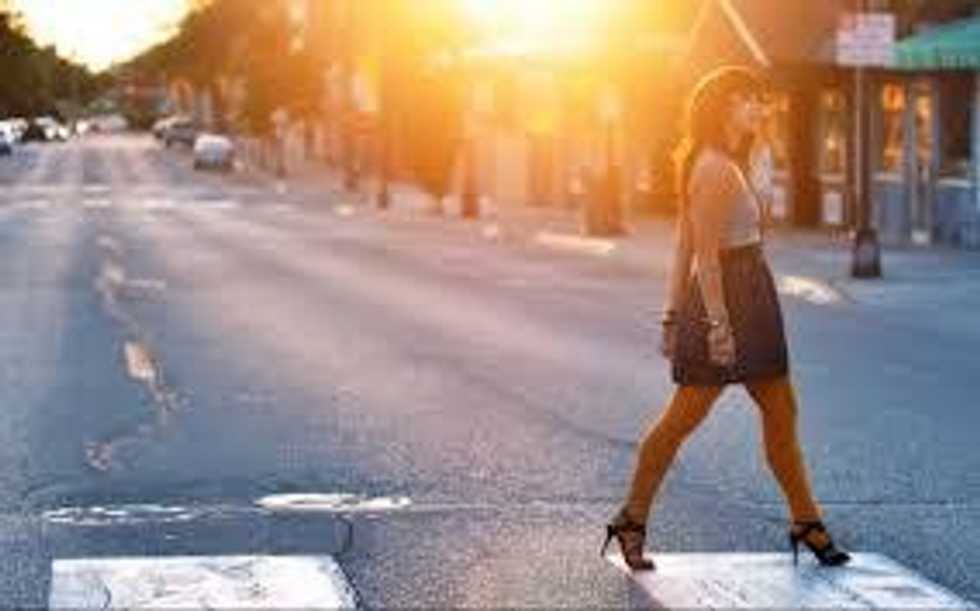
A man can probably walk down the streets of New York City without being bothered. It’s not likely that anyone will try to stop a man from walking, for it’s assumed that he has somewhere important to be. Perhaps he is going to work, or to another commitment. However, as a woman, I am not afforded the luxury of a peaceful walk through Times Square. I am instead catcalled, and made to feel uncomfortable. Even though I may also have somewhere to get to, I’m not seen as a person with priorities. Women on the street are not respected nearly as much as men on the street. Who cares if she might be late to work? Who cares if she’s on the phone? People want to talk to her anyway. A man on the phone or in a hurry will cause people to move out of the way to allow him to get to where he needs to be. That is privilege.
Privilege is not something we need to be ashamed of, but it’s something we need to identify, and we should be sensitive of the fact that we probably have social privileges that other people do not have. We do not share the same experiences as our peers due to the social structures that divide us, and it’s truly unfortunate. The first step to fixing a problem like this is to recognize that one exists.