

Things to Know:
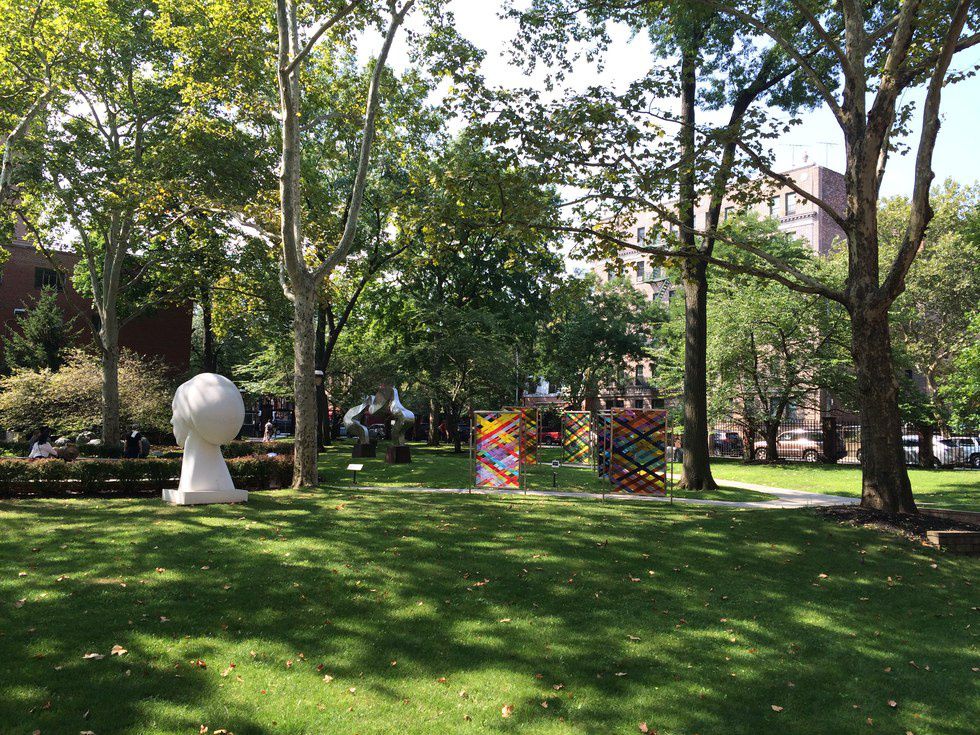
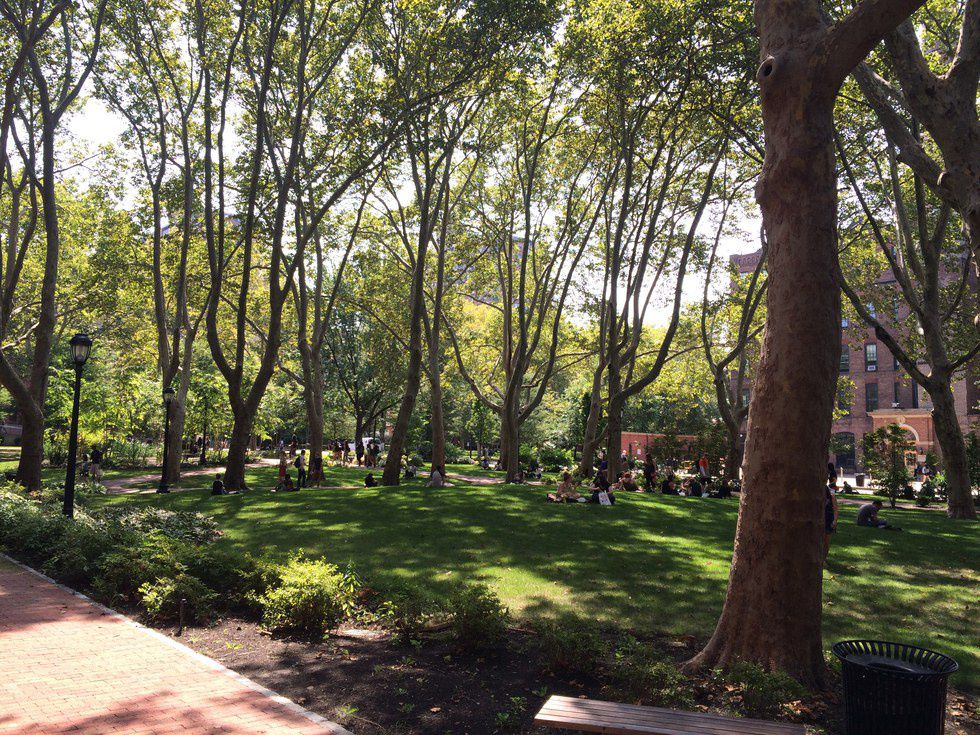
- Pratt Institute of Design is essentially an art school with majors that include drawing (my sister's specialty), critical and visual studies, and industrial design. It's located in the Clinton Hill district of Brooklyn, and its campus is littered with sculptures from students and professors, weaving in and out of the brick buildings and green lawns. Many students dye their hair and have a personal style that is completely unique, even within a borough as big as Brooklyn.
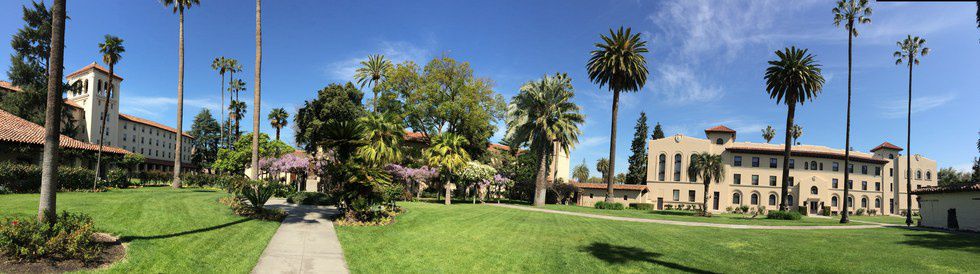
- Santa Clara University is a private Jesuit school in California with degrees available in the college of arts and sciences, Leavey School of Business, Jesuit School of Theology, School of Engineering, Law, and Education and Counseling Psychology. We're not only infamous for having an incredibly beautiful student body (many from the "basic" and "preppy" camps), but for our immaculately manicured lawns lined by palm trees, fountains, roses, and bordered by gigantic sidewalks.
- Howard Gardner's 8 Intelligences are as follows: spatial, bodily-kinesthetic, musical, linguistic, logical-mathematical, interpersonal, intrapersonal, and naturalistic. I found some of these were irrelevant to this article (bodily-kinesthetic and musical vary depending on the individual), so I'll only include the ones that stood out.
1. Spatial
Spatial Intelligence is the ability to think in terms of physical space; being aware of your surroundings and knowing where you or other objects fit within them. The classic scenario demonstrating spatial intelligence goes as follows: you're in the grocery store heading down the ice cream aisle, and someone has placed their cart in the middle of the aisle. They have also positioned their body away from the cart so they are completely blocking the aisle. This person simply does not possess enough spatial intelligence to realize everyone else must wait for them to reposition themselves to continue grocery shopping.

I like to think my spatial intelligence is strong in day-to-day situations. However, transplanting myself into my sister's turf revealed a different story. I quickly learned how clumsy I am in the dense city; I stubbed my toes on uneven sidewalks on numerous occasions, would awkwardly find myself facing off against someone opening a door at the same time as me, and couldn't manage to find my way back to her apartment after making what seemed like a simple trek to the closest Cuban restaurant. I learned that the environment at Pratt oozed spatial intelligence to a level that made me feel like an amateur. This makes sense for a design school; everyone has an eye. The placement of the sculptures on campus are able to stand on their own without competing with one another or with students wanting to convene on the lawns. No one was picky about the seat they chose in class; no one was afraid to sit in the front or next to people they didn't know. And surprisingly, no one was walking on campus with their faces in their phones; everyone seemed to know where they were going and looked straight ahead, walking with a purpose.
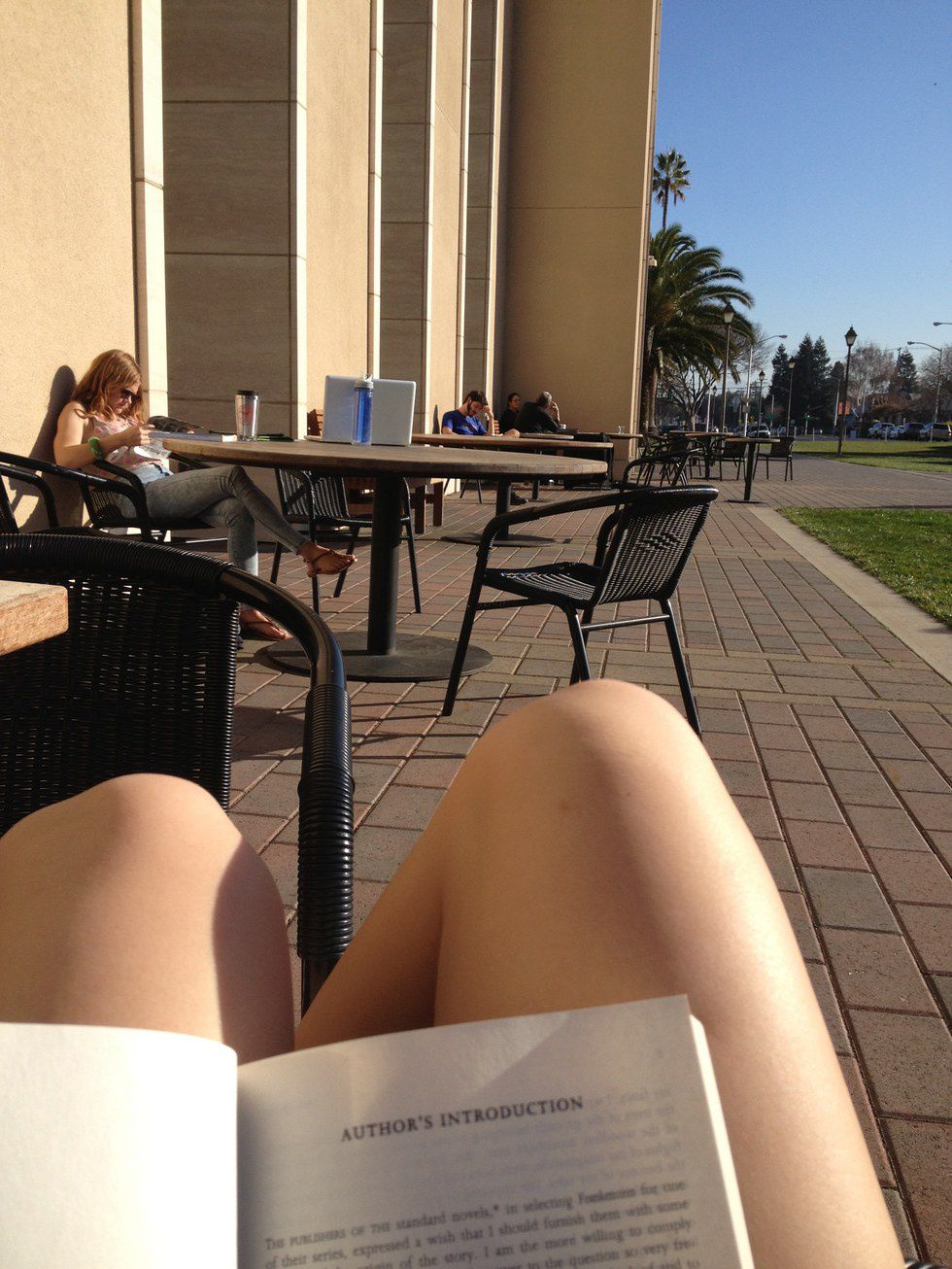
At SCU, it can be argued that our landscaper had too much spatial intelligence; our sidewalks and lawns are constantly being reconstructed to perfectly frame the stucco buildings, and gardeners are always repotting flower beds and trimming bushes. Walking through campus, you learn to fear the sound of a longboard, because you will get run into or cut off. The large sidewalks are great, but this means the different flows of traffic are mixed and convergent, and many people are on their phones to avoid making eye contact. In the classroom, most people fear the front row, and people flock to their peers in groups. The one thing I'd say all of us excel at is crossing the street, especially while drunk, thanks to the off campus housing being so close to campus
2. Linguistic
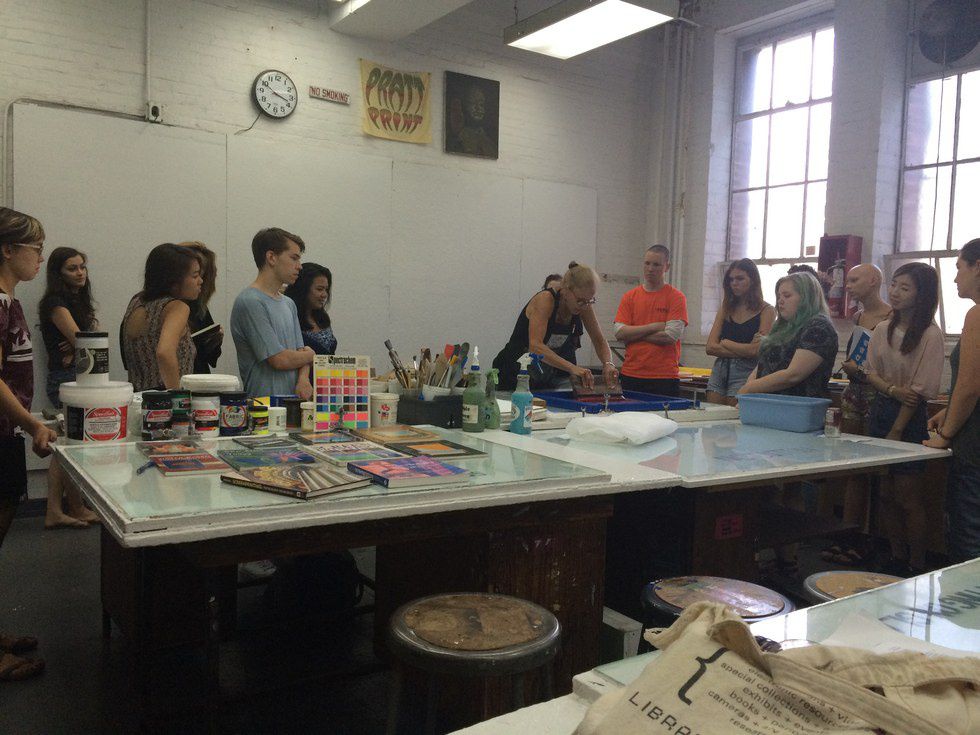
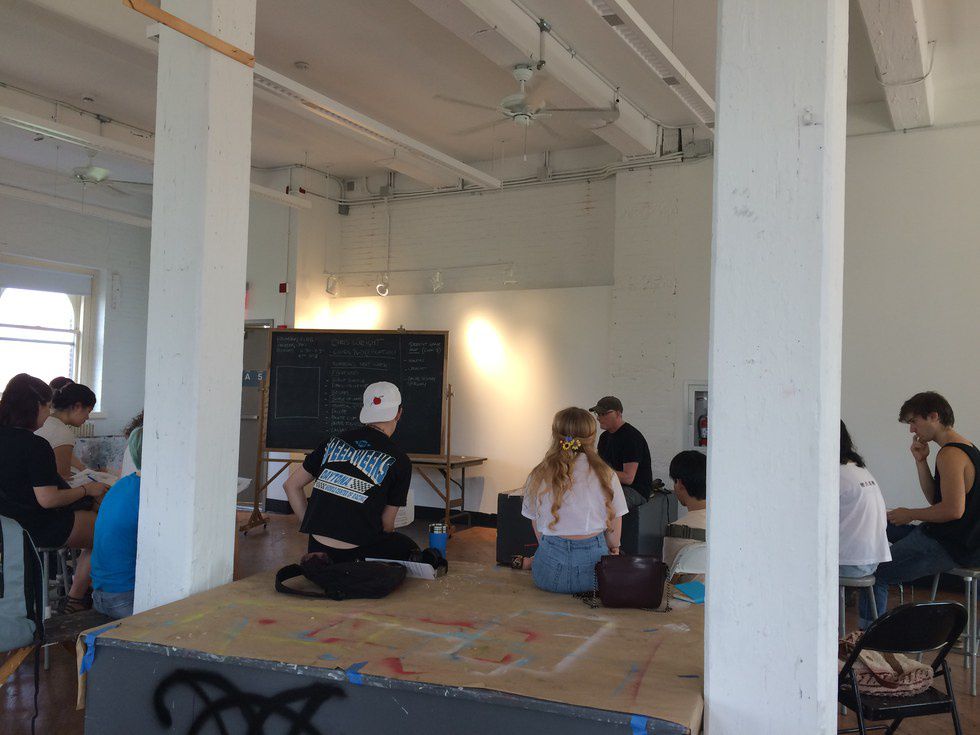
Linguistic intelligence is the ability to use words effectively; you are sensitive to the many meanings words carry, and you can pick up on the different rhythms, inflections, and sounds people use when they communicate. This is especially useful for participating in lectures or listening to podcasts (shoutout to The Moth–go to one if you can!). While I was in my sister's painting class and the teacher was talking about the different kinds and colors of paints they would need to buy for the course, I found myself diligently scribbling down notes about how yellow + prussian blue = a beautiful green, while ultramarine blue + yellow = a muddy green. I looked to my left and saw my sister drawing her teacher in the exact position he was sitting, not paying any attention to the words coming out of his mouth. I laughed to myself, because here I was in her class, and I was the one taking notes. This was mostly due to the fact that I was fascinated by how her teacher talked about color; it wasn't just "blue" or "brown"; it was "cold blue" and "burnt sienna", or in slang terms, "dark earth". He provided the class with a basic list of colors they would need for their oil paintings; aka portraits of the naked people they would be studying for the three-hour class, but encouraged them to experiment. "If you see a certain color on the paint rack and you go, 'I gotta see that!' try it out, see what it does". I had never thought about color doing anything before. My sister later informed me that she had taken a core class the year before that prohibited using descriptors such as "light", "dark", or "nice" when talking about color, and encouraged students to pick out multiple tones and shades in paint colors before settling on just one. I thought she was crazy when she told me the sidewalk was yellow and blue but figured I was probably one of the only people on her campus who hadn't been taught to think this way. If there was one word I heard way too much while I was there (as in, on the same level as "bae"), it was "medium", which can mean your preferred method of creating art (chalk pastel for my sister), or what you mix with ink and paint to make it what it is–although I'm still not sure what it is exactly.
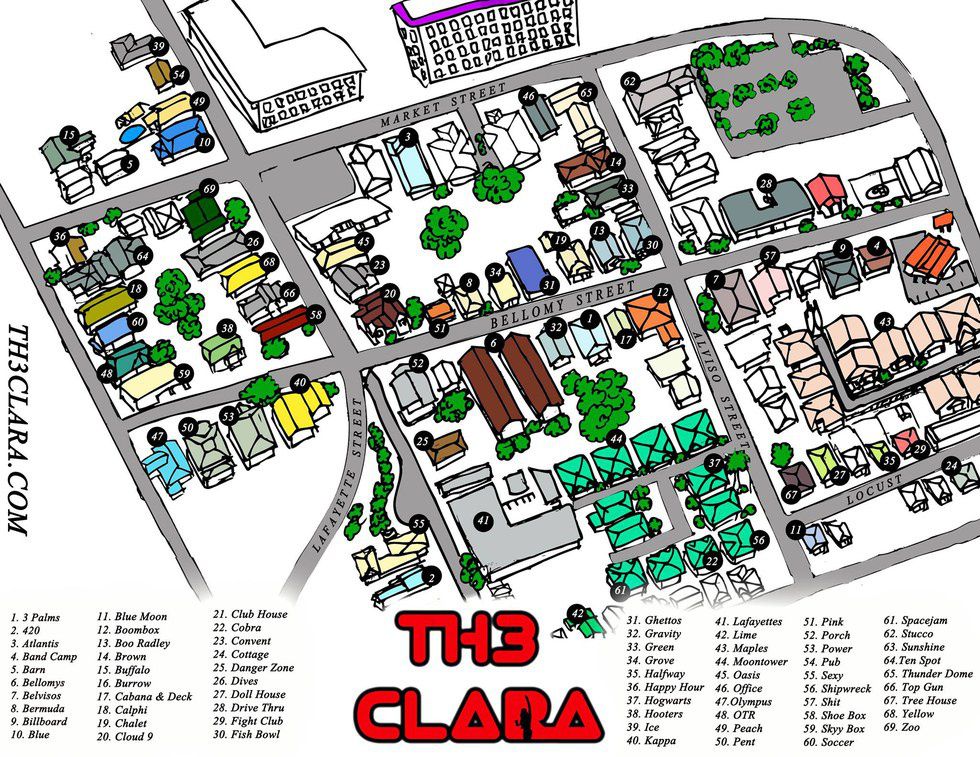
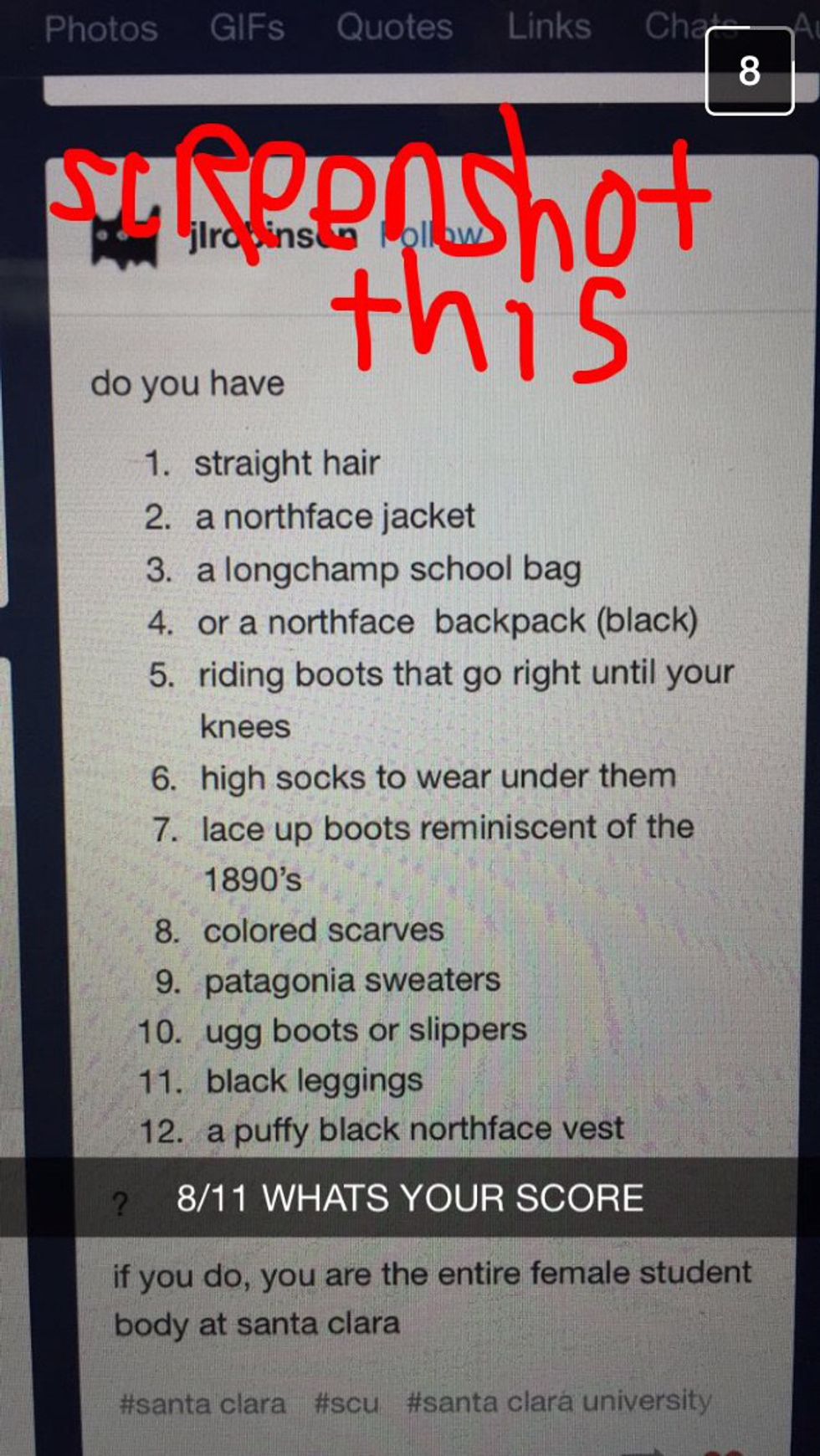
At SCU, the linguistic intelligence is also unique to the community we have on campus. The Bay Area even has it's own slang, such as "hella" or "hyphy" (prounced high-fee, meaning hyped, crazy), but don't even think about using those words if you aren't from The Bay. I've witnessed painful situations where someone from L.A. was called out for saying "hella". Not to mention west coasters hate it when you call California "Cali" or San Francisco "San Fran"– it's all about the abbreviations. At SCU, the dining hall is called "Benson", and most of the off campus houses and apartments have names such as "Paradise", "Tenspot", and "Dives". Learning the correct names for the locations on and around campus is a rite of passage. Luckily for me, within the first few days of being a freshman people were passing around the off campus housing map (pictured in the "spatial" section) via text as if it was a game of hot potato. It is the lifeline to the party scene, after all. We also have a whole category of slang related to the night life at my school: a "dab" is a "drunk ass bitch", a "kickback" is a small party of close friends that's more casual and laid back, "the hut" is our campus bar, a "mokie" is a term for weed and tobacco in a joint, and "mob" is a term used to say "let's go" when you're traveling in a big group ("let's mob to Billboard"). Vitali and Keystone also make the list for terms you'll hear referencing bad alcohol. My school is also big into labels such as "basic", "extra" (meaning obnoxious or referencing someone who needs to calm down), "scrub" (an alternative to "f***boy"), "ratch", "thot", and any abbreviation of a sorority or frat on campus ("Theta", "A Phi", "Cal Phi", "Kappa Sig" etc.). Add "AF" (meaning as f***) to any descriptor, and you're speaking our language.
3. Logical-Mathematical
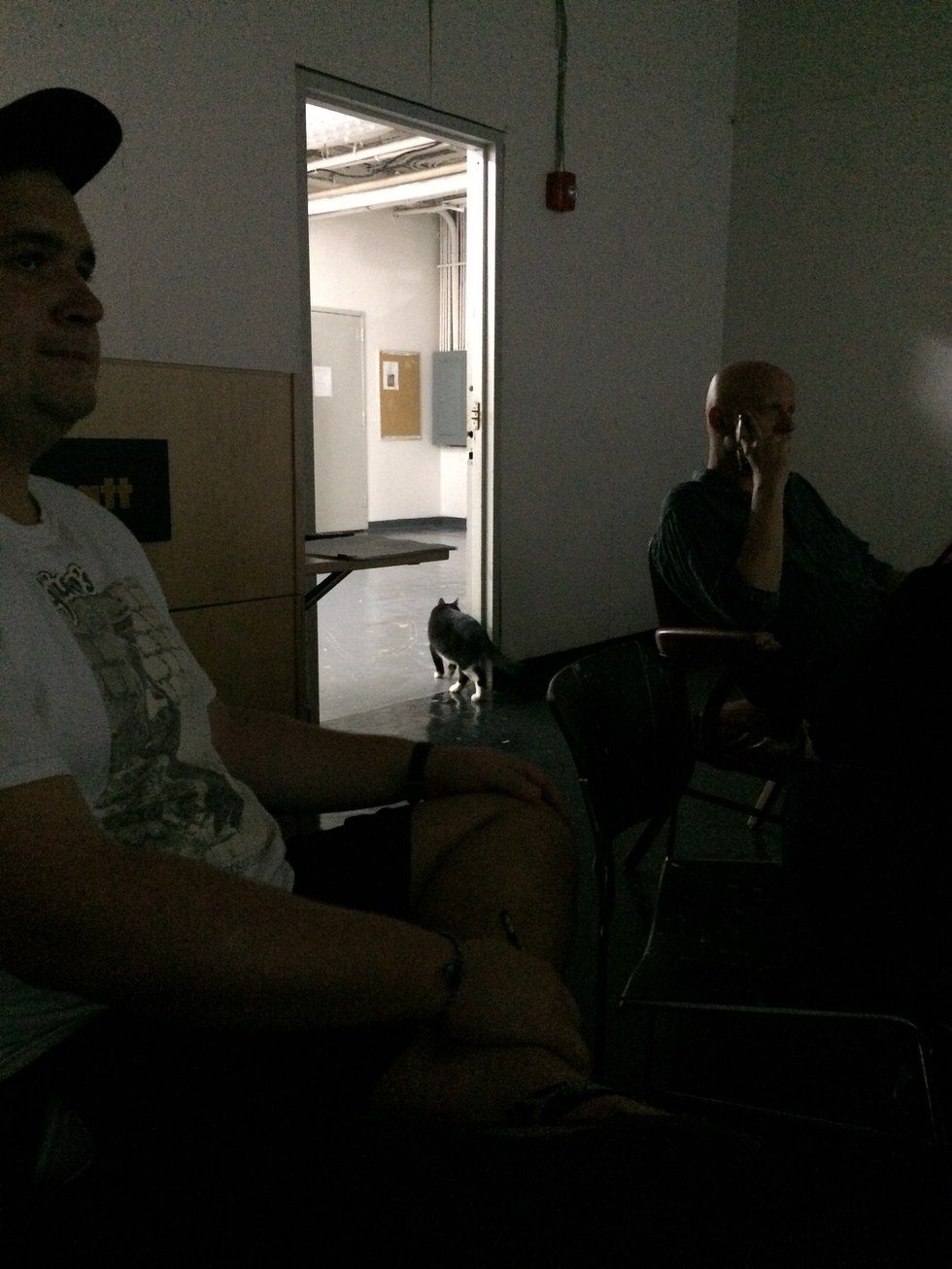
Logical-mathematical intelligence involves being able to think conceptually, reason, use logic, and explore patterns and relationships. This intelligence is the most widely tested, since many standardized tests only focus on our abilities to think logically and mathematically. In my own experience, this is the type of intelligence school systems push on students the most, whether it comes naturally to them or not. Howard Gardner doesn't approve of this practice; he believes, "A contrasting set of assumptions is more likely to be educationally effective. Students learn in ways that are identifiably distinctive. The broad spectrum of students – and perhaps the society as a whole – would be better served if disciplines could be presented in a number of ways and learning could be assessed through a variety of means." Preach, Howard! I always knew the SATs did a poor job of assessing intelligence, and I hated the idea that a test score could all of a sudden define you as a student. Luckily, Pratt doesn't focus as much on SAT scores as it does on the applicant's portfolio. It was refreshing to sit in on my sister's fine arts lecture, where your opinion and point of view about art matters more than your grammar or writing style when submitting a paper. Not a single syllabus mentioned which style to use when citing sources or how your grade was split into percentages for participation, exams, or papers. In fact, none of the classrooms I visited had a whiteboard or chalkboard on the wall, and most students took notes in small sketchbooks or pieces of paper (if they took notes at all). The school is so lax they even allow stray cats to walk in and out of the classroom (Pratt cats); I was the only one who even batted an eye when it happened.
At Santa Clara, logical-mathematical intelligence is emphasized within the classroom walls. Get this: philosophy is one of my least favorite subjects, but I've taken five philosophy courses while at SCU. This is due to the fact that we have a common core requirement that stresses ethics, civic engagement, diversity, the arts, and social science among others. We're also required to take critical thinking and writing courses, C&Is (cultures and ideas courses), on top of religion courses. Philosophy courses just happened to fulfill a lot of those requirements, and they tend to brush upon those subjects anyways. Within your major at SCU ,it's also important to learn all of the course concepts before moving onto the upper division classes. While all of this may seem dry, most of the professors on campus push students to think about real-life scenarios, explore the relationship between society and institutions within society, and discover new patterns or solutions to reoccurring issues. SCU is also unique in that it requires teachers to conduct their own research outside the classroom in an attempt to stimulate new course content and keep the material fresh.
4. Interpersonal
Interpersonal intelligence is the ability to interact with and understand others in an effective way. Also known as social intelligence, people with high interpersonal intelligence are able to empathize with others, are sensitive to others' moods, and have street smarts. Of course, the students at Pratt have street smarts, but as an outsider it was difficult to make a conclusion about how students interacted with each other, and whether those interactions were frequent or deep. One thing that jumped out at me the second I stepped foot on the Pratt campus was seeing students sitting together in groups on the lawns – on the first day of school. I was impressed that even on the first day of school students were meeting up again so quickly and exchanging hugs or enthusiastic greetings. The environment in the classrooms was a different story. Students would walk in silently, sit down silently, and wait patiently until the teacher arrived. No one made an effort to introduce themselves or even talk to the people they knew from last year, and no one left the room together or made plans to meet up later. I even made an effort to talk to a boy my sister said she knew from last year, and that conversation didn't last long. My sister also said she knew a girl in her class and wanted to ask her about a previous class they took together, but never followed through. It seemed as though either everyone was there to do their own thing, or the awkward, reclusive artist stereotype was real and rampant at Pratt. Some of her classes were more lively than others; students would talk quietly amongst themselves or sit near friends, but I got the sense that the classroom wasn't a place to socialize – this was reserved for the many smoke breaks students would take throughout the day. It makes sense for a campus such as Pratt to feel a little disconnected when their sports program is limited, and their club and Greek life presence is almost invisible with the exception of a few fliers displayed on bulletin boards. Or perhaps my observations were skewed due to the fact that it was the first week of school.
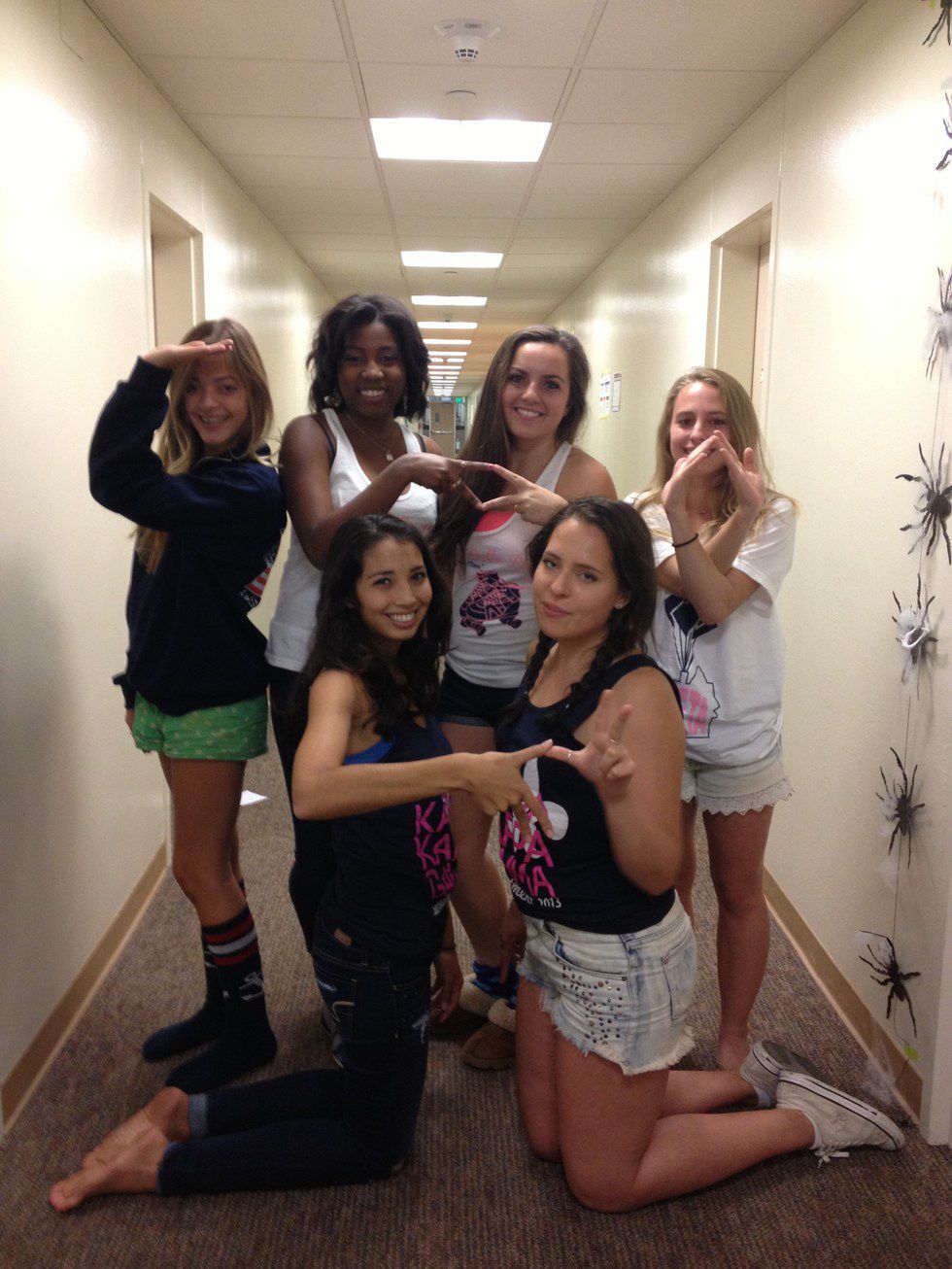
And then there's welcome weekend at SCU. Almost every off-campus house throws down, and freshman are encouraged to visit each one as a celebration of the campus community coming back together after the summer. You'll also hear people screaming "Wake up Swig!" to the freshman dorm on campus, a tradition that unfortunately lasts all year. This past year campus safety planted security cameras on our bronco statue after we developed a new tradition of "riding it" late at night. Surprisingly, their Segways are rarely fast enough to catch students, even when drunk. There are club fairs throughout the first week of school, and Greek life starts the recruitment process soon after. The soccer teams usually have their opening games, and intramural sign ups fill up fast. Going to eat at Benson becomes an activity you do with your whole floor, and it's very common for people to sign up for the same classes as their friends to make studying less lonely. There's even a campus wide Facebook page called "Runner", where you can ask fellow students to pick up food or groceries, take you somewhere, or lend a hand moving heavy objects for a negotiable fee. YikYak also has a heavy presence on campus, but like any anonymous app it's become controversial and isn't always a positive communication platform. SCU is often criticized for feeling like high school due to its small size and different social groups, but at the end of the day, we all look out for fellow Broncos.
5. Intrapersonal Intelligence
Intrapersonal intelligence is the ability to know yourself; how in touch are you with your feelings, interests, goals and anxieties? Gardner makes the distinction that it's not about your career goals, but concerns your place in a complex society and your ability to make consequential decisions. Just walking around the Pratt campus, you can tell that many people possess high intrapersonal intelligence. Not only do students walk with confidence, but their personal style is extremely reflective of their personality, major, and soul. I even felt pressured to express myself more appropriately; to swap my conventional white Converse for white chunky flatforms and to dye my plain skinny jeans with bleach, or draw on them with a Sharpie. In every class, at least five people had dyed their hair. One guy shaved off part of his eyebrow, another had henna on his hand, a few girls had placed stickers on their faces, and many went braless. The "basic" but easy style I developed in California was lame compared to the girl I saw walking on campus with rainbow hair, or the boy sporting round, mirrored sunglasses. There was a strong sense that everyone knew who they were, and if they had any doubts, you can bet they were open to experimentation. It was intimidating to say the least, especially because I didn't have any tattoos or piercings to show off. This intrapersonal intelligence is probably what makes these students so successful in the art realm. Everyone has a different technique or medium, and only they are able to sense where and when they've made a mistake – unless your teacher spots it first and wipes your canvass clean with paper towels before you can say "hipster". And yes, some teachers warned this could happen (one teacher even told us that it's possible we may accidentally run into our paintings, as has happened in previous years). The ability to know oneself so deeply also comes with its setbacks. The students at Pratt are under constant pressure to develop and refine their skills, and will often spend countless hours in the classroom perfecting their creations. This explains the smoking, odd sleeping hours, and personal quirks.

As a Jesuit Catholic school, students at Santa Clara are highly encouraged to focus on intrapersonal intelligence. Our University's motto is "competence, conscience, and compassion", and being a "bronco" comes with having many values and high morals. Almost every class I've taken so far has assigned a paper or project that has either asked students to talk about something that's important to them, or to reflect on their position in society and how to use that role to solve problems or help others. There are many forums on campus that encourage students to discuss topics such as "being black at SCU", or "being LGBTQ at SCU", and the religion course requirement is meant to get students thinking about the bigger mysteries in life. As a small school, students tend to build their identity according to the clubs or Greek life they're involved in, the dorms they live in, and the places they come from. As a freshman, I struggled with my intrapersonal intelligence at SCU; I felt I had to join organizations and find a group of friends to align myself with in order to define who I was to the rest of the community. I did things I told myself I would never do, and felt more lost and alone with every mile I was away from home (3,000 total). Unfortunately, this is the reality students face at a small school such as SCU, and developing my intrapersonal intelligence wasn't a fun or easy experience. I joke that I was forced to declare my major at the end of sophomore year because I kept getting passive aggressive emails from the school about how my records were going to become inaccessible if I didn't make a decision. Luckily, the peer advisors we have on campus provide support to students like me who struggle with figuring out which path to take, and which consequential decisions fit the aspirations and goals we have for ourselves. Looking at my campus, it's hard to tell how many people have advanced intrapersonal intelligence and how many don't. Social media helps us mask our insecurities so we can appear as though we're having the time of our life, even when we're miserable. In other words, we can fake our intrapersonal intelligence. In the end, we aren't just fooling other people; we're fooling ourselves. My advice to the incoming freshman would be as follows: everyone says freshman year is going to be a blast, but no one ever mentions how hard it is to find your place in a sea of 5,000 other people. The best thing you can do for yourself is figure out what makes you happy on or off campus, and to bring a friend with you to do whatever that may be any time you feel lost. Suggestions: In n Out, beach trip, going on a run, or buying a pack of Hubba Bubba Gum and having a bubble blowing contest–works every time. 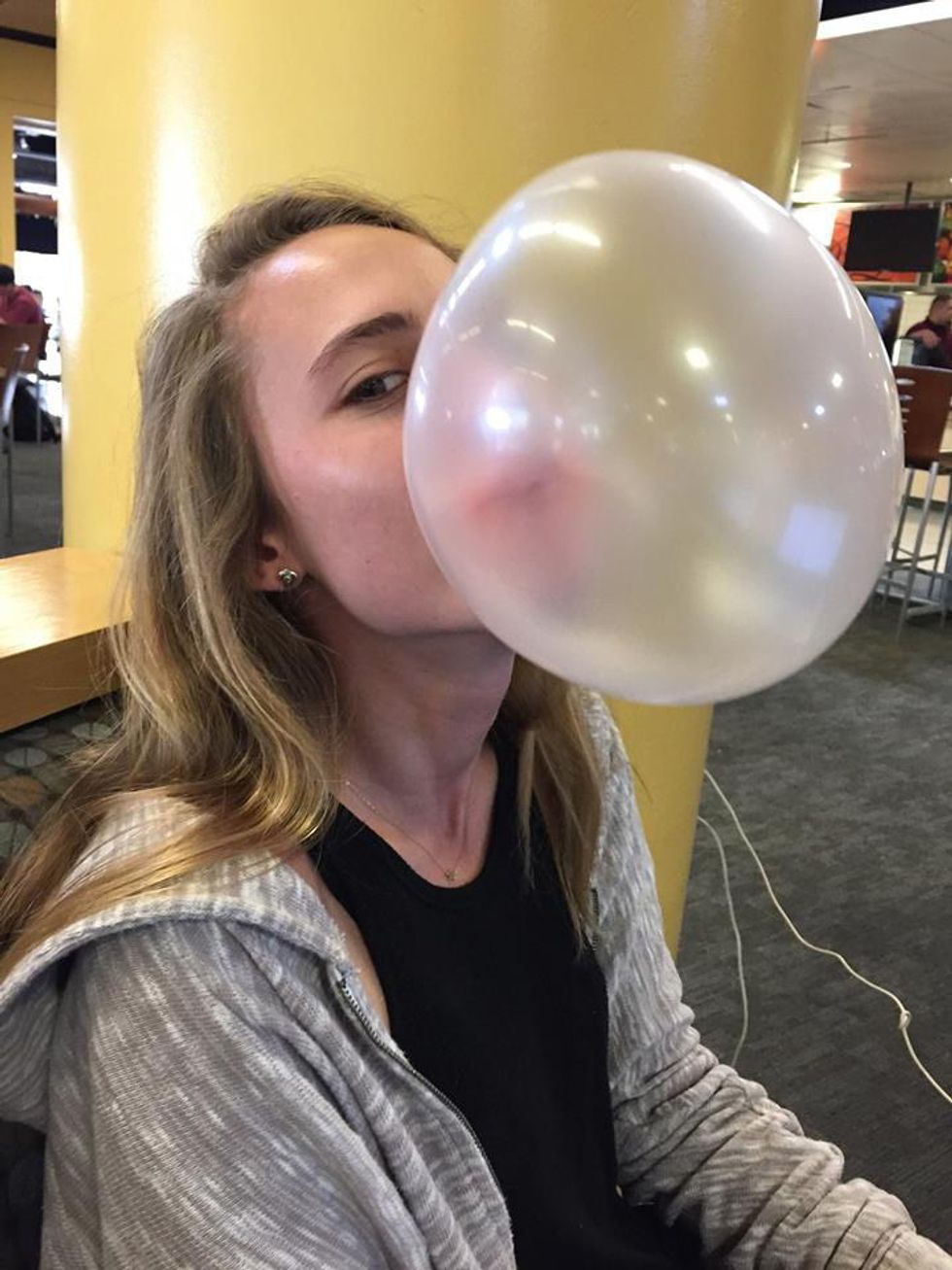
6. Naturalistic
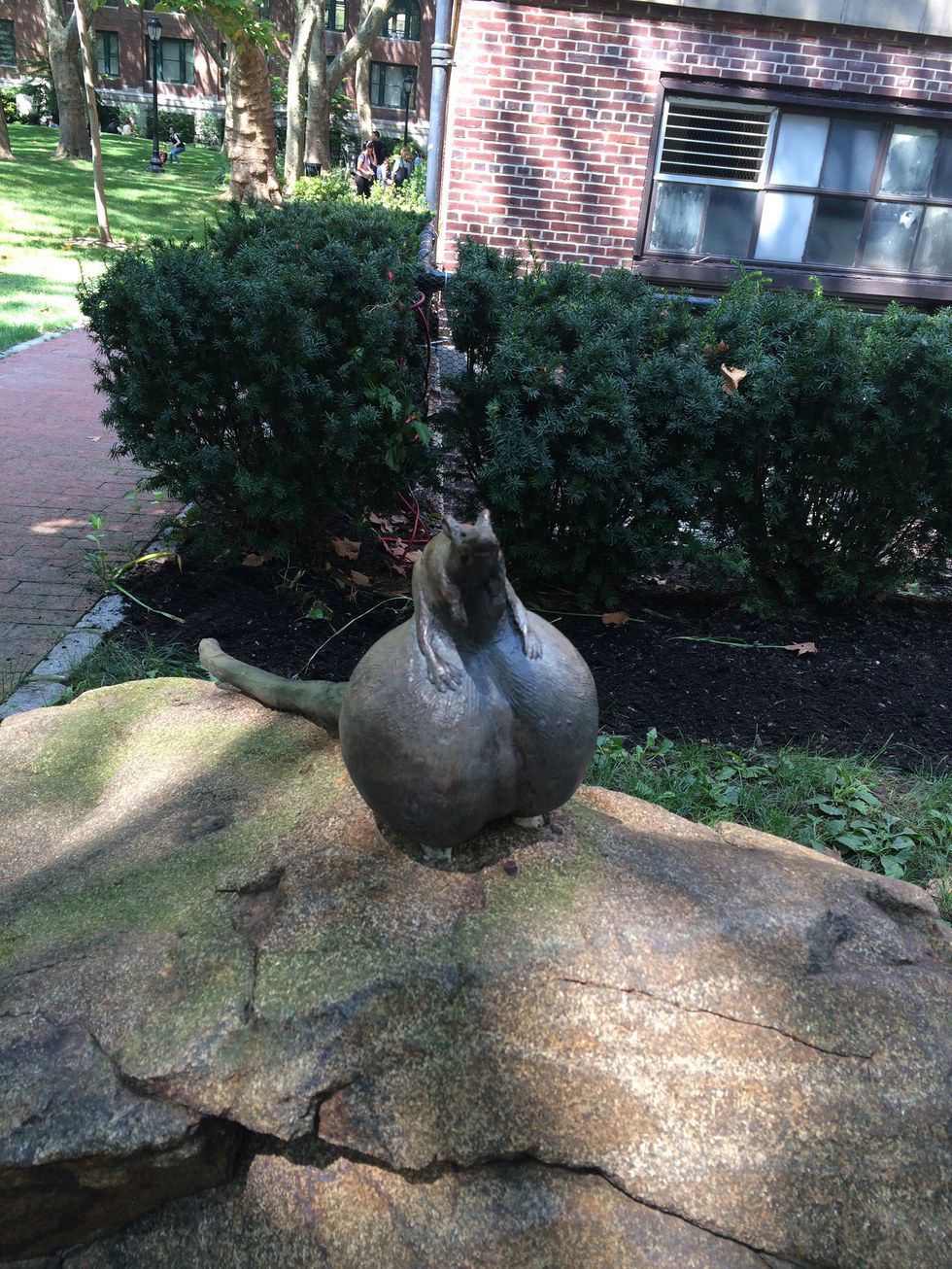
Naturalistic intelligence is the ability to understand nature; being able to distinguish flora from fauna and possessing the skills to make consequential decisions in the natural world, as a hunter or gatherer would. I like to think this intelligence concerns being in tune to nature and familiar with the living environment around you. My household isn't religious, but we do often say we believe in G.O.D., the Great OutDoors. But don't be fooled by my family motto or the fact that my favorite show at the moment is "Naked and Afraid"–people who know me know I hate camping and my fear of spiders is what keeps me from wanting to travel to Australia one day. Fortunately (or unfortunately) for Pratt students, they don't need to concern themselves with these worries about nature due to the fact that they live in a concrete jungle. The only green spaces I discovered while in Brooklyn was Fort Greene Park and the lawns on the Pratt campus. However, as I mentioned previously, the students seem to take advantage of the limited green space by sitting in the grass or hanging out by (or on) the sculptures within the lawns. I think it's safe to assume design students have a high level of naturalistic intelligence based on the fact that they know how to use space effectively, whether they're designing buildings or filling a canvass. You could argue landscaping is an art, and my sister usually has a few comments to make about the placement of structures or trees in a particular space when we travel. However, it's doubtful her comments are made because she's concerned about the natural world and the flora and fauna within it. I think she's just highly spatially intelligent. So as not to dismiss naturalistic intelligence for spatial intelligence, however, I'm sure many Pratt students also find inspiration from the little nature they can find in the city, or from places they've discovered elsewhere. For example, the picture below is a sculpture from Pratt titled, "Rat Sitting on His Laurels" and is a comment on how humans " anthropomorphize animals, bringing to them the charm of a teddy bear."
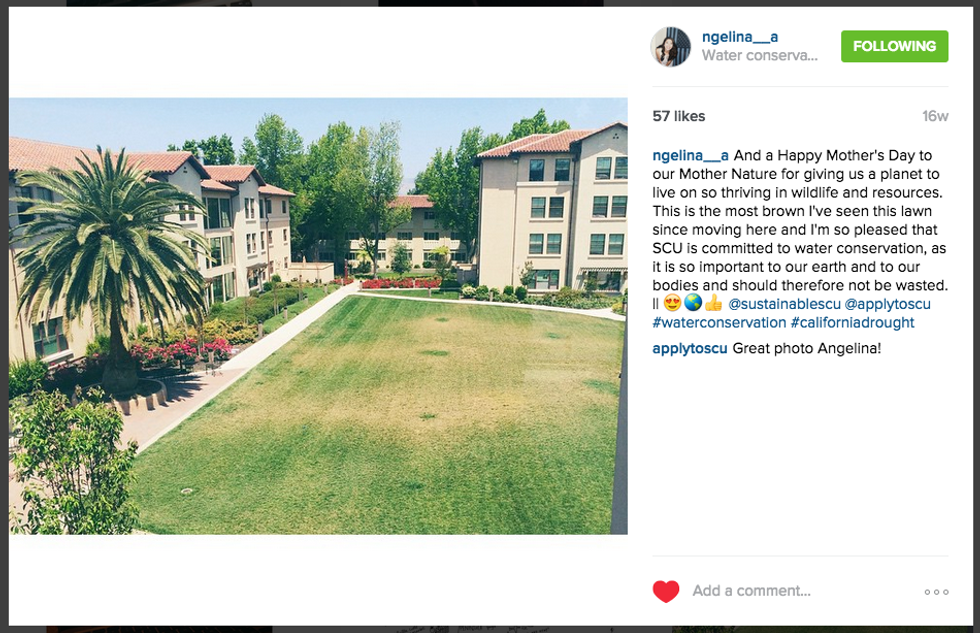
SCU students posses high naturalistic intelligence almost by default. As most people know by now California has been experiencing an extreme drought which is evident on my campus. Since many students at SCU come from other parts of California, living with the drought is a very scary matter. There is an urgency to conserve water on my campus, from students scolding other students for taking long showers to the school turning off any fresh-water fountains and only watering lawns with recycled water. I've even been scolded for not finishing my glass of water at a restaurant! However, many students are still unhappy with SCU for watering the lawns on the historic part of our campus with fresh water almost every night. Many students have been vocal about the need for SCU to get over our landscaping obsession and deal with the drought in a realistic way. Since many students come from eco-appreciative states such as Washington, Oregon, and Hawaii, environmental awareness is highly visible on our campus whether students are throwing a huge Earth Day celebration or demanding the school divests from fossil fuel production companies. One of our biggest clubs on campus is "Into the Wild", the University Wilderness Program that coordinates backpacking excursions, rafting adventures, camping and skiing trips, zip lining activities, and day hikes for any of its members for a small fee to help pay for transportation and equipment. We have a community garden called the Forge, in which many students enjoy volunteering or using as a place to monitor experiments. Often many professors even get involved with any environmental protests in the area and actively encourage students to participate. Earlier this year our campus finally went tobacco-free, our gyms have machines that are human powered, and every year SCU has a team of students participating in the Solar Decathlon competition sponsored by the U.S. Department of Energy. The Swig Residence Hall has a floor dedicated to sustainable living, called the SLURP floor, which has been responsible for placing compost trashcans all over campus and instituting eco-trays (environmentally friendly take-out boxes) into our dining hall.
It was fun to make a lot of assumptions and generalizations in this article because Pratt and Santa Clara are very different in so many ways. Most importantly though, both schools have created vibrant and stimulating learning environments. They just have different intelligences.