“I hadn’t heard my name in two years.”
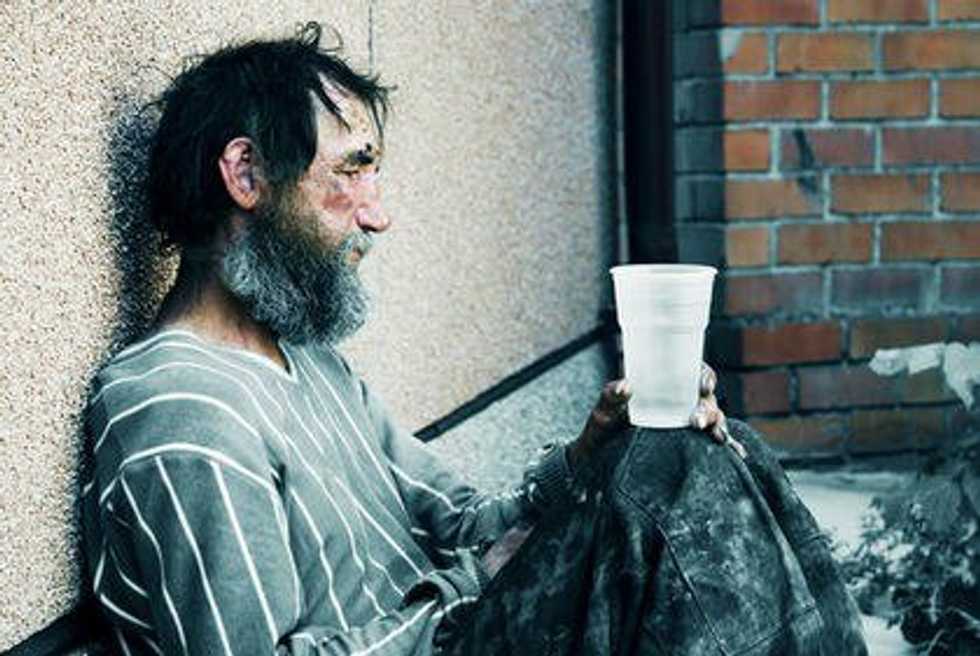
I wonder what that’s like, living apart from your family. Returning every night to a cold bench or a street curb to sleep. Spending two Christmases totally alone. Going through birthdays unremembered. Sitting on a rigid sidewalk day in and day out, as strangers pass by and look at you like you're dirt. Not hearing your name in two years.
Alan knew exactly what that felt like.
I recently had the opportunity to listen to Alan’s story of his six years of homelessness, and though I mourned his every word, what struck me hardest was that he hadn’t heard his name for two years. I think I would have lost my mind.
The worst part about his experience with homelessness, Alan recalled, was the mortification of saying ‘hello’ to a passerby and receiving a glare in return, or worse, a diversion of eye contact. On the flip side, his best day on the streets was the time a kind woman took a few minutes out of her day to greet him, ask him how he was doing, and buy him a cup of coffee.
And ask him his name.
What a simple gesture of personal attention that can turn someone’s whole day around. An effortless, yet caring affirmation that might change someone’s life. A small act of love that can truly move mountains.
Another gentleman I met, named Steve, who experienced homelessness for fifteen years, could vouch for Alan. The pain of being purposefully ignored and seemingly invisible for years deeply damaged his already mangled heart.
“Homelessness sucks, there’s no way around that,” Steve told us. No one would willingly choose such horrific living conditions. But it was the heartless public that made homelessness for Steve absolutely unbearable.
It wasn’t about the money, either. Though they desperately needed it, Alan and Steve both expressed that they didn’t expect people to give spare change all the time.
But “it takes one second to nod your head in my direction, make eye contact, and acknowledge me as a human being.”
According to Steve, “It’s not rocket science.” He emphasized how truly simple and easy this interaction could be, if one simply took the time.
“Talk to me like you would to a friend,” Steve continued. “If you don’t have any money on you, say ‘Hey man, I’m sorry, I’m a broke college student and I don’t have any extra change, but I’ll pray for you!’”
It's time we stop making excuses for our incivility. It’s time we start treating people like Steve and Alan as friends, instead of what they’re used to, which aligns more with dirty animals, or diseased monsters, or worthless objects.
Homelessness can happen to anyone, I learned. Alan, for instance, was making six digits before his bout of homelessness. All it takes is an onset of illness, a drug addition, a family split, a period of domestic violence, a few missed payments. Homelessness does not discriminate. It plagues all ages, races, professions, families, individuals, veterans, you name it. If, for you, the possibility of homelessness is not even thought, know that for most people living on the streets, the concept never crossed their minds either.
I had the pleasure of meeting Steve and Alan during my school’s Hunger and Homelessness Awareness Week, an annual campus tradition of service, education, and advocacy, that I helped lead this year. Steve and Alan were speakers from the National Coalition for the Homeless and helped me understand how fast one can fall into homelessness, the terrifying realities of these circumstances, and the privileges I so often take for granted.
A group of students and I discussed privilege during a Solidarity Sleep-out, in which we spent one night outside on cardboard boxes to express our unity with the 500,000 people in our country and the millions more around the world who don’t have a place to stay on any given night.
One boy in my discussion circle quoted football coach Barry Switzer. “Some people are born on third base and go through life thinking they hit a triple.”
And he’s right. In this society, the privileged are positioned so that success is the reality. Making money and thriving socially and achieving greatness and hitting home runs is just expected. But don’t mistake your privilege for pure hard work. Don’t mistake this innate advantage with superiority in skill and work ethic. Basically, just because we have privilege does not mean we’re all that and a bag of chips. It means we happened to be born in favorable circumstances based on socioeconomic status and societal structures already in place. Just like people experiencing homelessness happen to fall into less promising situations. And just as they don’t deserve their plight, we don’t necessarily deserve our excessive advantages.
Something everyone deserves, though, is equal respect. Financially stable people are no better than those experiencing homelessness; it’s time they start acting like it. And although it's important to work to eradicate homelessness as a whole, small, everyday gestures can also have significant effects on the lives of the homeless. Next time you see a homeless man or woman on the street, I challenge you to tip your hat and say ‘hello.’ Or even better, ask them their name. You never know when a simple acknowledgement will brighten somebody's day or give someone the encouragement and stamina to push on.
Because everyone deserves to feel loved. Everyone deserves to hear their name on a regular basis. And above all, everyone deserves a place to call home.