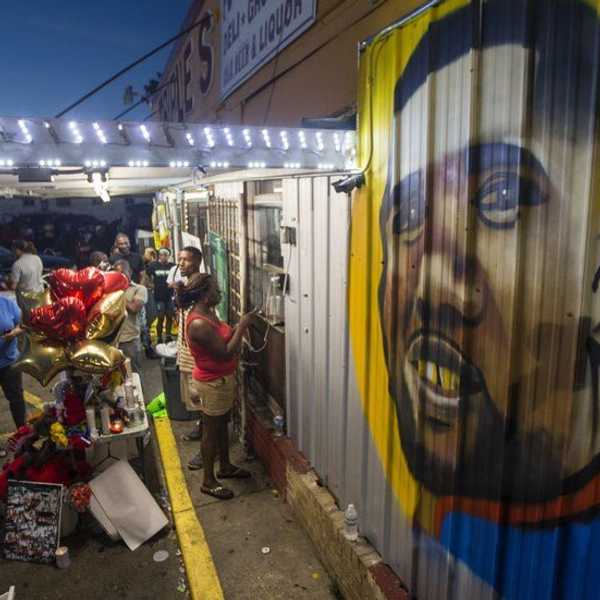

Within the past few days, everyone has heard the horrific and angering stories of Alton Sterling and Philando Castile, two African American men who were fatally shot by police for committing violations as minor as selling illegal CDs and having a broken taillight. This is not the first time we are hearing dreadful stories of racially-based police brutality; incidents like these are becoming common place. We live in a society still so obviously and unfortunately divided along racial lines, so hearing claims that we live in a post-racial society enrages me.
Yes, slavery has long been abolished, schools are no longer segregated, and our nation's president is black. Still, three-fourths of Hollywood actors are white, racial slurs are casually used in daily conversations, and people of color are being negatively stereotyped and fatally hurt by police for committing minor crimes. Racism may have improved, but belief that it is over stems only from the extreme privilege that allows white Americans to ignore the existing racial issues in our country.
Those who believe in the reality of a post-racial America tend to deny the significant correlation between the issue of racism and police brutality. This correlation can no longer be denied once it is realized that black people are statistically three and a half times more likely to be killed by the police than white people. In addition, unarmed black men are seven times more likely to be killed by police than unarmed white men.
Our justice system and general society have failed when colored men like Samuel Dubose, who was missing a front license plate, and Eric Garner, who was illegally selling cigarettes, and many like them, were shot and killed by police officers for their minor crimes. Meanwhile, Dylann Roof, a white man who committed a mass murder of innocent churchgoers, was safely escorted from the crime scene to be given a fair trail. Brock Turner, a white man who sexually assaulted an unconscious woman, was only sentenced to six short months in prison and was even pitied for the damage done to his athletic future. The existing stereotype that profiles innocent African Americans as criminals is ridiculously unjust, and yet it still exists, five decades after the Civil Rights Act ended segregation in America.
Racism exists beyond a lack of legal civil rights. People of color are constantly misrepresented in society. Believers in a post-racial America see racial discrimination as extinct as long as we have passed the days where African Americans were enslaved, Native Americans were being slaughtered in mass genocide, and Chinese immigrants were banned from entering the country. But in reality, regardless of its gradual improvement, America has in no way been wiped clean of racism.
Over the last decade, Islamophobia has become an epidemic evolving from fear and enmity. The September 11th terrorist attacks ignited this xenophobic fear and its only grown stronger as we've gotten further away from that fateful day. The few dangerous Muslim individuals who contributed to these hate crimes misrepresent an innocent minority group that desires nothing but peace in their lives. Most people find no problem generalizing the Muslim population based on the actions of some extremists. However, Christian extremists like Jim David Adkisson, who committed a mass shooting at a Universalist Church, and Eric Rudolph, who bombed several abortion clinics and a lesbian bar, are not given nearly as much attention in the media and are not portrayed as representative of their religion. This is because white privilege still exists in America, and people of color are seen as outsiders and therefore subject to stereotypes.
Latino Americans have also been stereotyped and prejudiced through media and politics. There is a consistent stereotype of the "Hispanic domestic" strengthened in popular television and film that portrays them as maids or gardeners who exist to serve affluent white Americans. This depicts the minority group as having lesser value than whites and promotes that misconception among the public. Mexicans, in particular, have experienced greater discrimination recently through Donald Trump's characterization of Mexican immigrants as "unwanted" and "criminals". His words have evoked racist feelings that many Americans share against Latinos. Mexicans have become dehumanized and are viewed more as an illegal problem and less as human beings trying to find work and provide for their families. The color of their skin should not separate them from white Americans who are also human beings with similar goals, interests, and purposes.
While we have progressed since the 19th century, America still has a long way to go in its road to racial equality and the extinction of prejudiced discrimination. The examples I have provided are minuscule compared to the amount of discrimination and hate many minority racial groups experience on a daily basis. Our legal system is greatly flawed, our politicians encourage racially-based hate, and our society still possesses a level of cultural segregation between groups.
When one has white privilege, it is easy to believe that racism is now obsolete in the country, since we do not experience it firsthand. However, it is crucial to recognize that people of color still constantly struggle with racism every day in America. Use your privilege for good: do not go along with stereotypical slurs when you hear them, be aware of racial injustices, and most importantly, do not naively believe in the nonexistent and utopian concept of a "post-racial America".