Late last year, I was at a house party chatting with a guy I had just met. We were really hitting it off: he was funny, interesting, and very charming. He offered me a sip of his drink, and I declined. Over the course of the next hour or so, he continued asking if I wanted some of his drink. He also offered me some of his pizza, so I truly believe he was just trying to be polite. Eventually, I told him that I can't share drinks, or food, because of my intense fear of germs. We continued talking about this, and I let him know that I had been diagnosed with obsessive-compulsive disorder earlier in the year.
There were so many potential scenarios for what could have happened next. He could have:
a. moved on from the subject
b. apologized uncomfortably and slipped away
c. asked me more questions about OCD out of genuine curiosity, or
d. explained to me how he "is" OCD too, because his room is always clean and he's the only one who does dishes in his apartment
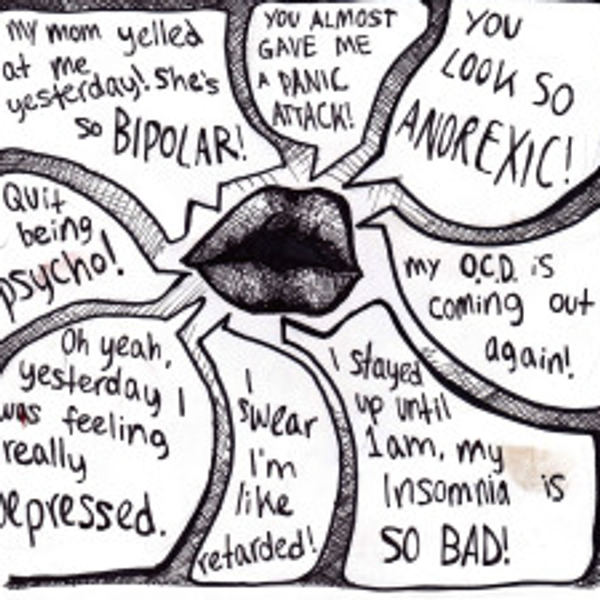
Can you guess which scenario actually occurred? If you said d. then congratulations! And this isn't the first time this has happened. Whether I'm at a party, in a class, or scrolling through Facebook, phrases like this are thrown around all the time. Online quizzes testing your "OCD skills," memes belittling those who actually suffer, hell, even Googling OCD and 90 percent of your results show just how misinterpreted and misunderstood OCD is. Many people don't comprehend how problematic it is to claim to be SOOOO OCD, or any mental illness for that matter. And as someone who suffers, it's downright infuriating.
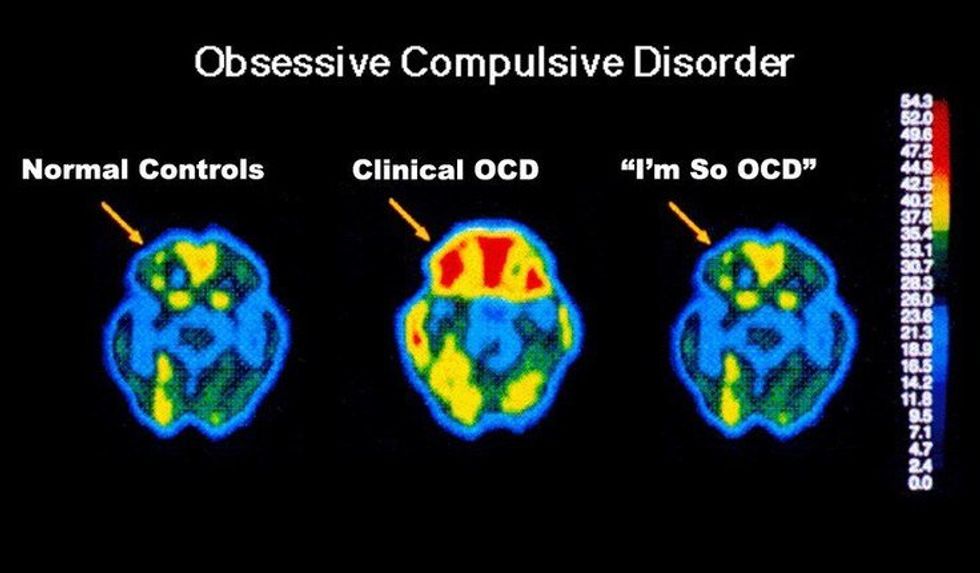
First of all, you can't be so obsessive compulsive disorder. OCD is not an adjective. It's something you have, not something you are. Second, liking things a certain way or always being clean and organized doesn't necessarily mean you have an illness. As humans, we strive for perfection. But perfectionism does not equal crippling, life-altering disorder.
Why is it that people are so quick to judge, belittle, and doubt those who actually and truly suffer from a mental illness, while at the same time using said illness as a descriptor for themselves? When you don't actually have a mental illness, it may seem mysterious or quirky. Even the media often portrays characters with mental illnesses as eccentric, silly, and not to be taken seriously. And the illness is more-likely-than-not only present when the plot needs it to be. This so-called representation is not only inaccurate, but hurtful to those who suffer. Mental illness is serious, and it needs to be treated as such.
Claiming to be OCD can invalidate those who actually suffer. Many times I've caught myself questioning my own obsessions. Am I overreacting? Are my compulsions not as bad as I think they are? I'm sure others can relate: we feel confused, overdramatic, angry, and even embarrassed. When I finally feel like I have come to terms with this disorder, I'm back to square one.
OCD is a disease. It ruins lives, friendships, relationships, and dreams. It's not trendy, it's not hipster, and it's not fun. I've had really fucking awful days because of it, and it continues to affect me even with medication and therapy. I'm not here to sugar-coat or make light of the "bright side" of OCD. There's no bright side. You learn to cope with it, or you don't. It can consume you, and it can kill you. There's nothing cute about it. Stop minimizing our very real struggle.
Yes, I have an illness. But I am not an illness.
I would never wish a mental disorder on anybody, but I can't help but wonder: if someone without a mental illness could experience one just for a day, would he or she realize the severity of it? If you could step into my shoes, would you leave with a better understanding of what OCD actually is? Would you stop throwing the word around carelessly every chance you get? Would you stop questioning me about whether it's real or not? Would you do more to allow yourself to learn about mental illness? What would you do?