This year’s election is a gruesome mutation of the democratic practice. Our democratic system based on the principles of fair representation and equal opportunity has been mangled into a gross political satire, leaving voters feeling as if they have to choose between two evils. However, I would like to argue that choosing to vote for the lesser of two evils is the worst thing a voter who seeks change could possibly do. This article seeks to illuminate the value in voting outside of the two party system, and to defend the choice not to vote.
The first argument against voting for the lesser of two evils rests in the logical conclusion that a voter in a democratic system should, by principle, never settle. The entire ideological basis of democratic civilization is that the government is "of the people", meant to merely represent the population and provide for the protection and rights of that population as is deemed necessary. John Locke explains in his "Two Treatises of Government" that the individual enters into a government to secure protection of his natural rights, "life, liberty, and property" (later adapted by the framers of the Constitution to be "life, liberty, and the pursuit of happiness"), and the government exists to provide that protection, therefore implying that a government is only viable as long as it is supported and representative of the people. In understanding this, it becomes obvious that the very concept behind voting was to create a system in which individual voices were democratically represented in a way that can be used by the government to satisfy the natural rights of the population. In order to continue operation of the government, it is the civic duty of the individual to best represent their desires via the voting system. Consequently, a voter that settles in a democratic society promotes a stagnation of democratic process and also rejects the entire premise on which voting was erected; a voter who has settled cannot possibly hope to see their voice represented in their democracy as it was not ever provided in the first place.
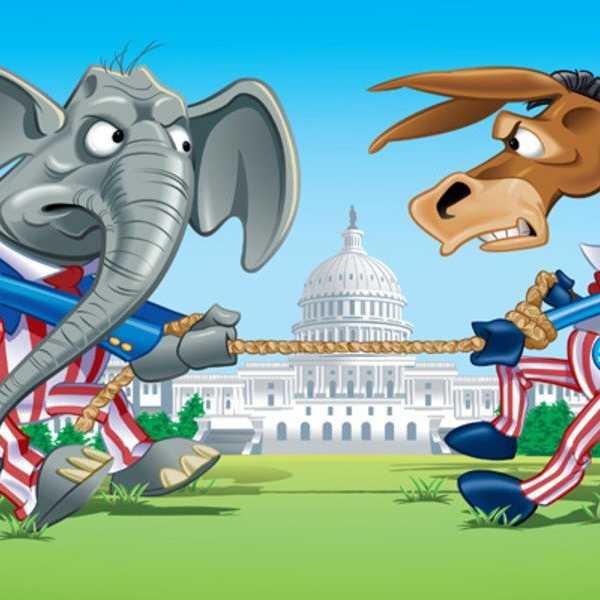
Now, the usual response to this argument is that it is almost impossible to get a third party elected. Statistically, it is very unlikely that the third party would receive a majority above 50% of the popular vote; instead third party candidates are more likely to split the population into thirds, resulting in a majority that falls under the 50% mark. In this situation, the election then goes to the House of Representatives, who would then elect the next President of the United States. The problem is, currently, there is not a single independent representative. Consequently, the bipartisan system pushes the population to instead cast their votes in favor of Democratic/Republican candidates by convincing voters that third party votes make no difference in the outcome of the democratic process. Essentially, the establishment argues that a voting for a third party is the same as not participating at all as it will never have an effect on the system.
However, this perception is dangerous for several reasons, the first of which is that it allows political parties to act with impunity. The polarization of the bipartisan system is actually in their favor in this regard; as the parties grow further apart the likelihood of them losing their support base grows exponentially smaller. As it stands, when political parties know that all voters are confined to expressing their individual opinions in a democracy only through the values of their party, they are free to act as they please because they will not loss any support. This accounts for the rapid growth in corruption on behalf of both national conventions, most recently seen in the action taken by the Democratic National Convention to stifle the Bernie Sanders campaign leading up to the primary election. If voters were willing to support candidates more in tune with their individual opinions, political parties would have less room to act with impunity and the ideals of the “people's government” would take precedent over the interests of the conventions themselves.
Nonetheless, even if voters are somehow okay with parties acting beyond anyone’s control, the most important reason we should refuse to vote for the lesser of two evils rests is that voting either direction still guarantees an outcome of evil. A voter who decides to settle for the lesser of the two accepts that evil is the outcome and, more importantly, that evil is the ONLY outcome. This is especially harmful when considered alongside the principles of democracy, as voters are casting their ballots in favor of evil when that ballot is supposed to represent individual opinion. Inherently, the voter who settles then not only accepts but legitimatizes the existence of evil in both our democracy as well as our society. This leads to a multitude of issues, most of which can probably be assumed; most importantly, voting for someone that an individual considers to be evil leads to voter apathy and further rejection of the democratic system. This is important because, as we discussed, a democratic system of government that has lost its support by the population is inherently illegitimate, considering the very principle of democracy is a government “of the people”.
This argument concerning the delegitimization of a democracy becomes important again when examining the implications of rejecting the democratic process and choosing not to vote. It is important to note that I will be addressing the conscious choice not to vote rather than those who do not participate in the process for a variety of other reasons. Voters in the U.S. are constantly bombarded with a series of reasons why voting is important, and told that if they choose not to vote then they “can’t complain about the outcome." This ridiculous for a variety of reasons. First and foremost, those who make the conscious decision not to vote are still representing their democratic voice and therefore still fulfilling their civic duty, perhaps even more fully than those who settle between evils. A conscious non-voter who understands the principles of democracy also understands that their vote is not being cast on a candidate but instead on the democracy itself. As noted before, a democratic society without the populations support is illegitimate, and the voter is simply refusing to recognize the current system as one that is legitimately democratic. It’s also important to note that the rhetoric in favor of voting is inherently favorable to the two majority parties, as explained in the argument concerning party immunity, and so the negative perception surrounding non-voters is artificially created by the system they hope to oppose. This rhetoric includes such arguments as “There are other races on the ballot," “Voting is a right people died for," and, my personal favorite, “Voting is your voice.” The first and third arguments fail to understand the very principle behind the conscious decision not to vote that was previously discussed, and the second is blatantly wrong, as people have died to protect the values of our democracy, none of which include undermining your individual voice in favor of a money-making bi-partisan system. Perhaps more importantly, this viewpoint doesn’t even consider people of lower economic status who died statistically more often to defend the democratic systems that their children can’t even access due to voting laws that make voting almost impossible for that same class. The final argument posed by the modern establishment in opposition to nonvoters is often phrased as such; if the third party option is such that it closer represents the individual's voice, why not push non-voters to cast their ballot in favor of a third party? Non-voters by their very ideals do not support the policy of any candidate currently involved, and therefore cast their ballot outside of the political system, directly voting against the current system instead of voting within the current system.
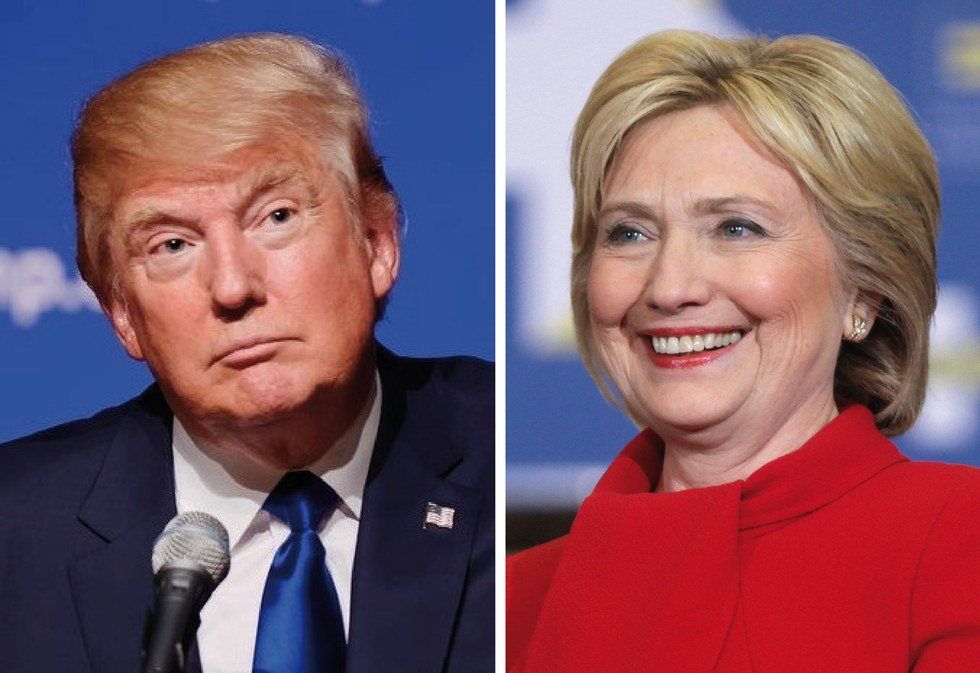
As individuals choosing the path to influence our government, we should not view democracy as a means to end, a way to elect either Clinton or Trump. This line of argumentation directly benefits a bipartisan system that seeks to maneuver the democratic principles of the United States in a way that profits the leaders of that system. Instead, we should view democracy as a process, working towards the best representation and best society we can believe. It all begins with realizing the power of your voice.