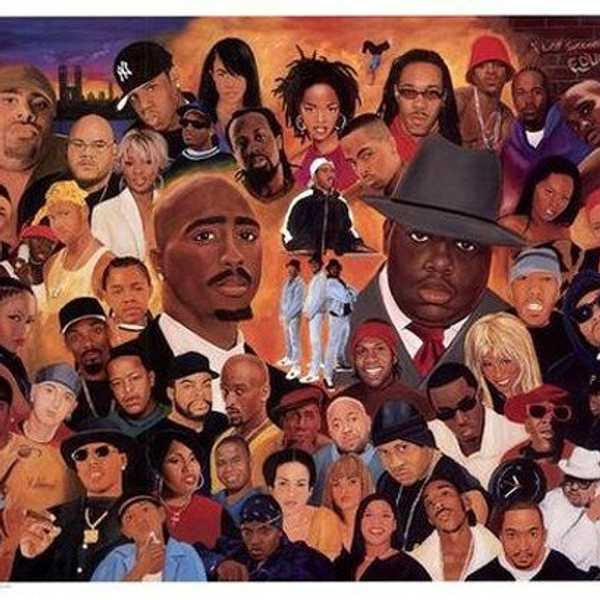
The hip-hop movement was founded on competition and uniqueness, building on the variance of styles and reputations of New York's five boroughs. As hip-hop emerged from the South Bronx and spread across the city, emcees looked to establish themselves and prove superiority.
At first, emcees would just compete to see who could rock the mic the best, controlling the crowd at the block parties or clubs with simple cadences and call-and-response lyrics. That all changed in 1981, when lyricism in battle rap was brought to the forefront. Kool Moe Dee is now an accomplished Grammy award-winning artist but his visceral lyrical assault of party rapper Busy Bee Starski at the Harlem World club changed battle rap forever.
Lines like "Hold on Busy Bee I don't mean to be bold, but put that ba-ditty-ba bullsh*t on hold" sent the crowd in a frenzy. The recorded tape of the event spread like wildfire through the streets, eventually making its way across the nation.
Kool Moe Dee wasn't the first rapper to take lyrics seriously, but that battle changed the landscape of hip-hop forever. Not only did you know have to be able to control the crowd, but you had to be willing to go to war lyrically to defend your name.
This is where the age-old debate of the definition of what a freestyle truly is comes into play. Some consider a freestyle an impromptu rhyme conceived at the moment, while others describe it as a loose rhyme written or remembered.
Through the 1980s, several rappers established themselves as top-tier emcees, but the holy trinity of Rakim, KRS-One and Big Daddy Kane reigned supreme. Although none of the aforementioned artists actually battled each other, Kane did battle Philadelphia emcee Jazz Fresh shortly before the release of his 1988 debut album "Long Live The Kane."
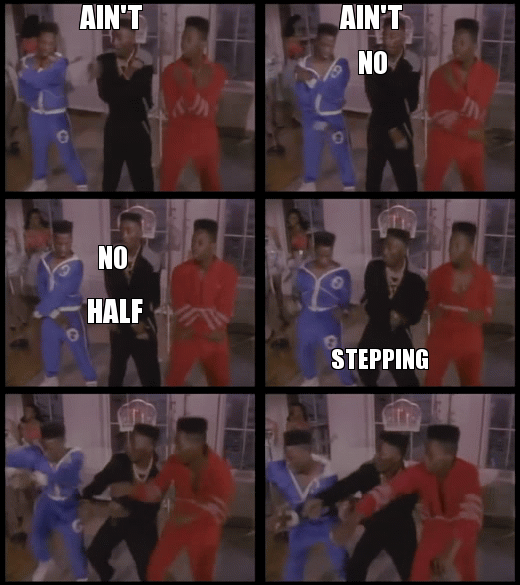
Kane electrifies the crowd in the second round of the battle with a fiery verse that would later be used on his hit single "Ain't No Half Steppin."
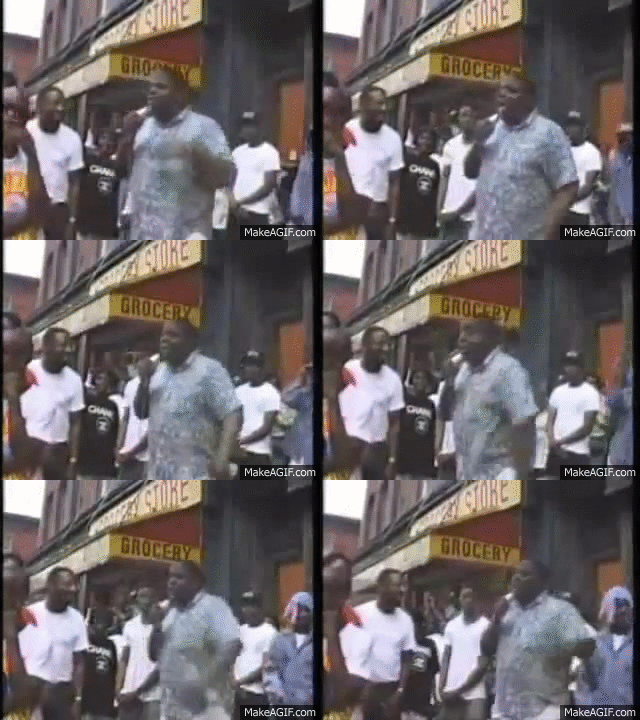
Some of the most decorated rappers of all time made a name for themselves going toe-to-toe in battle long before they had hit records. As documented in the 2009 biopic "Notorious," The Notorious B.I.G. made a name for himself in Brooklyn ripping emcees to shreds long before he was considered the greatest rapper of all time.
Before everything was broadcasted on social media, some of the greatest battles took place with no visual record, left to be tales of urban legends. The story of legendary rappers Jay-Z and DMX squaring off in a Bronx pool hall for hours has floated across the industry and internet for nearly two decades.
As hip-hop continued to lean more on lyrics, the element of battle became even more important. Record labels would test their new emcees against war-tested vets, making sure they were getting their money's worth.
In 2001, the Ruff Ryders placed their newest protege Cassidy in the ring with Rocafella signee Freeway in a battle that would become more legendary for a single phrase than the actual battle. Cassidy obliterated the unprepared Freeway, who pleaded for the producer in attendance to "put on a beat."
The battle would mark the change of an era, with YouTube allowing people around the world access to rap battles from the safety of their homes.
The 2000s saw battle rap take major leaps forward, and there was two movements that propelled it to another level. The first, was the Philadelphia DVD rap era movement. After Philadelphia exploded onto the rap scene with Cassidy, Major Figgas and State Property in the early 2000s, artists from the city vied for the same exposure. These DVDs would feature different Philly rap crews and artists freestyling, battling and participating in ciphers on camera. Many of these videos made it to YouTube, garnering millions of views and making artists household names. The most notable of these artists were Reed Dollaz, Joey Jihad and Meek Mill. The Philly battle rap scene was more hostile than the New York scene, with the emcees getting often getting physical spitting truly disrespectful, violent lyrics.
The second movement responsible for expanding battle rap was the SMACK DVD movement, courtesy of New Yorker Troy Mitchell. Simply known as SMACK, the now famous host started off by giving street rappers visual exposure. The early SMACK DVD's consisted of low-budget music videos, ciphers, interviews, freestyles and rap battles.
Many of the most decorated battles of all-time took place on SMACK DVD, thanks to Harlem rapper Murda Mook. Mook became an internet sensation battling legends like Jae Millz, Party Arty, Loaded Lux and Serius Jones. These videos went viral at a time when most families didn't own a computer.
Battle rap was starting to take off, and the television corporations began to inquire how to make a profit off of it. BET's "106 & Park" held a segment called Freestyle Friday that allowed unsigned emcees an opportunity to battle on live television. Emcees like Jin and Posta Boy became household names by destroying opposers, which landed them record deals.
MTV2 premiered "Fight Klub" in 2006, a battle rap show that featured a roster of battlers that would success of their own. Rappers like 40 Cal, Remy Ma, and French Montana all got their initial exposure trading bars on the series.
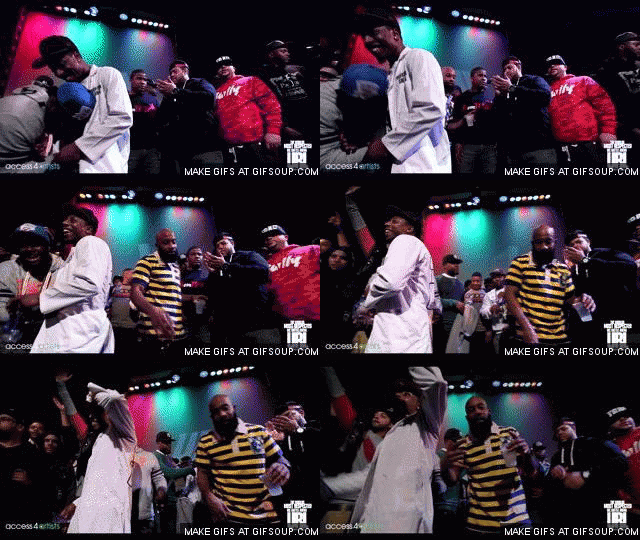
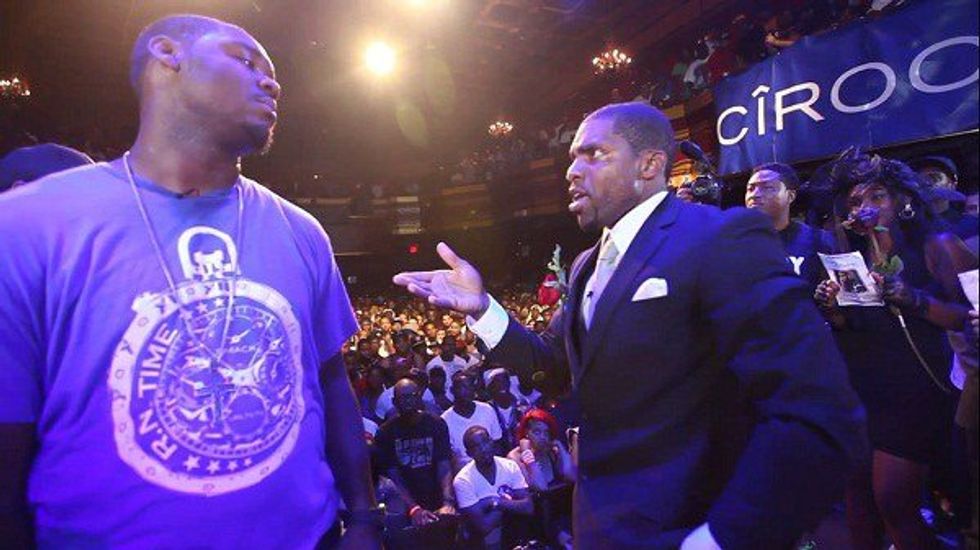
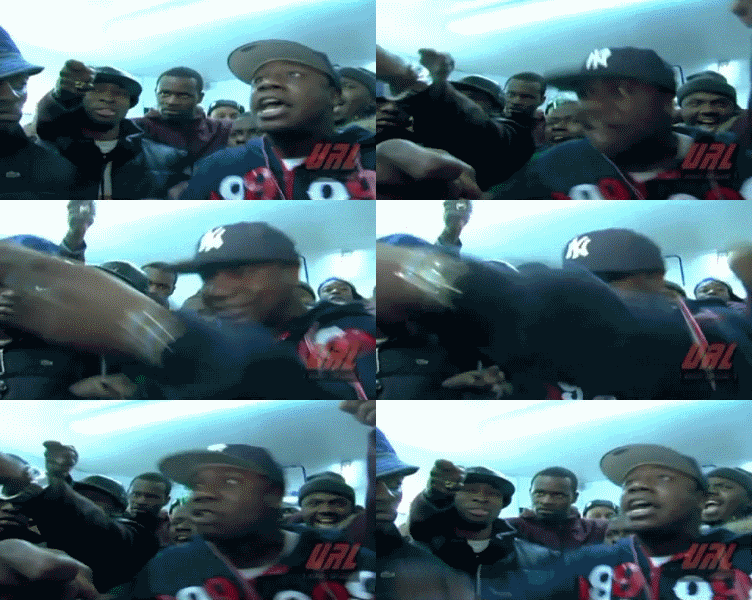
Through the mid-to-late 2000s, SMACK reinvented his battle platform, from SMACK DVD to URLTV, turning the genre into a serious profession. Expanding the genre from a regional sensation and including artists from all over the world, SMACK found success overnight. Battlers like Arsonal, Loaded Lux, Aye Verb and Hollow Da Don emerged, each with their own personalities and unique styles. Long gone were the days of stationary battle rappers who just used their words to paint pictures. Battles were pure entertainment, performed on grand stages, which members of entourages playing roles and props being used.
The success of URLTV has been imitated and duplicated, as the battle rap genre becomes oversaturated with a bevy of promotion groups and leagues. The culture is more popular than ever, with battle events being showcased on Pay-Per-View.
It's hard to imagine that the rap's ancestors would see battle rap evolving from the parks of New York to sold out shows across the nation, transcending multiple countries and different races. But if battle rappers can continue to reinvent themselves, the possibilities are endless.