
When Aylan Kurdi washed ashore in Turkey earlier this month, the Internet exploded. As the images of the two-year-old's body circulated, people around the world began to demand action.
Aylan, his brother Galip, and their mother Rehen died during a dangerous journey across the Mediterranean Sea to escape Syria. Their fate is not unique.
Syria has been ruled under the semi-dictatorship of the al-Assad family since the 1960s. When the people rebelled in the 2011 Arab Spring movement, the al-Assad family began a brutal civil war. ISIS used the opportunity to seize power amidst the fighting in the hopes of building a totalitarian Islamic caliphate. Trapped between the regime, rebel groups, and religious extremists, millions of Syrians fled their homes. The surrounding countries (Turkey, Lebanon, Jordan, Egypt, and Iraq) are currently supporting 95% of refugees, nearly 4 million Syrians.
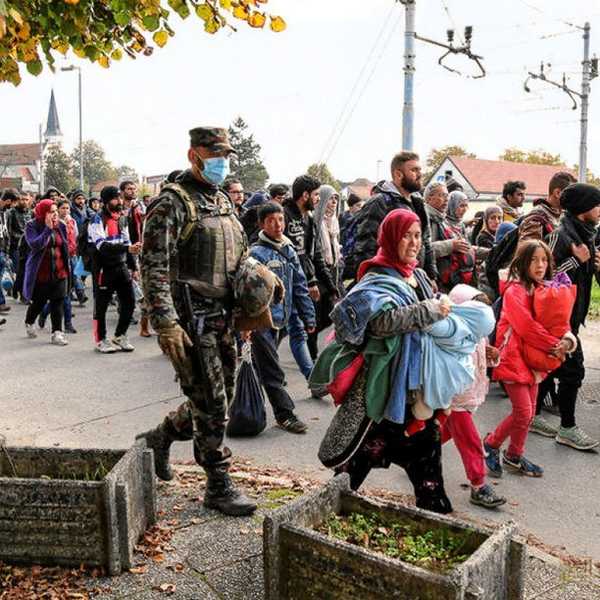
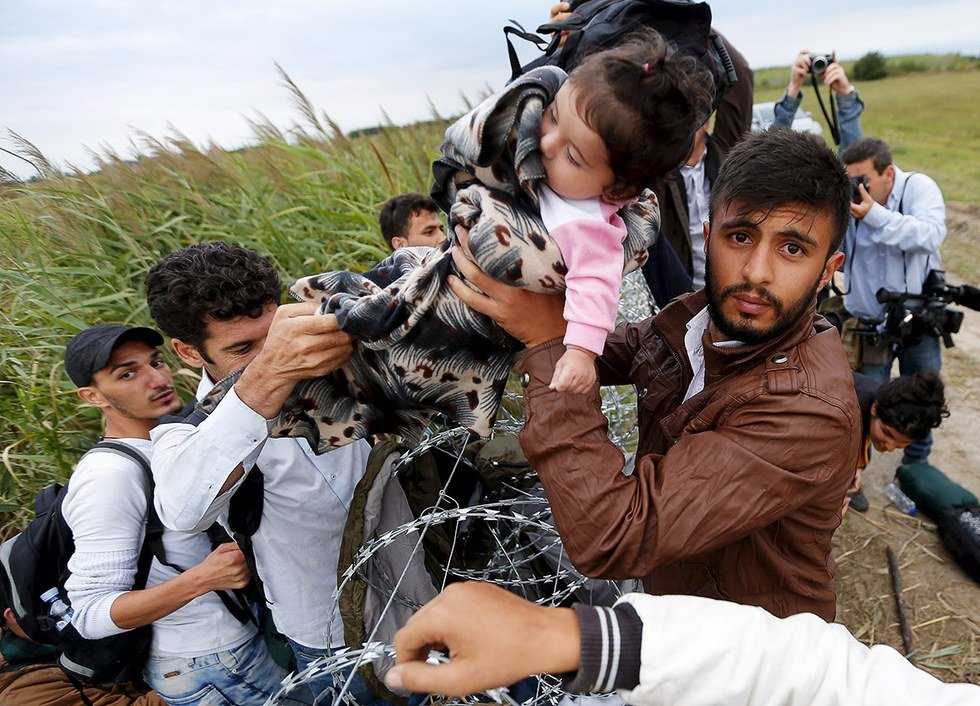
The UN was unprepared for a crisis of this scale. Refugee camps often lack food, shelter, and medical aid. Many refugees have fled to Europe, where they have been met with indifference or hostility. Enormous pressure has been put on the European border states, while many European states blatantly refuse to accept refugees.
With Aylan’s death, the Syrian refugee crisis gained new attention. Germany has announced that it will accept all refugees and is predicted to welcome over 800,000 Syrians. That’s more than the entire European Union accepted in the past year.
Meanwhile, other Western countries have limited the number of refugees they will accept. The United Kingdom has stated that it will allow 20,000 refugees in the next five years. Australia has agreed to accept 12,000 refugees, and the United States will welcome only 10,000 refugees. Compare these numbers to those of Jordan, which currently hosts over 600,000 Syrians.
But support for asylum seekers has come mostly from citizens, not politicians.
The United States has taken in 1,500 Syrian refugees since the Syrian conflict began four years ago, with another 1,300 coming in this year. The U.S. has also provided more than $4 billion for humanitarian aid in Syria since the crisis began. Of course, that’s where practical help ended and political assurances of exploring “a wide range of options” and “consider[ing] additional steps” began.
But what do our 2016 President hopefuls have to say on the matter?
Hillary Clinton advocates for a more “robust policy.” “I think the entire world has to come together,” she said. “We should do our part, as should the Europeans.” The Democratic candidate explains that a united effort will require “intensive diplomacy” to “stop the flow of refugees and try to bring some peace and security back to the region.”
Former Maryland governor Martin O’Malley has called for the United States to take in at least 65,000 refugees by the end of 2016, criticizing the current policy for falling short of American values. He has invited others to support his petition online.
Other, more conservative leaders share a different opinion. In true Trump fashion, leading Republican candidate Donald Trump has argued that the refugee crisis is a European issue, stating that we have problems of our own to attend to first. Meanwhile, John Kasich has announced that it is “fundamentally a European issue” and cautioned the United States to avoid “confusing” policies in the Middle East. Ted Cruz and Rand Paul also err on the side of caution.
Republican Lindsey Graham, however, has been more generous, citing that it is America’s moral obligation to step up its assistance. “We should take down the Statue of Liberty,” Graham said. “This is our response as a nation, just tear it down. We don’t mean it anymore.”
How do we as a nation want to be remembered? Do we want to uphold our promise as a compassionate nation, as a leader of the free world? Or will we go down in history as xenophobic cowards who refused to lend a hand? It’s time that we, as a nation, stepped up. Whether it’s through personal donations or group petitions, we need to make our voices heard.