

Last week, I published the first part of this open letter. You should read that here before this. In short, I talked about how, if your goal is just to make a short term difference, you ought to just write a check instead of going on a mission trip. If you want to gain knowledge to make the world better long term, however, that’s a perfectly good reason to go abroad. Here are some more considerations.
Service can be useful for learning
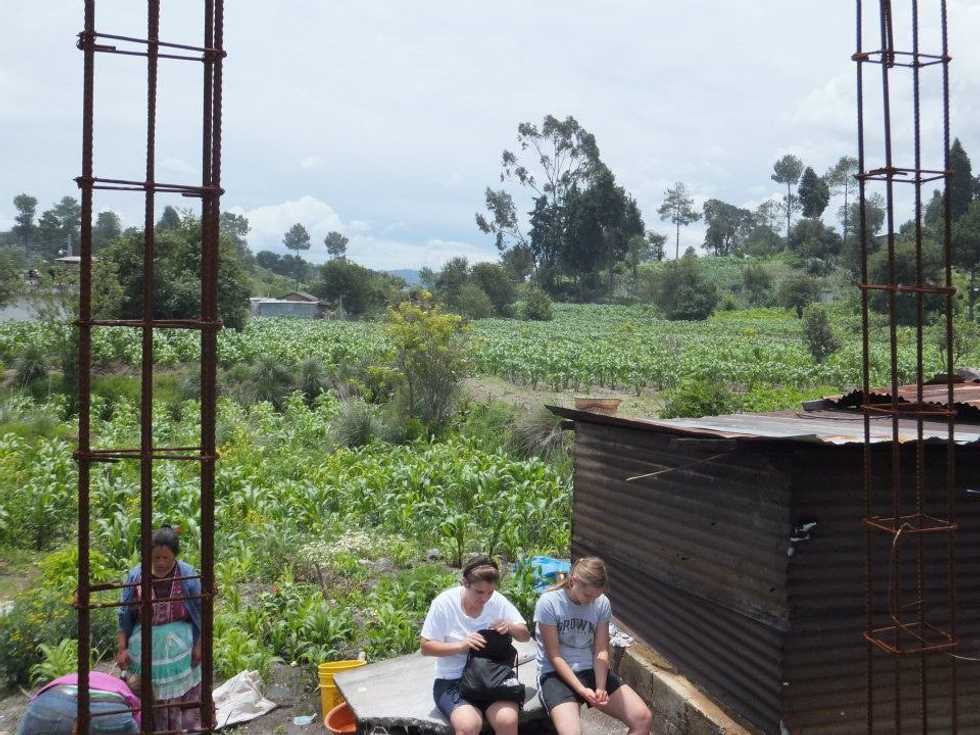
All this talk about learning over service doesn’t mean that service isn’t valuable. In fact, service is a fantastic method of learning. Anyone who has been in a service learning course or on an alternative break trip can tell you working with a population is a great way of getting to know them on a profound level. In El Salvador, we visited a prison to spend time with the 18th St. gang members there. Similarly, in Kenya, my group cared for infant in a day care center in a hospital while we were there learning about the effects of the AIDS crisis. The difference between these and Guatemala was that the focus was on service as learning rather than the service itself. Through visiting gang members in prison, I learned that what drives people to crime isn’t being a bad person, but not having opportunities to adequately support themselves legally. Through building ovens in homes in Guatemala, I learned how to cut through a cinder block with a machete.
So when you’re planning your trip, focus on your experience and learning, but include some service if there are some service opportunities that will align with your primary goal.
Doing service improperly can also be harmful
When planning service opportunities, it’s important to make sure you’re doing something helpful. When I went through the numbers of the Guatemala example, I estimated my work at worth the minimum wage of $8/hour. That’s actually a pretty huge overestimate. Differences in the value of money across countries aside, I was doing work I wasn’t qualified for with supplies the family I was serving paid for themselves. I think my work was pretty good, but another group I came with accidentally mixed too much water into the cement, effectively ruining the supplies and requiring more work to be done to demolish the sloppy mess they tried to call an oven. This is bound to happen when you’re trying to do work like building or painting that normally requires a professional.
As I said, your primary focus should be on your own experience, not how much you’re helping people right now. However, you’ve got to keep in mind that part of the hippocratic oath: First, do no harm.
Check your attitude at the end
Proper reflection after a powerful experience like going abroad is almost as important as the experience itself. You should evaluate what you’ve learned and what you feel at the end. I’m not going to tell how you’re supposed to feel, because every experience is different and you’ll likely come to insights I haven’t thought of. I will warn you about some harmful conclusions you might walk away with, and something you might look for instead.
Hopefully at the end of your trip, you’re inspired to do more to benefit humanity. This seems like it would be fairly obvious, but the problem with many purely service trips is that people come home feeling like they’ve already done their part to make the world a better place, even when, as I’ve shown, their work was likely insignificant or even harmful.
Another harmful result is if the only thing you take away from the experience is how poor the people you served are. Don’t get me wrong, it’s awesome if seeing poverty makes you think about how much you have and be grateful for it. But if the only difference you notice between your cultures is income, you should look a little deeper. Try to find something in the country you visited that you could bring back to your own to make it better. My biggest takeaway from El Salvador was the happiness of the people of Cinquera, the village I stayed in for three days. I realized this happiness primarily came from their close-knit community and how often the setup of their society allowed them to interact with their neighbors. That’s something I could take back to my community to make it better, and something I’d need to protect if I were to try to help the village develop in the future.
To recap, if you want to make the world a better place and aren’t ready to make the long term commitment to doing so well in the future, just write a check to an effective charity and call it a day. If you are, go ahead and go on that trip, but make sure your focus is on your own learning and growth: that’s the part that can only happen because you’re there. You can do service to help your learning, but make sure you’re doing something you can do properly. Finally, reflect on what you’ve learned, thinking about what you can take from your own society and the one you visited to improve each other. If you do all that, you’re well on your way to being an effective altruist.