
I find myself using the word less and less in social situations where I don’t know everyone very well. I’m worried how people will react, how they will view me because of it. I assume this must be similar to saying "Voldemort" if I lived in the Harry Potter universe. Will there be a huge outburst if I use it? Every time, I try to find ways to test the waters so I can avoid an argument I’ve had one time too many.
The word? Feminism.
I think it’s time we had a discussion about why this word has become so polarizing.
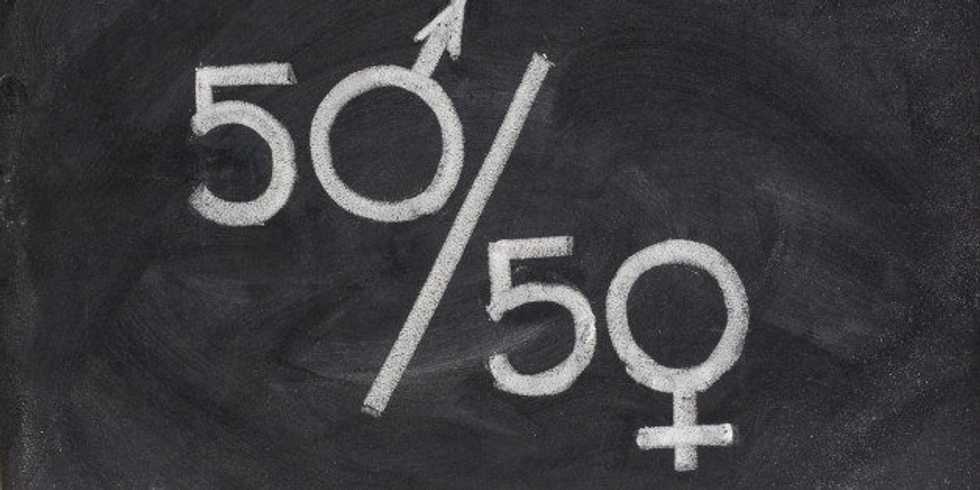
According to the Merriam-Webster Dictionary, feminism is “the theory of the political, economic, and social equality of the sexes.” While I could write pages upon pages about why I invest in this way of looking at the world, I would prefer to focus on why people who more or less hold these values to be true do not like associating themselves with the word “feminism.”
Here are some concerns I’ve heard about the concept of feminism:
Feminists are all radicals who hate men.
I’m not going to say that this is completely untrue, because there are people who identify as feminists who do loathe men. This is a reality of any large group; there are going to be differing opinions because we are all individuals with our own values and belief systems. The KKK and the Westboro Baptist Church identify as Christian groups. They are an outspoken, vitriolic minority. I’m not going to disassociate myself from Christianity because there are sections of it that preach hate. Rather, I am going to reaffirm that my beliefs as a Christian involve love and acceptance.
The overwhelming majority of feminists I have interacted with are not interested in putting down men, but rather raising up women of all backgrounds so that they have the same opportunities as men. The goal of feminism is not hate or division.
The word feminism is too narrow because it should focus on both men and women.
I get that having the prefix fem in the word feminism can be confusing. There’s an interesting history behind how the word came to be, which I encourage you to dig into it if you have some free time, but for the sake of the argument, let’s just stick with the fact that the word “feminism” is what the movement for gender equality is built on. I’d like to revisit the definition of feminism; “the theory of the political, economic, and social equality of the sexes.” The sexes, meaning all of the above. Feminists are concerned with how patriarchal values harm men and people who don't identify on the gender binary as much as they are concerned with how those values hurt women. The theory behind feminism is that people shouldn’t have less of an opportunity based on their sex or gender. That theory includes men.
Women have it good enough now, it’s not like a century or two ago.
Yes, the average life of the average American woman in 2016 is drastically better than the average American woman in 1916. We have the right to vote, we aren’t considered property by the law, and we overall have more autonomy. That does not mean women do not face discrimination based on their gender today, and it does not mean that they should feel content to settle with the steps that have been taken thus far. In 2014, women working full-time made an average of 79 cents to a man’s dollar. The pay gap is even worse for women of color. African-American women make 63% of men’s earnings, while Hispanic or Latina women make 54%. There is an overwhelming rape culture in the United States; one in five women will be sexually assaulted during their life time. Conditions for women are different across the world as well. In Nigeria, violence “by a husband for the purpose of correcting his wife” is legal. In 2012, Malala Yousafzai was shot in the head for fighting for girls’ right to an education.
I list these issues because they are tangible and real. They can also be solved. Feminism is fighting for equality and safety on a lot of different fronts that are valid and cause-worthy. Yes, a lot has changed. But that doesn’t mean there’s no more room for improvement.
I think it is valid to have questions about social movements. That being said, I also think it’s important to question why we have these apprehensions about feminism. Have these concerns been perpetuated because if the perception of feminism is that of a narrow, hateful, pretentious movement, it can be discredited? The f-word has a lot of stigma surrounding it. Consider where it might be stemming from.