


The Joy of Establishing Friendship Circle
Two years ago, while I was still a freshman at Hiram College in Ohio, I decided that staying in a co-ed dormitory would be both practical and enjoyable. My decision turned out to be a good one, not only because I was in close proximity to all my classes and professors’ offices, but also because it was very easy to engage in a lot of on-campus events and, when I saw the same bunch of people every day, it was not hard to form camaraderie with those who shared the same living space I occupied. Miller Residence Hall was always full of laughter, warm smiles, and hugs as energetic teenagers assemble to celebrate four years of youthful freedom—this was a place where everyone genuinely cared about everyone else, not just playing nice.
I had two resident assistants, a senior guy who majored in Music Education and a junior girl who majored in Creative Writing. The guy invited me to join his marching band and it helped me to bond with students who expressed interest in learning how to handle instruments such as trombone, snare drum, trumpet, and saxophone. Outside of marching band business, this guy also welcomed me to pet his guinea pigs, which quickly became everybody’s favorite animals. What about the girl RA? She was kind and compassionate! She was on a Cross Country team, so she had to wake up very early each morning, but when she got back from the running track in the afternoon, she would always be responsive and ready to lend a hand if someone needed to move furniture or had problem with getting the heater to reach the right temperature. In short, the dormitory gave me an experience on how to be jovial while also learning to look after myself and others. This was further emphasized by the unwritten open-door policy: often, I would walk in on folks blaring music from the radio and I would get an offer to dance along, or I would catch them watching horror film and it went without saying that I could sit with them on the couch. Because everything was meant to be enjoyed together, it felt wrong to be exclusive and discriminatory—we even had to patiently take turns when using the microwave in the kitchen, because there were thirty-seven of us and only one standard microwave. However, we were mature enough not to fight or monopolize it.
During the weekend, we would gather at the common lounge, which was a cool hangout space, and did floor meeting activities—for example, there was one night when the RAs brought origami paper and asked us to pretend we were in kindergarten and were allowed to experiment with the origami. On another occasion, the RA distributed star-shaped blank cards on which we wrote the things that were the most meaningful to us—our family, our hopes and dreams, our faiths, and our personality traits—and proceeded to tear them apart to give us an idea of how depressing it could feel if we had nothing to comfort us in our darkest hours. It was a heavy topic for twenty-somethings, but it was a reminder that it was necessary to be supportive and understanding to individuals who might silently struggle. However, we also planned and executed cheerful activities, such as an egg hunt during Easter, a costume contest, door decoration competition and trick-or-treat during Halloween, a homemade dinner during Thanksgiving, and gift wrapping for Secret Santa on the snowy weeks leading up to term break. We also loved to have bonfires where we roasted marshmallows and hot chocolate while swapping ghost stories and building blanket forts in lieu of tents.
For all the perks and incentives, living in a dormitory was not always about rainbows and butterflies—I still got annoyed over trivial details. I disliked waiting in line for public bathroom as it made me feel I had no privacy, I hated having to go downstairs to the basement every time I needed to do a load of laundry, and I loathed the fact that dormitory can be very noisy except during exam or test sessions. My list of complaints was justified, but living in the dormitory was still worth the dollars because it showed me how to be empathetic, communicative, approachable, and ready to mingle or blend in—I never had to feel like a misfit and I knew I was among the lucky few who had a positive experience and was not forced to adapt to an unfavorable atmosphere. However, I was deprived of the prospect of becoming independent—that was why I opted to have a different living arrangement once I moved to North Carolina.
Transitioning: Entering A More Unchaperoned Life
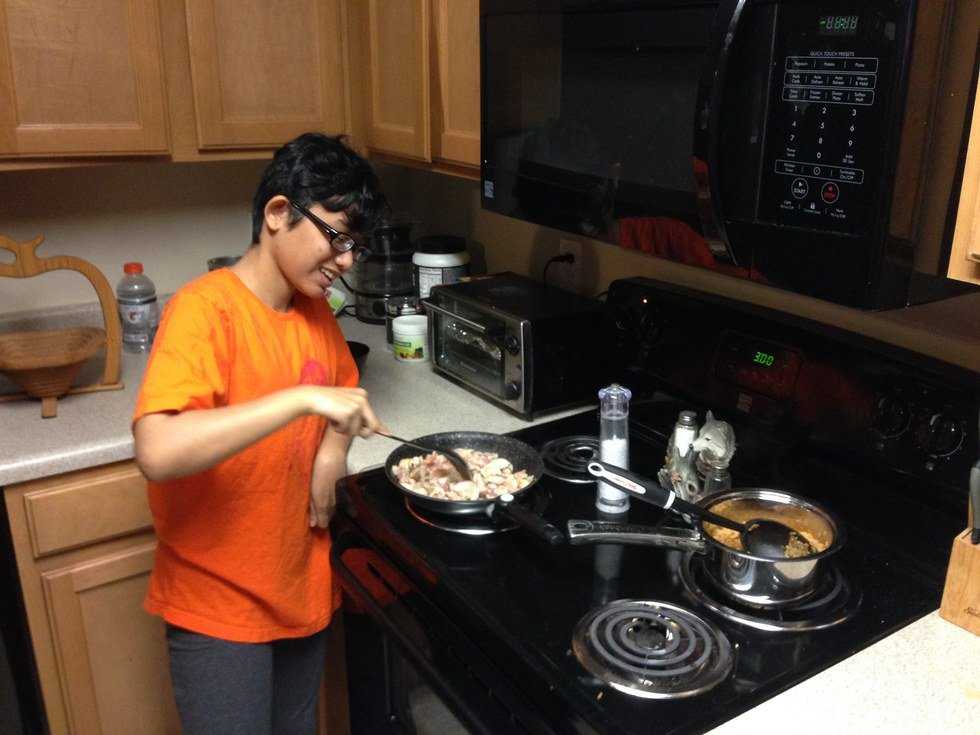
A year ago, I transferred to UNCA as a sophomore and signed a leasing agreement with The Verge (previously called The Grove), where I could rely on the shuttle to get to school when I do not fancy going on foot. I rapidly learned that if I wanted to survive, I had to do regular grocery shopping and stock up the fridge, unlike at Hiram College where I lived a stone's throw away from the dining hall. Well, buying eggs and milk and bread to try out new recipes were not difficult, the challenge was to clean up after making a meal or else my roommates would fume about dirty piles of plates on the sink that should have been put in the dishwasher. Aside from figuring out how to get food in the refrigerator and keep a tidy pantry, I also learned that there were rules for guests staying overnight—for example, the one hosting a guest should notify the landlord several days in advance, or that the guest is not supposed to stay longer than five consecutive nights or the host would have to pay a certain amount of fee. Last December, when I had my mom coming over for a month and half, I was anxious about the protocol and procedures, so I tactfully negotiated with the property manager and my mom did not have to book a hotel room—but that was a fortunate instance.
The hardest thing for me during the adaptation process was to be careful not to break appliances if, as a tenant, I do not want to be charged any fee for them to get repaired or replaced. While helping me to move in and get acquainted to the apartment, my parents tirelessly and meticulously advised me on checking whether or not the private restroom and shower leaked, whether a cupboard in the closet had a hole, whether the lightbulbs were bright enough, or whether the windows creaked. However, I did have an incident. One time, I almost got in trouble for arson because my roommate did not remember to tell me to turn off the stove after boiling water for soup (I was blessed the alarm did not go off and alerted the whole unit). Another time, I set the microwave power up too high and heated the cardboard instant noodle bowl for too long (at least I did not use plastic utensils though, for I would not want the plastic to melt) and it burned and the content spilled and left ugly black stains that were challenging to remove. I was glad the microwave service did not cost too much or else my roommates would yell at me. “I do get stressed out about cleaning up the indoor trash bin before it gets smelly or trying my best not to clog up the toilet, but at least I have my own small bedroom”, I would try to reason with myself whenever I thought I was incapable of being an adult.
On top of those frustrating daily tasks and errands, sometimes I feel lonely and isolated because, unlike in a dormitory, I had to make my own serious effort to go out and socialize if I want to be part of an association or organization. At first it was intimidating, but I realized that was what I needed in order to grow up and expand my network. I started to check out different interest groups, such as those who are active participants of student senate and members of the multicultural center programming board. I attended a career and job fair, went to a couple of informational interviews, met some alumni who worked for Peace Corps, and had conversation with local Asheville investors. Living in the apartment meant that I have to spread my wings if I do not want to be a hermit who is eccentric and ill-equipped to function in a modern civilization.
What if I still get bored in the apartment? Not a big deal, because I would rent a video or a blue-ray movie and order a large pizza while cuddling up with a pillow in front of a projector—an extravagance I could not indulge in when I was still living in a dormitory. When all else fails, there is always the clubhouse with free coffee and free gymnasium—apartment facility can really make me feel pampered.
All things considered, I am grateful for my tiny apartment. Yes, it was a little overwhelming not to have residential staffs to guide me in doing household chores, but having independence is the first stage in being accountable for my own mistakes and to acquire a sense of pride for what I do right. If I were still living in the dorm, I might be happier, but there is a probability for me to be rather spoiled—unless I took the responsibility to keep the common lounge tidy without being supervised or penalized for making a mess. In conclusion, in 2016 I am no longer afraid of having household duties.

















