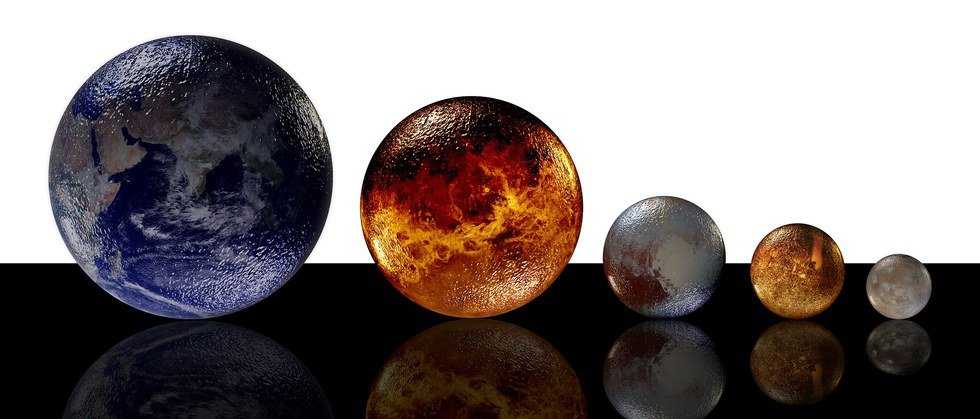
On Wednesday, the scientific community and astro-nerds alike were thrilled when astronomers announced a new discovery: seven small, potentially life-sustaining planets orbiting a star.
In May 2016, astronomers shared the discovery of three planets orbiting a dwarf star called TRAPPIST-1. This initial discovery led to intensified research and observation by astronomers with the TRAPPIST telescope. (TRAnsiting Planets and Planetesimals Small Telescope) This method of observation includes looking at the light from the star through that telescope and watching for blips of shadows across the starlight. Last week astronomers noticed several more shadows across the star. In this case these shadows indicated planets.
These planets are in orbit around TRAPPIST-1, which is a small, ultracool dwarf star about 40 light-years away from earth. What makes these particular planets so special is they have the combination of requirements to make them potentially habitable. They're small, within the habitable zone of their star, and some of their temperatures are cool enough that the planets could contain water - which means the potential for life.
Astronomers have estimated, based on the planet's mass and distance from its star, TRAPPIST-1f is the most suitable for life. It is rocky, and cooler than earth, but could still be possibly habitable.
The planets are very close together, and TRAPPIST-1 is only about one-tenth the size of our sun, but that makes the planets easier to study and observe, and hopefully within the next 10 years scientists will have a much more thorough understanding on each planet's atmosphere and conditions.
This is a huge first step in the discovery of extraterrestrial life.
It's an appropriate guess that mankind's first dose of extraterrestrial life will be the discovery of a microorganism in the water of an ice planet or moon, or after these new planetary findings, perhaps someday in the potential water of TRAPPIST-1f.
While the TRAPPIST system is only 40 light-years away, it would still take us millions of years to reach it. Until we develop warp speed, that is. But that won't stop astronomers from continuing to learn about the system and its planets' potentials.
Another exciting thought is that, if this planetary system exists, there must be others. Other possibilities for scientific expansion and discovery. Other possibilities for life.
One of my favorite things about this discovery is the unity it caused. In a time of such political turmoil, our society is fueled by our differences in opinion and fear for the future. This announcement has brought us together in the pure awe of discovery and curiosity for the future.
Even if you don't believe in the idea of extraterrestrial life, you have to admit this discovery is amazing, or at the very least humbling.
It reminds us that there are things much bigger than us, worlds other than our own do exist, and we are not at the center of the universe.
As we move forward after this big step for mankind, I'm ecstatic to see what new discoveries will be made and how they will contribute to our understanding of the universe.
As we move forward, I like to keep in mind one of my favorite quotes:
"Two possibilities exist. Either we are alone in the universe, or we are not. Both are equally terrifying." -Arthur C. Clarke