A sign of strength, will and determination. A sign of choice, self-efficacy.
Not just my favorite grammatical tool.
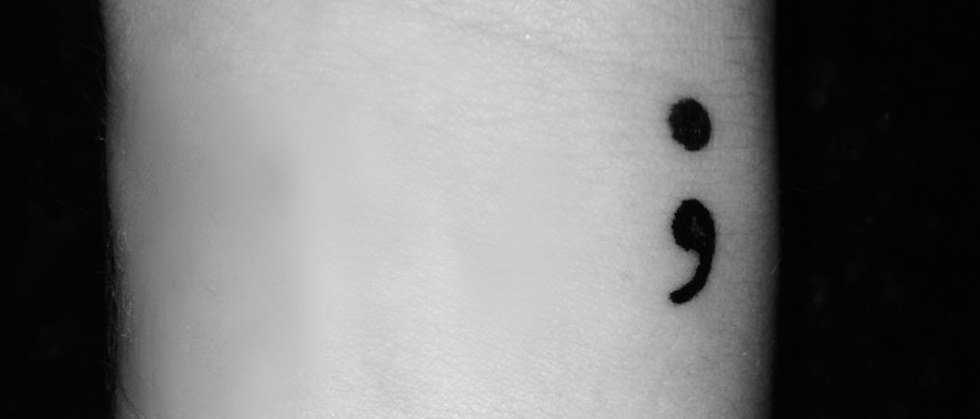
The semicolon tattoo began as a small movement to raise suicide awareness. It has grown massively, and it isn’t uncommon to see someone wearing one of these symbols of power. Yes, power. The semicolon means someone made a choice to continue their story, their life, when they could have ended it. Like in a sentence, a semicolon can often replace a period, a firm ending.
When I’m asked about my semicolon tattoo, I’m not always sure how to answer. I’m proud of it, proud of the things I’ve overcome, the things I've survived. I’m blessed that I was able to cheat death, given a second chance after a mistake. That’s why I got my semicolon—to remind myself of what I’ve done, and how much I can do. The sad part is, I can be hesitant to explain this concept to people. Despite spreading awareness for this cause, there are still numerous people out there who are quick to judge, or question, mental health, suicidal attempts, or other circumstances, when what they need to do is just the opposite. Instead of further isolating them, people need to embrace them to prevent recurrence. I’m not saying everyone needs to be everyone’s psychologist, but a simple smile or acknowledgement goes a long way in boosting someone’s mood. It’s sad to think that a mark I wear so proudly gets diminished from fear of judgement.
That’s why I’m choosing to write about the semicolon, about my semicolon.
It’s not easy to admit to anyone that you’ve suffered, let alone the whole world. It’s even harder to literally wear the evidence of it on your body, open to everyone, every single day. It’s not easy, but it’s necessary. Without doing so, the stigma will never end. The ridiculous, absurd stigma, has got to end.
My semicolon is for awareness, but it’s also for me. I find myself looking at it and touching it multiple times each day. Not a day goes by that I don’t look at it and remind myself of what a badass I am. I don’t see it as a symbol of weakness, as a negative reminder. I see it as a reminder that I survived, and after that, I made a choice. I made an active choice to continue.
I see it as a reminder of my siblings, my three best friends and biggest supports. They all got it with me, for me. I look at it and see how I have affected them, and how despite everything, they are there for me. They love me, and would do anything for me—and they did. It reminds me that I’m never alone.
I see it as a shared identity. I’ve seen a few other people with the semicolon, as have my siblings. We might not always talk about it, but it’s a mututally shared knowledge. We’re all on the same page.
The semicolon is the symbol of a warrior. The symbol of a fighter. It’s the symbol of someone who overcame one of the greatest struggles in life. It’s someone who may still struggle, but is making the choice to continue through that struggle. To push through and fight it. If you think that’s weird, or associate it with negativity, if you choose to perpetuate the stigma—well, there’re not many nice things I can say to you, so I won’t.
The semicolon is used as a substitute for a period, for an ending. The next time you see someone with one, realize what they are standing up for.