
My mother came to the United States in 1987 from Port-au-Prince, Haiti. By default, since Creole is the native tongue in Haiti and only French is taught in school, my mother didn’t know any English when she came to the U.S. She managed on her own until she met my father two years later. By then, she had picked up some English from her surroundings and through her work as an in-home nursing attendant. However, my mother has always been insecure about the immense language barrier she experienced and continues to experience today. I can relate.
Growing up, my first language naturally ended up being Haitian-Creole. It was spoken throughout the house by my mother, my aunt, my grandmother and any of my mother’s friends when they came to visit. My father even began picking up some of the terms—he is from Grenada and therefore is not fluent in Creole. Oddly enough, while I understand my mother’s native tongue 100 percent, I can’t seem to speak it. I can read it and I know the words to form sentences, but I have always been self-conscious about my accent––or lack thereof.
There have been times when I have attempted to converse with my mother’s friends in their native tongue, only to be ridiculed and poked fun at. While the jokes were always loving and not meant to be taken seriously, some part of me always felt ashamed to have a language barrier that prevented me from connecting fully with my heritage.
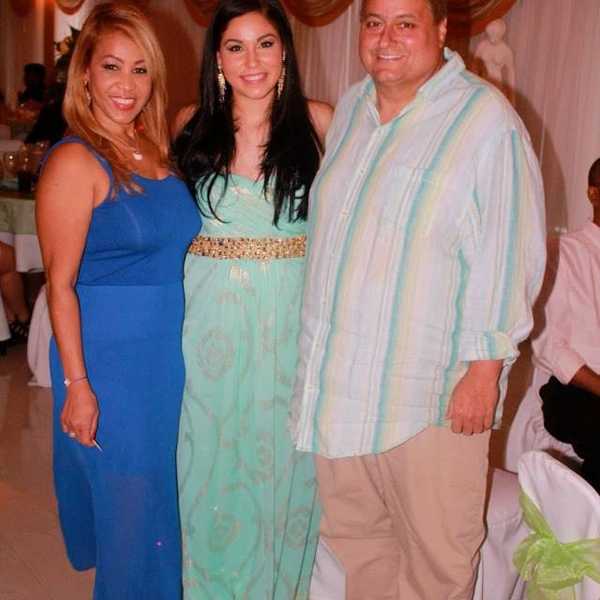
To add to this sense of disconnect, my appearance, as I’ve been told, doesn’t give away any hints to my heritage. As a worker in customer service, I encounter a plethora of people on a day-to-day basis. On more than several occasions, I have been approached by a person who, after taking in my appearance, assumes I was Hispanic and immediately began speaking Spanish. “No, I don’t speak Spanish. Sorry,” was my normal response in these situations, which resulted in thoroughly aghast faces. What I began to wonder after a while was, why was I sorry? I mean, if anything, they should be sorry for assuming that I was Hispanic without knowing anything about me.
Aside from the situation mentioned above, there are also instances when things are sort of reversed. I admit, I am guilty of eavesdropping when I hear my mother’s native language being spoken by people I do not know. There’s something exciting about being a fly on the wall camouflaged and out of sight from any onlookers. However, things can quickly turn nasty and hurtful, which I’m all too familiar with as well. Because I work in retail, there are times when misunderstandings with customers take place and situations can get heated. In some special cases, I have been on the receiving end of some, particularly vile and racist insults. Of course, these insults were never in English, but the fact that they were in the language I grew up hearing from my mother’s mouth made the sting of the slap that much worse.
This did nothing but further emphasize the distance I felt from my mother’s world. Because I didn’t “look” Haitian, I automatically wasn’t. Because I didn’t speak Creole, I was automatically reduced to some half-breed. Because I had never stepped foot on Haitian soil, I was deemed unfit to claim my mother’s heritage. It didn’t matter that I knew most of the traditions and almost all of the folklores from Haiti, or that I knew the recipes to delicious Haitian dishes; I didn’t belong. My American upbringing, non-Haitian father, and seemingly Hispanic features, among other things, made me an outcast.
I have confided in my mother these feelings of not belonging and shame, and in return, she confided in me the same feelings I was experiencing. My mother has always blamed her shyness on her broken English and thick accent. She would ask me to proofread any important documents or letters she needed to complete for her personal affairs, and expressed her feelings of extreme anxiety when it came to speaking with doctors, lawyers, bank tellers, etc. for fear that they wouldn’t understand her accented English. While I did find her self-consciousness misplaced, I could relate to my mother’s sentiment. Her voice was my favorite part of my childhood. There was something so elegant in the way that her native language flowed off her tongue –– I found it extremely soothing, not to mention adorable (when I wasn’t being yelled at, of course).
Since learning that I wasn’t alone in my feelings of isolation from such a big part of my mother’s life, my mother and I have come to an unspoken contract. I say 'unspoken' because we never talked about it or decided that’s how things were going to be. Since I was a teenager, any interactions with my mother became learning and teaching experiences for us both. When she would address me in Creole, I would reply in English. This way, I could become a bit more comfortable with her native tongue and she could become familiar with mine.
This circumstance hasn’t completely dissipated my fears. I still have those bad encounters with other Haitians, although the nastier interactions are fewer and farther between. It wasn’t always nice when someone would look at me with a befuddled expression and ask the infamous “You’re Haitian?” question whenever I expressed my understanding of the language, but I’ve learned to laugh about it. As for the other disconnects, I’m learning to live with them –– well, at least the ones I can’t control, like my lack of a Haitian accent when I speak –– but the ones I can control, I will overcome, especially the fact that I’ve never visited Haiti. I hope to take a trip there with my mother someday, but until then I’ll be just another fly on the wall.