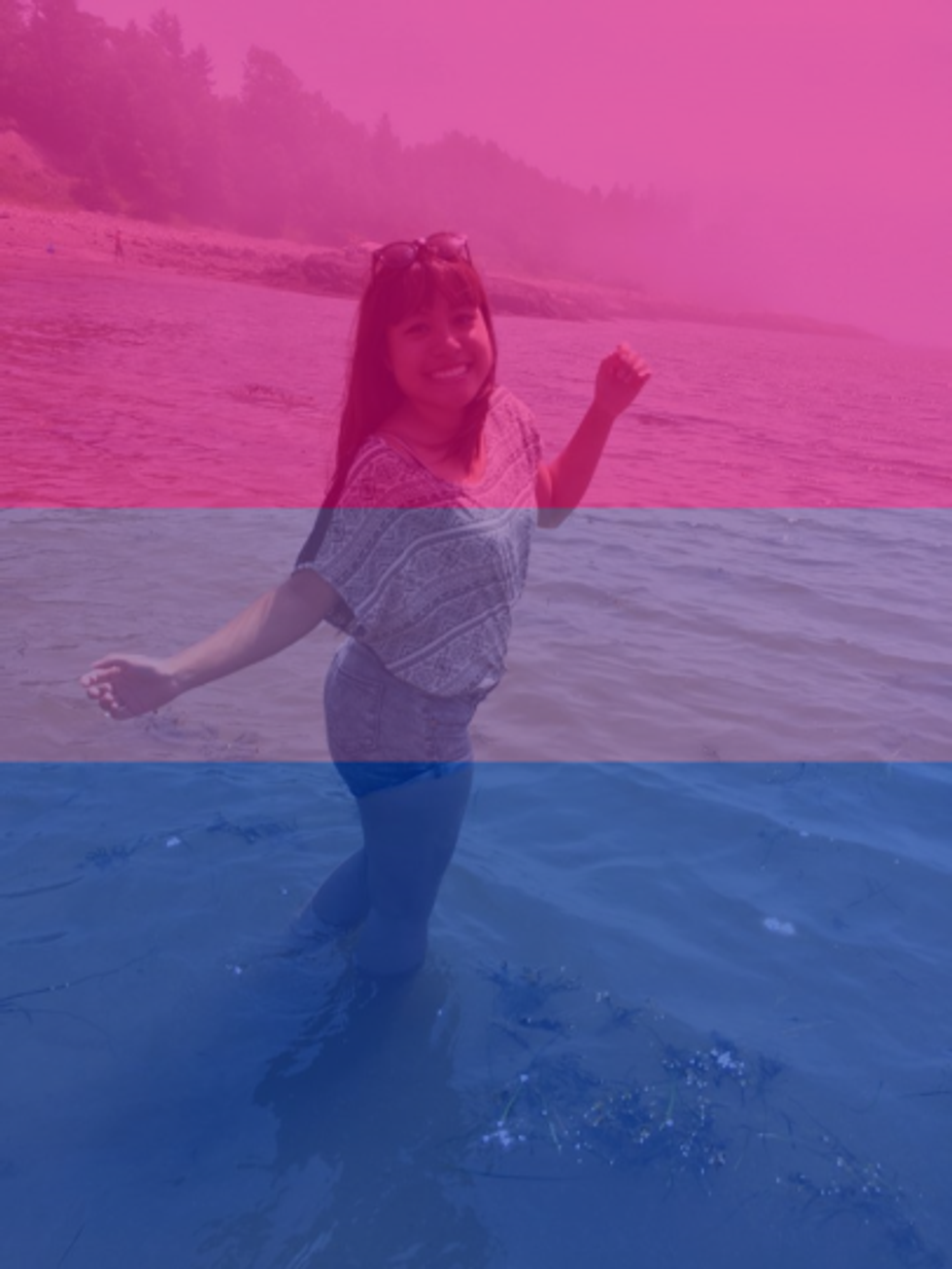
When I first “came out” to the world, I was a bright-eyed, loud and proud senior in high school who had absolutely no time for any negativity. I felt confident in who I was and had known for a while that I wasn’t straight, so I figured it wasn’t that big of a deal when it came time to tell my friends that I was in a relationship with a woman. I kept it to one sentence, short and sweet, because it didn’t really feel like there was anything for me to “come out” from. I knew sexuality was more like a spectrum than two opposing options (straight or gay), and I didn’t think there had to be any assumption that I was straight.
Ever since making this personal decision, however, I’ve had to deal with stereotypes, scrutiny, discrimination, fetishization and sexual harassment–and not just from the straight community. It was as though coming out meant stepping into the center of some public arena where people could hurl slurs, invasive questions, and sexually inappropriate comments at me whenever they felt like. But I didn’t ask for any of this when I came out as bisexual. All I wanted to do was live freely, without hiding any part of my identity.
Bisexuals face a unique set of stigmas–and this is in no way meant to ignore or minimize the stigmas and prejudices other minorities face. Rather, it's that the nature of bisexuality prompts its own responses and stereotypes. Because bisexuality is inconsistent with the common perception of sexuality as black and white, bisexuals are often scrutinized upon coming out, and many bisexuals avoid doing so because of this. This deterrence, combined with the habit of deciding individuals’ sexuality by the gender of their current partner, contributes to a glaring lack of visibility. Bisexual women are often hyper-sexualized and fetishized, stereotyped as being “easy.” This dangerous stereotype is part of why bisexual women experience the highest rates of sexual violence compared to both straight and lesbian women.
I realized all of this as I encountered more and more responses to my identity. It explained so much: the suggestive eyebrow raises and sleazy comments, the preconceived notion that I was actually just experimenting or trying to get guys’ attention, the assumption that I welcomed any and all sexual advances, and the constant questions about threesomes. (I suppose it’s flattering that people believe I have the time, energy, and social network to be having all these threesomes, but doesn’t anyone realize how exhausting that must be? How am I finding, entertaining, and satisfying all these people on top of classes and other everyday activities?)
It’s exhausting, trying to prove that my identity is real and that I am not a set of stereotypes, but rather a human being deserving of basic respect. Being out at Lehigh is harder than I thought it’d be–I wasn’t too aware of all the stigmas and stereotypes surrounding bisexuals, and specifically, bisexual women, until I came here. I learned the hard way at parties that not everywhere is a welcoming environment for out queer individuals, the hardest lesson bringing an abrupt end to what would have been a great night.
I was at a party, teeming with energy and ready to have a fun night, when the girl I had a crush on walked through the door. She was a year older, smart, beautiful, and unbelievably cool. I had asked her to a date party earlier that week, and when she said yes, I felt like the luckiest person in the world. I walked over to her, expressed how happy I was to see her there, and we began dancing quietly by ourselves, holding each other and kissing. But it seemed like no time had passed before I felt hands grab me from behind, and I realized we were being pulled apart. Apparently everyone had been watching, and I was bombarded by unwelcome harassment. Guys told me that I wasn’t supposed to get with girls, and that we could stop kissing because it wasn’t impressing the men at the party anymore. I was constantly being touched without my consent, called slurs I didn’t even know existed, and repeatedly separated from the girl I was so excited to see at the party. If you’ve ever known the feeling of having a crush and being excited about any opportunity to see them, maybe you know the sadness in having this simple human desire being denied to you. Maybe you understand the pain of seeing someone you care about be harassed, and wanting to do anything to stop it, and all of this happening because of who you are.
My identity isn’t a ploy to get attention. It’s not a phase, and it’s not an invitation to a debate. I didn’t come out to entertain peoples’ fantasies or fetishes. When we try to fit sexuality and gender into limited, strict descriptions, we perpetuate outdated and harmful beliefs and make it difficult for countless individuals to live openly as who they truly are. My experience as an individual is just one example of the prejudices the bisexual community faces, and I hope that with greater awareness and education, people of all identities on the spectrum can live comfortably as who they are. My identity should not be a controversy. No one’s should be.