
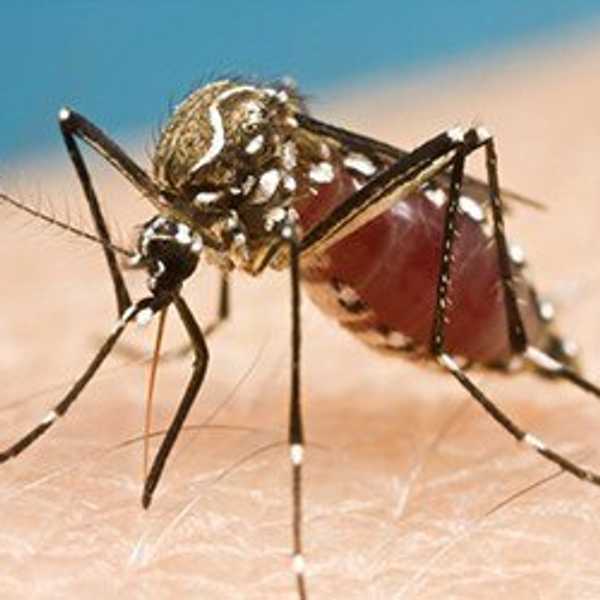

The biggest public health scare of late is the Zika Virus. The virus is spread through the bite of the Aedes mosquito and leads to Zika Fever. Those diagnosed with Zika report mild symptoms such as red eyes, joint pain, and rash. So far, the general consensus among the medical community is that the virus does not pose a serious health threat unless those infected are pregnant or actively trying to conceive a baby. Zika leads to a disease called Microcephaly in newborns that causes them to be born with abnormally small heads. Microcephaly is often a result of abnormal brain development in the womb. Microcephaly and the threat of newborn's health is what makes Zika a national public health emergency.
You may have been hearing about Zika in the United States for a while now, but it wasn't until of late that the United States contained what is called "local-borne transmission." Local-borne transmission means that a citizen contrived the virus from a mosquito bite inside the United States borders. In this case, southern Florida. To many public health experts, the fact that Zika reached the 50 states this summer was not a surprise. There is a good chance Zika may spread to other coastal states as well.
Earlier this year NASA and NCAR teamed up to create a map, which helped public health officials focus on areas most likely to face local-borne transmission of Zika. As you can see by the map, they hit the nail on the head as they predicted southern Florida to have a high abundance of Aedes aegypti mosquitoes as southern Florida is the southern most tip of the continental United States. This made southern Florida frontrunners to become the first state to get hit with local-borne transmission of the Zika virus. Alabama, Georgia, Louisiana and South Carolina were also predicted to have a high abundance of Aedes aegypti mosquitoes.
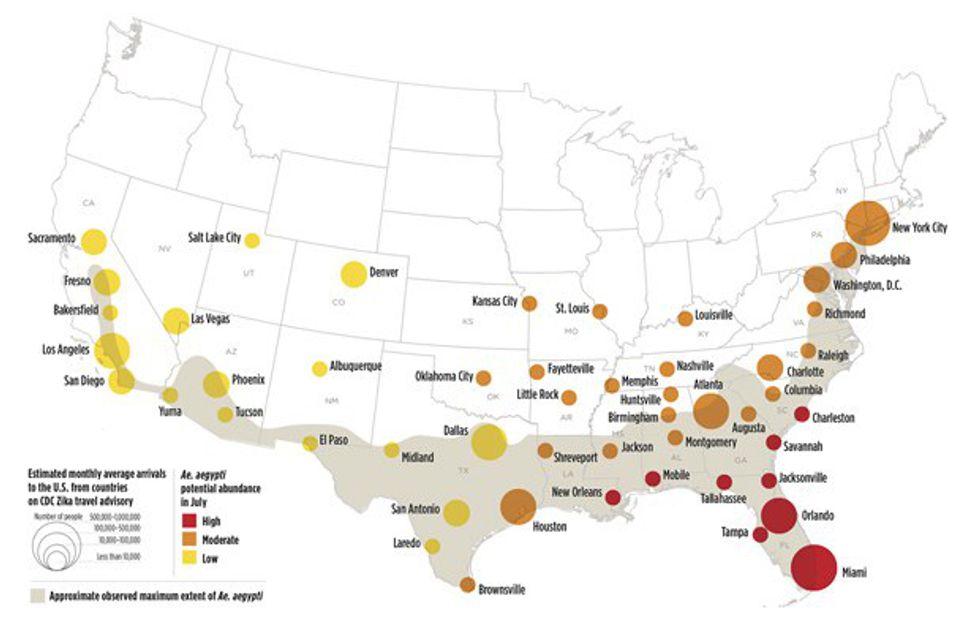
The good news is that summer is quickly coming to an end and most mosquitoes will either die off or hibernate. Which gives us time to combat this disease because as you can tell by this map and countless reports by your local news station, Zika is heading North and signs point to this virus being a renewed public health concern come next summer.
One unique plan to combat Zika comes from Oxitec. A British biotech company that is notorious for developing genetically modified insects to aid in mosquito control. Oxitec's plan is to release lab-bred male mosquitoes into areas hit with local-borne transmission. While you may think that more mosquitoes is the last thing those areas need, the theory is that these genetically modified mosquitoes will eventually decrease the amount of mosquitoes in any given target area they are released in. It's also important to note that male mosquitoes do not bite and consequently cannot directly spread a virus such as Zika. When Oxitec's sterile male mosquitoes mate with wild female mosquitoes, their offspring produce too much of a natural protein causing their offspring to die before they can mature into biting adults. Females usually have the capability of laying anywhere between 100-300 eggs at one time. If all goes according to Oxitec's plan, this type of mosquito breeding will significantly decrease the mosquito population of targeted areas, which in turn will decrease the likelihood for the spread of the Zika virus among other viruses typically spread by mosquitoes such as Yellow Fever and Chikungunya. Oxitec claims their method has been proven. According to Oxitec, they have released millions of their mutant mosquitoes in Brazilian and Panamanian communities. These communities report a decrease in mosquito population growth by as much as 90 percent.
Despite many fearing the release of genetically modified mosquitoes and believing such mosquitoes will eventually harm the environment, the federal government has already approved Oxitec's plan and a proposal for a field test in Key West, Florida. The Food and Drug Administration found that Oxitec's plan “will not have significant impacts on the environment.”
The last legislative step to be completed before Oxitec releases their genetically modified mosquitoes in the Key West is the approval of the Florida Keys Mosquito Control District. Until then, residents of the community will be polled on how they feel about Oxitec's plan. Initial reports are showing that residents are divided on the proposal. The Florida Keys Mosquito Control District is set to vote on Oxitec's plan this fall.