

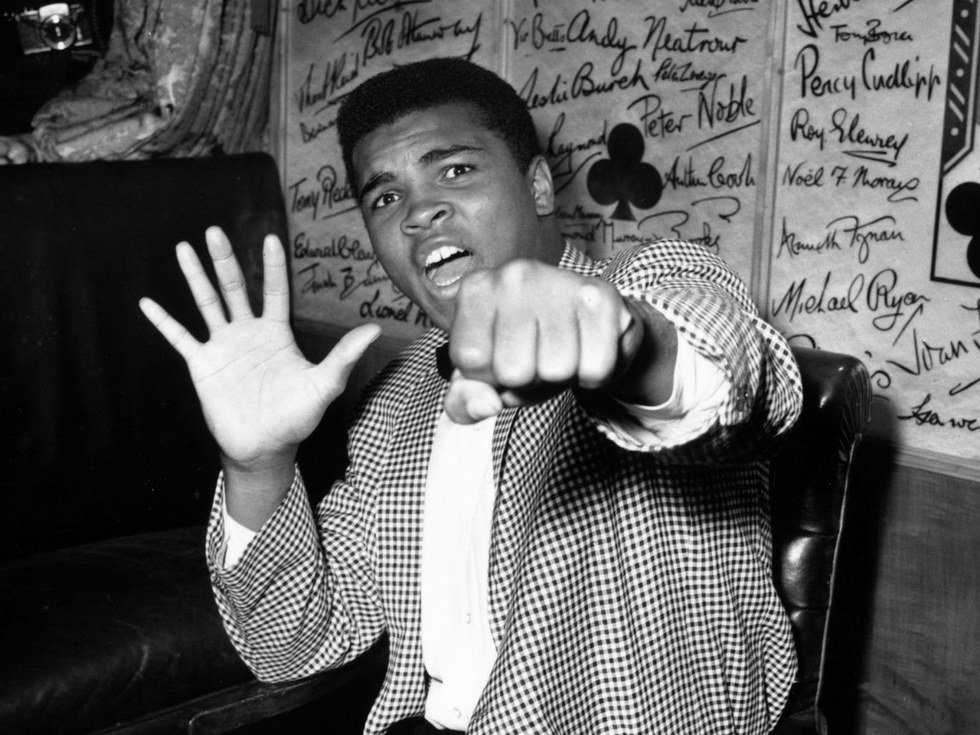
In athletics, it’s something of a rarity to find a blend of success on and off the field. The possession of a clear motivation to promote equality and other altruistic values for an athlete, is even more so uncommon. That is, until Cassius Clay -- better known as Muhammad Ali -- entered the fray.
Ali, who was victorious in his maiden bout on October 29th, 1960 by a sixth-round decision, oozed with swagger whenever he stepped in the ring; carrying himself with a confidence that had never been seen before.
“I am the greatest, I said that before I knew I was,” said Ali, showing off the strong faith he had in his abilities.
Whether it was performing a shimmy-like dance after dodging 21 punches in 10 seconds or claiming that he could “float like a butterfly, sting like a bee,” this belief in himself defined him not just as a fighter, but as person.
The man who was coined “The Greatest” faced foes from Sonny Liston to Joe Frazier en route to a 61-5 record. While this record has blemishes, the icon never backed down from a fight and always wanted to fight the best.
This was evident in the fight that took place on October 2nd, 1980 in Las Vegas against the great Larry Holmes. One could argue that Ali had no business partaking in this bout, as he had come out of retirement. However, what separated Ali from the likes of Mayweather or De La Hoya is that he answered the call.
Unfortunately for The Champ, he lost the fight by knockout in the eleventh round.
Where Muhammad Ali truly made his stamp on society isn’t what he did when he put on the gloves, although, it contributes largely to his icon status; it’s what he did when the bell rung and the fighting stopped.
“Service to others is the rent you pay for your room here on Earth,” said Ali.
Shortly after his 1981 retirement, Ali found himself in the limelight once again. The Champ made national news after talking a man out of jumping from a ninth story Los Angeles building.
“You’re my brother. I love you and I wouldn’t lie to you. You got to listen. I want you to come home with me, meet some friends of mine.”
Ali viewed everyone as family. It’s this compassion -- which, is ironic, given that he made a living off fighting people -- that separated him from the other icons of his time.
Even though he wasn’t being directly affected, during the Gulf War in 1991, Ali made the decision to travel to Iraq in order to negotiate terms on how to release the American hostages within the country.
Ali, who made the controversial decision in 1967 by refusing to join the armed forces in the Vietnam War following being drafted to serve, ended up providing a service to his country after all, following this courageous act.
However, even though in essence, he served by negotiating with Saddam Hussein, his decision to not enter the army when he was drafted came with consequences.
He was banned from boxing from 1967 to 1970, the prime years of his career.
The Champ didn’t let this get him down. He began to realize that there was more to life than boxing.
During one of his countless inspirational speeches he gave throughout this period of forced inactivity, he preached about just how precious life truly is.
“Life is not very long. Let’s say that the average person is 30 years old. Add up all of the 7, 8, 9 hours you have slept for 30 years. Out of 30 years, out of all the nights; last night when you went to bed, you don’t remember a thing. You’ve been unconscious for about 8 years of your life.”
This revelation showed off the inspiration that seemed to emanate from Ali in everything that he did.
His altruism shined within the same excerpt.
“I want to dedicate my life to using my name and popularity to helping charities, helping people and uniting people.”
Once again, Ali’s calling card seemed to lie in his compassion towards others.
Ali’s life post-boxing wasn’t easy. The Champ fought for 32 years with Parkinson’s Disease, a bout that he was destined to lose from the jump.
However, it’s what he did during those 32 years outside of the ring that make Muhammad Ali so special. It’s how he acted following his boxing career that make his name so recognizable with everyone not only in America, but throughout the World.
Unfortunately for Ali, his sparring partner, Father Time, dealt the proverbial knockout punch on June 3rd at the age of 74. He rested peacefully surrounded by family.
In seemingly the most Ali-way possible, during those final moments, even after complete organ failure, Ali’s heart kept beating for 30 minutes. A testament to the strength of the man that was Muhammad Ali.
While he might be gone, the life that Ali lived and the lessons he left behind will forever leave a lasting impact on society. Nobody will ever forget the late, great Muhammad Ali as he floats like a butterfly and stings like a bee into the great beyond.
















