
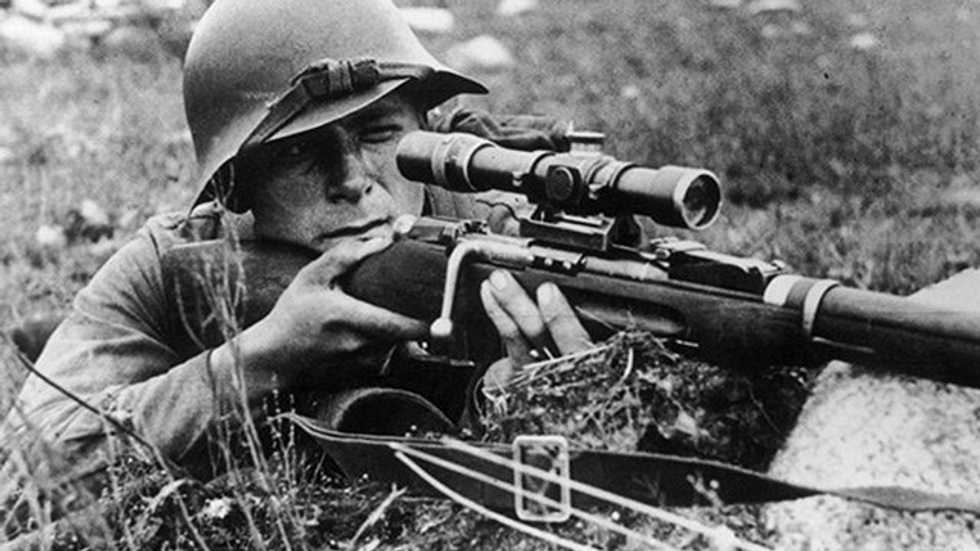
Joseph Stalin once said, “One death is a tragedy; one million is a statistic.” As important as it is to be educated about history in order to understand how the world works, I believe it is even more important to preserve the stories behind the statistics. Normally, when we learn about events like World War II, we learn the timeline of events, battles that occurred, or casualties and general information about the event as a whole. Very rarely in school do we learn the personal stories of survivors and people who experienced everything as it happened. But when we do get to hear the personal stories, it reminds us that World War II was not just a historical event, but a time in which people suffered, fought, and died, but were encouraged by courageous acts of heroism. We are reminded of the actual people involved and the tragedy of each death; one million may be too large of a number to comprehend, but we should at least dedicate time to learning the stories behind as many of those as we can.
That’s why one of my favorite classes in high school was my World War II class. Every week, the teacher invited a different World War II veteran or Holocaust survivor to speak to us. Hearing and recording the stories of World War II veterans to preserve them for generations proved to be an amazing opportunity. There is so much to admire and learn from the heroes who fought so bravely for freedom.
Bob Dingman, one of the veterans I had the opportunity to meet and who just recently passed away, served as an 18-year-old Private First Class during World War II. Assigned to the 83rd Reconnaissance Battalion, he functioned as the eyes and ears of the army with 24 other men throughout enemy territory in Germany. He had no friends there—as an 18-year-old replacement, he was inexperienced and likely to die very quickly. Why try to make friends with someone you know will probably die in a matter of weeks or even days? And though he survived, he had countless close calls. Once, he was running through a field under fire and just barely escaped into a house nearby without being shot. He ran in, expecting safety, but instead found a German soldier standing inside. Soon enough, he realized the man was carrying a Bible. Suddenly overcome with emotion, he thought about why two men carrying Bibles were trying to kill each other a few minutes ago. Mr. Dingman impressed upon me this important truth to remember: Not all Germans were evil; some were conscripted to join the army and fight for a cause they disagreed with. And not all Americans were good, either.
Ultimately, Mr. Dingman was driven out of a battle on the hood of a jeep after he was shot through the arm, chest, lungs and spine, breaking a vertebra and paralyzing him from the waist down (from which he made a miraculous recovery). Surprisingly, when he was thanked for his heroic bravery, he insisted several times that he was not a hero and many of the other veterans had this same response. They insist they are not heroes; the true heroes are the soldiers who didn’t make it home.
I am always inspired by the bravery and humility of these veterans, and I hope to share more of their incredible stories in the future.