If you’ve read the news lately, you probably know something about the Mexican drug war. Alarming, bold-faced titles about the Mexican drug cartels blare from my computer screen regularly, and that’s not just because I spent my summer researching cartel violence. “Mexican Cartels Defy Onslaught.” “Mexico Kills Drug Kingpin Three Years After Mistakenly Reporting Him Dead.” (Yes, that really happened). The students who disappeared from Ayotzinapa. The second escape of the Sinaloa cartel kingpin “El Chapo.” Kidnappings, shootouts, threatening phone calls, publicly displayed corpses, police corruption and impunity are facts of life in the more violent areas, and violence is on the rise throughout the country.
Despite the flood of information, it is hard to get a clear picture of what’s going on. Most people are either majorly freaked out, or not freaked out enough. Truth is, the situation is complicated. Here are five things you need to know about the Mexican drug war in order to avoid sounding like a total dingus.
1) This has been going on for a long time. Like, multiple decades long.
Drug cartels have been operating in Mexico since the 1970s. However, almost a decade ago, a “new school” of drug cartels emerged that is more violent, sadistic and sophisticated than ever before. Four major cartels dominated Mexico when previous President Felipe Calderón took office in December of 2006. While these cartels have fractured and new organizations have risen to the fore, some still exist under the same name, including the Gulf cartel and the Sinaloa cartel (run by our friend “El Chapo”).
2) The “Mexican drug cartels” are separate, dynamic organizations with their own ideologies, operations, and rivalries.
Mexican drug cartels are constantly evolving. The groups emerge, fracture and disintegrate in response to inter-cartel violence, governmental action, and other factors. According to the DEA, seven organizations were dominant from around 2009 to 2012. Those included Sinaloa, Los Zetas, Tijuana, Juárez, Beltrán Leyva Organization, Gulf, and La Familia Michoacana. Some cartels fractured near the end of Calderón’s term in 2012, creating new groups like The Knight’s Templar and the New Generation, which have subsequently grown in influence. The Sinaloa Cartel is still the most powerful and prolific of the cartels, while Los Zetas cartel in its prime was the most disturbingly violent and sadistic.
The cartels do not all get along. Rather, they abide by a complex web of alliances and rivalries. For example, La Familia originally emerged with the sole purpose of expelling Los Zetas from Michoacán, or so they claimed. (Fun fact: La Familia burst onto the scene by rolling five severed heads onto a dance floor at a club. If that doesn’t inspire confidence, what will?) Of course, like every other major cartel, La Familia since became involved in blackmail, kidnapping, theft, rape, and murder, in addition to good old-fashioned drug trafficking.
3) The scope of the violence is appalling and should be taken seriously.
Flipping through the book Blog de Narco, I accidentally halt on a page plastered with grisly images of severed heads, arranged ear-to-ear in a neat row. My stomach churns and I slam the book shut. The violence in the news is not blown out of proportion. In fact, the Mexico 2015 Crime and Safety Report classified Mexico’s crime rate as “Critical.” In 2012, Mexico averaged about 10,000 crime-related killings a year. That includes over 1,300 beheadings. In one report, the Strategic Studies Institute ranked Mexican states by number of decapitations—that’s as if we compared the number of severed heads in Iowa to Alabama.
And murder is just the tip of the iceberg—kidnappings, armed robbery and extortion have all increased by huge percentages since 2007. The violence is mostly concentrated in border states and along transit routes, which explains why migrants are one of the most terrorized populations in Mexico. While cartels concentrate in specific areas, violence bleeds across state lines, and no region is immune.
Women are especially vulnerable to violence by drug cartels in Mexico. The drug war has led to a spike in kidnappings and homicides of women, referred to as “feminicides.” Last year, a delegation from the Nobel Women’s Initiative found that violence against women has reached crisis levels in Mexico. Bodies of disappeared young girls often appear pretzeled up in shallow graves by the side of the road. Cartels also use rape as a weapon to instill fear in the public or exact revenge on family members of rival cartels. The police tend to ignore reports of rape or sexual violence, and these cases usually go uninvestigated.
Free speech in Mexico is also under attack. Hundreds of journalists, bloggers and public figures have been killed over the past few years for reporting on the violence in Mexico or for speaking out against corruption.
It’s important to note that much of this violence is “state-sanctioned”; in other words, the government is complicit either through collaboration or feigned ignorance. Oftentimes when victims seek help, the police respond by urging them to investigate the crime themselves.
4) It’s not that the Mexican government hasn’t done anything. Rather, its tactics have just failed miserably.
Previous President Felipe Calderón’s strategy of targeting “kingpins,” or cartel leaders, caused violence in Mexico to spike after he came to power in late 2006. Without their prominent leaders, cartels fractured, creating new, more volatile organizations and unpredictable patterns of violent conflict.
The failure snowballed. In an effort to control the spike in violence, Calderón deployed thousands of troops to Michoacán and other violent states. Unfortunately, this militarization of the country increased clashes with the cartels and civilian casualties. Not to mention the fact that the federal and state police, as well as other public officials at the state and local level, were (and still are) riddled with corruption.
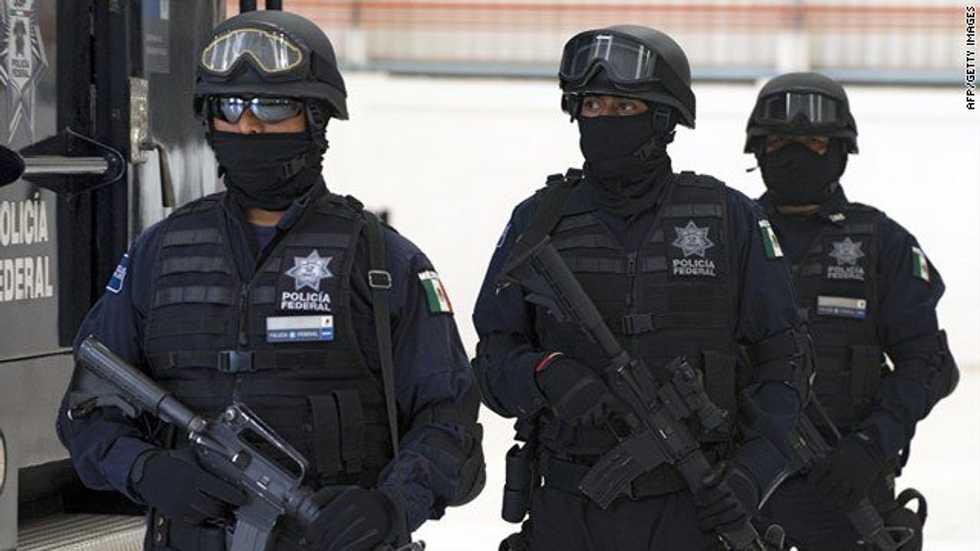
Current president Enrique Peña Nieto vowed to adopt a different tactic of reducing violent crime by developing a special police force to combat drug trafficking organizations. However, Peña Nieto has yet to demonstrate a true shift in government strategy, and statistics suggest violence of the same degree.
5) Extortion, or blackmail, is just as damaging to Mexico as more extreme forms of violence.
For more info, check out the article “Why Extortion is Deadlier Than the Drug Trade.”
http://www.borderlandbeat.com/2011/09/why-extortion-is-deadlier-than-drug.html
Extortion refers to blackmail, mostly of business- and landowners, as well as public figures, government officials and police. Cartels demand “renta,” or monthly payments, in exchange for “protection,” i.e. “We won’t kill you, yet.” Drug traffickers threaten farmers with attacks on their crops or bodily harm to extort millions of dollars in payments. In the last twelve years alone, cartels in Michoacán have squeezed avocado farmers for over $215 million.
Extortion contributed heavily to Mexico’s huge displaced population. Civilians who are unable to pay the imposed “renta” flee their homes to escape threats of kidnapping or assassination, becoming Internally Displaced Persons. Migrant families have been turning up in mass graves in the Mexican countryside for years.
And there you have it. Anyone can speak knowledgeably about the drug war in Mexico—it’s a problem, but there is a solution. And the first step is informing yourself. Now go forth and talk about it!
And stay tuned for Part Two: a critical look at proposed solutions to cartel violence.
If you’re interested in learning more about the drug war in Mexico, check out these great resources:
"Mexico’s Drug Trafficking Organizations: Source and Scope of the Violence." Trends in Organized Crime (n.d.): n. pag. Congressional Research Service, 15 Apr. 2013. https://www.fas.org/sgp/crs/row/R41576.pdf
Mexico 2015 Crime and Safety Report. United States. Department of State. Bureau of Diplomatic Security. OSAC. Department of State, 13 Feb. 2015. https://www.osac.gov/pages/ContentReportDetails.as...
Shirk, David. "“Drug Violence and State Responses in Mexico." Department of Political Science (2012): n. pag. University of San Diego. Web. http://fsi.stanford.edu/sites/default/files/evnts/...