

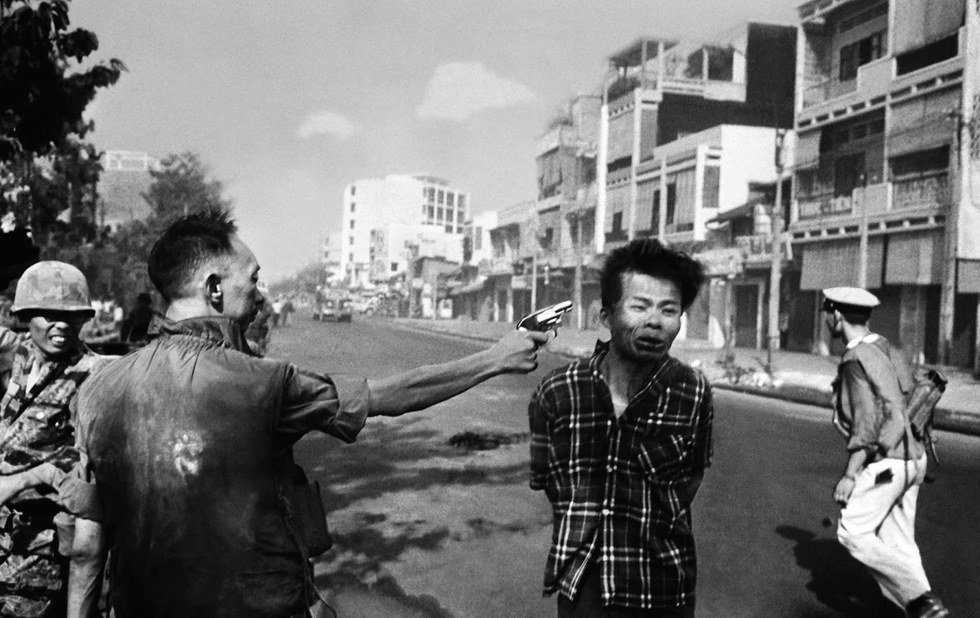
I am so sick of government.
I am sick of the petty divisions between the religious and the non-religious.
I am sick of political and social reactionary patterns.
I am sick of confirmation bias.
I am sick of white and blue collar workers headbutting with one another, when both are equally oppressed.
I am sick of the little digs, which even the most well-informed and socially conscious person will make towards the other sex, towards other races, ethnicities, and ideologies.
I am sick of arguing over the semantics of distractionary subjects, and appalled that we have refused to acknowledge other, far more serious subjects: at least not in any meaningful way.
I am sick of assumptions.
I am sick of not talking about what is so clearly the root of all this bullshit.
I am sick.
Laying on my side in bed, nothing significant is happening. I am scrolling through Facebook, listening to music, doing not much of anything. The feeling of something which needs to be said kept stabbing me in the back of the throat. The words weren’t there. They still aren’t. I’m basically just stabbing (angrily, hopelessly, sadly, fearfully) into the dark with all of this.
I thought about the differences between the society we live in today, and the different societies we have built throughout history. I asked myself, are there any differences? And the initial answer seems obvious: Yes, duh—of course!
Well, how?
Well, we wouldn’t have computers and cell phones and cars and mail people and shopping centers with christmas santas and dogs and houses and multiple kids and 401Ks and taxes, if it weren’t for the continual innovations we, as humans, have made.
And isn’t it true that our policies and ideologies have advanced? And that people have changed? Has not the general consciousness expanded, or at least shifted, over the past 200+ years of American growth? Everything now seems so different now from what we learn about the past: so everything must be different. It must be.
Physically, things are much different. This is clear. I won’t go into the pain of describing the differences, as they are too many. In fact, the differences are the only thing we do focus on in academia, and are therefore well established in the general consciousness. We look at our ancestors the way a child looks at a tiger behind glass: fearful of its savagery, though safely separated by the thin membrane of time and space. We are taught to look at the differences between writers of the 20th century, and the 19th century. The differences between business regulations before, and after WW1. The differences between the government before, and after Independence from Britain.
The problem of teaching kids in this manner should be glaring: instead of seeing the evolution of ideas which have always been around, we are presented with lists of individuals who appear to deviate wildly from the accepted course of action in order to find progress. The founding fathers, for example; or Einstein or Tesla; or Ford and William Randolph Hearst. These are all men (another unfortunate part of history) who have been painted as the great innovators: the pushers, the movers, the shakers, the bakers, the rollers, the cajolers.
I remember growing up with this certain picture of America, and, more importantly, a certain picture of how revolutionary thought and action comes into being. According to the education I received up until college, there seemed to be three factors involved in every revolutionary action/innovation: 1) being the universal/specific problem being faced, which up to that point had remained unremarked upon, or without solution 2) being the isolated specialist/group of specialists studying and fighting in order to eventually find a solution, which then 3) is spread out into the general consciousness.
This is the most important, and the by far biggest, line of bullshit we have ever been fed.
It’s important, firstly, because it cultivates a feeling of helplessness, isolation, and alienation: these three factors are what have allowed the State to operate since the beginning of organized agrarian society. Look at the real social changes, the ones that transcend the general feeling of helplessness/fear/isolation; the ones that have benefited you in positive, non-commercial ways: the famous american labor movements, food/drug movements, environmental movements, civil rights movements, feminist movements, LGBTQ movements, et.al: now realize that NONE of those movements were started, promoted, perpetuated, or brought to resolution by state authority: no, those were all us, baby. Those movements were born of people like you and I: sleepless dreamers who were so fed up with the history of human oppression, that they took to the streets and didn’t leave until the correct changes had been made (or, until the necessary amount of force arrived to disperse them).
These movements are almost always met with violence on the part of the State: let’s take the Labor movements of the 1800s for example. This was a time of especially high tensions for the recently established U.S government: both liberals and conservatives were wary of rebellions and revolutions, which they regarded as the misguided and destructive behavior of ignorant masses (Zinn). The west was still being settled, and law was inconsistent and corrupt throughout the country.
This period also marked the dawn of a new class, a class between the aristocracy and the poor whites/the slaves/the indians, which could act as a buffer of violence for the richest men in the country: what we presently refer to, rather significantly it seems, as the middle class (Zinn).
“This was the advance guard of a growing class of white-collar workers and professionals in America who would be wooed enough and paid enough to consider themselves members of the bourgeois class, and to give support to that class in times of crisis,” (Zinn). Essentially, what happened is, when industrialization first began it allowed men of status and wealth to invest their money in building infrastructure and factories: it also opened up the opportunity for a pyramid-scheme model of society to insert itself into american life: where the wealthiest of society delegated tasks to the next class (managers), who delegated tasks to next class (supervisors), on and on into the lowest of classes.
Interlude: this is not a new trend in agricultural societies, either. The act of the rich distancing themselves from lower classes is evident throughout all of history, across all continents, races, ethnicities, etc. Interestingly enough, as the middle class was given small portions of land and power, they began to see themselves as having significant amounts of political sway: and they were thankful. This is why the privileged classes tend to side with the State on all issues, despite humanitarian/environmental/ethical issues: because they feared loss of their worldly comforts, the State giving them protection and measly compensation, this middle class gave its soul and intellect up to the State, a higher power.
This is not at all a new trend.
Something new which did arise as a result of industrialization and independence, however, was the ability for the rich to intrude much further into the lives of their loyal workers; through wage slavery, labor contracts, and other, despicable means of worker domination (Zinn).
This oppressive system was met almost immediately with huge protests, riots, strikes, slow-downs, etc.,many of which contained upwards of 100,000 people. They were protesting for the 12 hour day; increased wages (many people lived off of about $.5-$2 a week); better working conditions; the right to unionize, and many other rights which we view as basic human rights. Unfortunately, responses from the opulent class to this desire for equality was, indeed, quite violent: from mercenary groups sent to fight protesters, to having the military called in, it seemed the rich were not willing to concede even a foot of ground towards the positive. The national news agencies were painting the protesters as fools, using their vast resources to insult protest groups’ platforms, as well as blurring the head counts and dismissing the protesters as mostly, “savages and slaves,” (Zinn). Anything in order to skew public perception.
Finally, after 40 years of fighting, several crucial steps were made in the Labor movements: but they came at the price of new, legal, labor contracts, which were created in essence to destroy the efficacy of the recent reforms.
The point of all this is rising out of the murk, slowly: but we have to go back a bit further before we can return to now.
I lay in my bed, staring at the flat white ceiling, dressed in plaid sleeping pajamas, the dim light of a rosy evening waning in the window panes, laying here thinking of human atrocities throughout history. Slavery. Rape. Mutilation. Retaliation. Domination. Wage slavery. Conquest. Hangings. Draw and quartering. Abacination. Child killings. Sacrifices. Flagellation. Whippings. Stranglings. Violent coups. Inquisitions. Crusades. Wars. Child soldiers. Fires. Pillaging. Fear. Disease. Drowning. Death.
And so, so, much more.
Think about the earliest parts of written history: the Egyptians owned slaves, who they forced to build the pyramids. The Greeks, Romans, Hebrews, and Mesopotamians also kept slaves, who they forced to build their empires. The main form violence took in Antiquity, despite the institution of slavery, was that of military conquest. Slaves were actually a result of conquest: the more you warred, the more territory you got, and the more slaves you got. The more territory you got and the more slaves you had permitted more food to grow; this allowed population growth, as well as increased power/resources for those at the top. The most effective government has always been viewed, from those within it, as maintaining strict and total control over its population by means of coercion, violence, propaganda, etc., as well as its ability to expand territory.
Subsequently, Anglo-Saxon communities built their societies off this same concept of divide and conquer: knights were encouraged to expand territory; bishops were corrupted, demanded large donations from church-goers (in addition to taxes), as well as acting the part of local judge/jury/executioner; taxes were implemented; militia units began organizing under rulers for fear of revolt, and were given permission to rape/pillage any area they conquered, as a ‘thank you’ from the ruler in charge. It was the same practices utilized by the famous states before them: what made the Anglo-Saxon tradition of government so different and attractive was its decidedly more rigid and logically organized social order, and its increased capability to intrude into the lives of subjects (by means of taxes, labor contracts, and control of resources/knowledge (seeing a pattern yet?)).
And, of course, the territorial conquests of the early 14-15th centuries are infamous, both for their extent, and their violence. Giant ships allowed these same militias, who had once terrorized only those within marching distance, to begin colonizing overseas. Guns were invented, allowing superior arms against any native or slave, and would help repel the rebellions of workers. Essentially, this period of history before the war of Independence was an incredibly violent one: state powers being forced to expend nearly all their manpower to maintain control over these distant lands. There were battles and wars waged yearly between natives and settlers. Back home, in Europe, the labor class was in no better condition than the natives of foreign lands; forced into cramped quarters, for money which could only be spent at their place of work. It seemed that everywhere around the world, still, as always, people were suffering.
So, I know that I just gave an almost offensively simplified overview of history, but I wanted to get the general gist across. Either way, abstracted or not, you and I have walked our way back up to the war of Independence, and the creation of America. This is where most people believe history took a dramatic turn: it’s as if people believe that the ideas America was founded on were in any way original, or different, from the ones all other societies have been founded on. As if the idea of democracy didn’t come from the Romans, or as if our secular beliefs didn’t descend from George Jacob Holyoake, or as if the ideal of egalitarianism wasn’t something natural inside of us all. This history of America’s fanaticism over our own individuality is key to understanding why the secular world we live in seems so violent: it is the string which leads us back to the now.
Many secularists today believe religion to be the cause of all this historical violence; on the surface, this seems obvious. But, as evidenced above, it was never the church promoting violence: in fact, nearly all religions, in their original forms, were created to fight the violence going on all around. No, it certainly wasn’t the church promoting violence: rather, it has always been State power appropriating religion in order to justify their violence. Conversely, many religious people today believe secularism to be the historical cause of violence: stating that, throughout history, atheists and secularists have been the causes behind violence (just like how secularists blame religious folks for creating violence), and now that secular liberals are in control, they (religious people) tend to fear them (the secular liberals) for the same exact reason secularists hate religious people: each group believes the other to be the source of all historical violence.
So who the heck is the cause of this drastic push forward?
All of us.
Those in power center the national discourse around ideas and ventures which will benefit only them. They try to form policies and laws which will benefit only them. And, as is clear by the gross inequality of resources/wealth, they have largely been successful.
It is quite a shock to realize that it is not our own individuality we have been chasing around for the past century (searching for the right kind of ways to express ourselves, I mean (as in, like, ideas, clothes, religions, political outlooks, social awareness, etc. (think about how many different ways we all try to express ourselves, to distance ourselves from others))): no, the individuality we are chasing is that of other people. We are, each of us, pawns in a game of international chess: each being taken advantage of in myriad ways, by myriad State/corporate powers, in petty ways which we are able to justify against the backdrop of our many daily middle-class comforts.
Secular government seems to have left a gaping hole at our moral center; the place where we all used to congregate and interact communally is now void, cliche, unmentionable, violent, dangerous.
This fissure between the religious/non-religious has been holding our country in stasis since its very beginnings.
The argument is something we are all familiar with: it underlies nearly every discussion (whether political, social, economic, spiritual, philosophical, scientific, etc.) going on in our country today. Karen Armstrong wrote a great book, titled Fields of Blood, wherein she asserts that the true difference in the new independent American government, was its focus on nationalism over religion. This is important because, whereas territory used to be divided up and conquered on a basis of religion, now territory took the form of physical, secular separation, marked by the flags and colors of that country. Instead of, “Glory to God!” Americans now shouted, “Glory to the U.S.A!” It was the same passionate fervor we so often associate with religion, now transposed onto the face of secularism.
So, the point of all this? Basically, thus: nothing has changed except for what we have at our disposal.
This is both a detriment, and a reason to hope.
A detriment because ever-increasing technology allows the State to separate further and further from its citizenry.
A reason for hope because increased technology gives, even if only in small measure, the power of communication back to the hands of the people.
Now, as I sit here, in bed, I see that we are planning a war with Russia: that hundreds have been killed and injured in Nice, France: that the military in Turkey is currently carrying out a coup.
I see my human brothers and sisters killed each day by powers who prey on the fact that we who are, all of us, oppressed, will never be able or willing to reconcile our seemingly irreconcilable (trivial) differences.
This is what holds us back.
It leads me to this final thought, what I’ve been wanting to say all along: the state has had its turn: the rich have had their fun: corporations have held power for far too long.
I say: no more.
The government (any and every governmental body, not just liberal or conservative, fascist or democratic, socialist or capitalist) has shown us that its only function is to perpetuate control through means of violence and coercion.
We have been divided for long enough.
We have given the State, politicians, “heroes”, enough chances.
They have failed us each and every time.
Our meager requests have been met with bullets and bullshit.
Now, we must take back what has always been ours, yet has never been ours; that which has always been our right, but has and never will be given to us: we must recover and claim our destiny.