

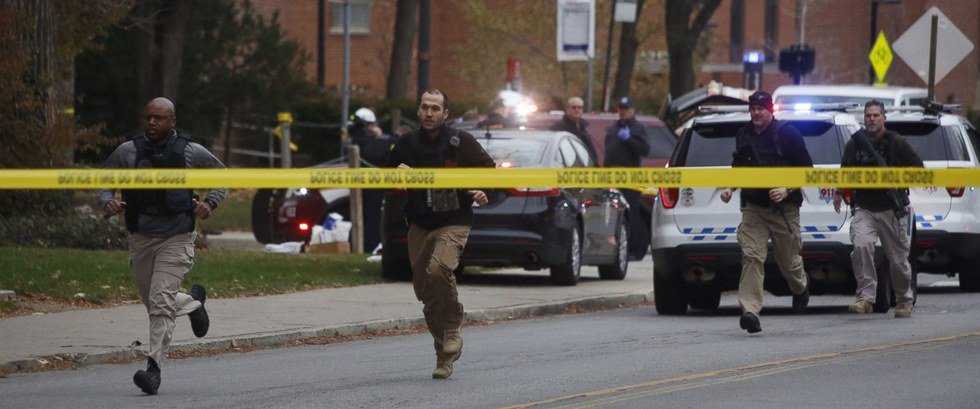
As I sat in my philosophy class it was hard for me to stay focused. My mind was racing with thoughts about the incident that had occurred only hours before at The Ohio State University. Thoughts about my friends who went there crossed my mind and I inevitably quickly began to stop paying attention to the lecture about Hannah Ardent’s, “Thinking and Moral Considerations”. However, as my professor went on with her lecture, certain points quickly caught my attention as they related to the horrible situation that had just occurred. One of Hannah Ardent’s main points in her lecture, was the banality of evil, which is the premise that ordinary people are capable of committing extraordinary evil things. As my professor went on, I learned that Ardent believed that one can avoid the banality of evil by merely thinking. While all of this may have made sense to Hannah Ardent at the time she wrote this, it did not make sense to me today. I could not comprehend how Ardent could apply the concept of using judgement to avoid evil situations to everyone. How could this concept apply to those who do not have the ability to make ”correct” judgements? The perpetrator who attempted to run over and stab students is not the first of his kind. There are many other people like this suspect: The Columbine shooter, the Sandy Hook shooter, Alex Hribal (the student who stabbed 20 people in his high school), The West Virginia University shooter, and so on. All of these people have a similarity, they all lacked the ability to make rational judgements. In my mind, Ardent’s argument could not possibly make sense and apply to everyone in our world today.
Ardent went on to state that questioning ourselves is good because it challenges our thinking. Let’s say that the perpetrators did in fact question their thinking before choosing to act. Regardless if they questioned themselves before they committed those evil crimes, the answers the perpetrators came up with were ultimately not rational and as most people would agree, are considered wrong. But this is not a question of right and wrong. Almost everyone will agree that choosing to injure innocent people is wrong. First, there is a deeper issue to note. The people who chose to take part in these heinous crimes were not in the right state of mind. Nobody in their right state of mind wakes up in the morning and decides to shoot or stab innocent people, especially ones that they do not even know.
Ardent says there are no permanent solutions to important moral questions raised. And to this statement, I can agree. In relation to safety at lower-level schools and universities, no one can stop people from doing certain actions. Yet, there are ways to prevent these terrible acts from occurring. I feel as if I sound like a broken record, but gun control and mental health screenings are vital steps to prevent gun violence. However, should conversations now be raised on knife control too? Although it is not the first of its kind, The Ohio State University incident has shown the public that schools are not only subjected to gun violence, but knives as well.
It is hard to stop events like this, especially when no one knows someone is planning to commit these crimes (not to mention the general principle that people who are not in their right state of mind are going to do what they want, regardless of public opinion). It is even harder to stop these events, when states (like Ohio) allow anyone to own knives. But there are steps to prevent these types of situations from happening and The Ohio State University incident is just another situation, like many others, that shows the world why we need to be proactive and take steps now. It should not take another incident to occur at a primary school, secondary school, or university for people to start questioning how one increase school safety and decrease the violence.