

May is Mental Health Awareness Month. Mental illness has a stigma attached to it that sometimes makes it difficult to talk about, but that doesn't make it go away. Mental illness is very prevalent in college students and needs to be a topic openly discussed between students, staff, faculty and the community. So let's start talking.
Approximately one in five adults experiences mental illness in a given year. Of that population, only about 41 percent of adults experiencing mental illness receive medical health services within that year. One in twelve college students makes a suicide plan according to National Data on Campus Suicide and Depression. Almost half of students surveyed (49.5 percent) have felt hopeless over the past year.
Learning how to recognize and respond to mental illness in college is as important—if not more so —than learning how to write using APA format or learning how to do complex math equations to answer life's important questions. In a 2012 survey a college student with a mental health illness stated that s/he thinks, "There should be a mental health and wellness course that is mandatory for the first semester of all incoming students." And why not? College is the time to focus on skills and experiences that will make you better as a person once you graduate and enter the "real world." Mental health should undoubtedly be one of those things students learn about in college. Creating a mandatory course is a decision that only a university can make. So during Mental Health Awareness Month what can we as students and allies do to better advocate for mental health awareness?
Learn about mental illness.
The National Alliance on Mental Illness (NAMI) has a wealth of resources to help you educate yourself on mental illness and take the next steps to helping yourself or others. This website helps you to "know the warning signs" while this one explains the types of mental health conditions. Visit your campus's counseling center to find out what resources are available to students at your school. Check in with mental health providers in your community. Go out and get educated about mental health—being informed the best first step to helping yourself and others.
Change your perception.
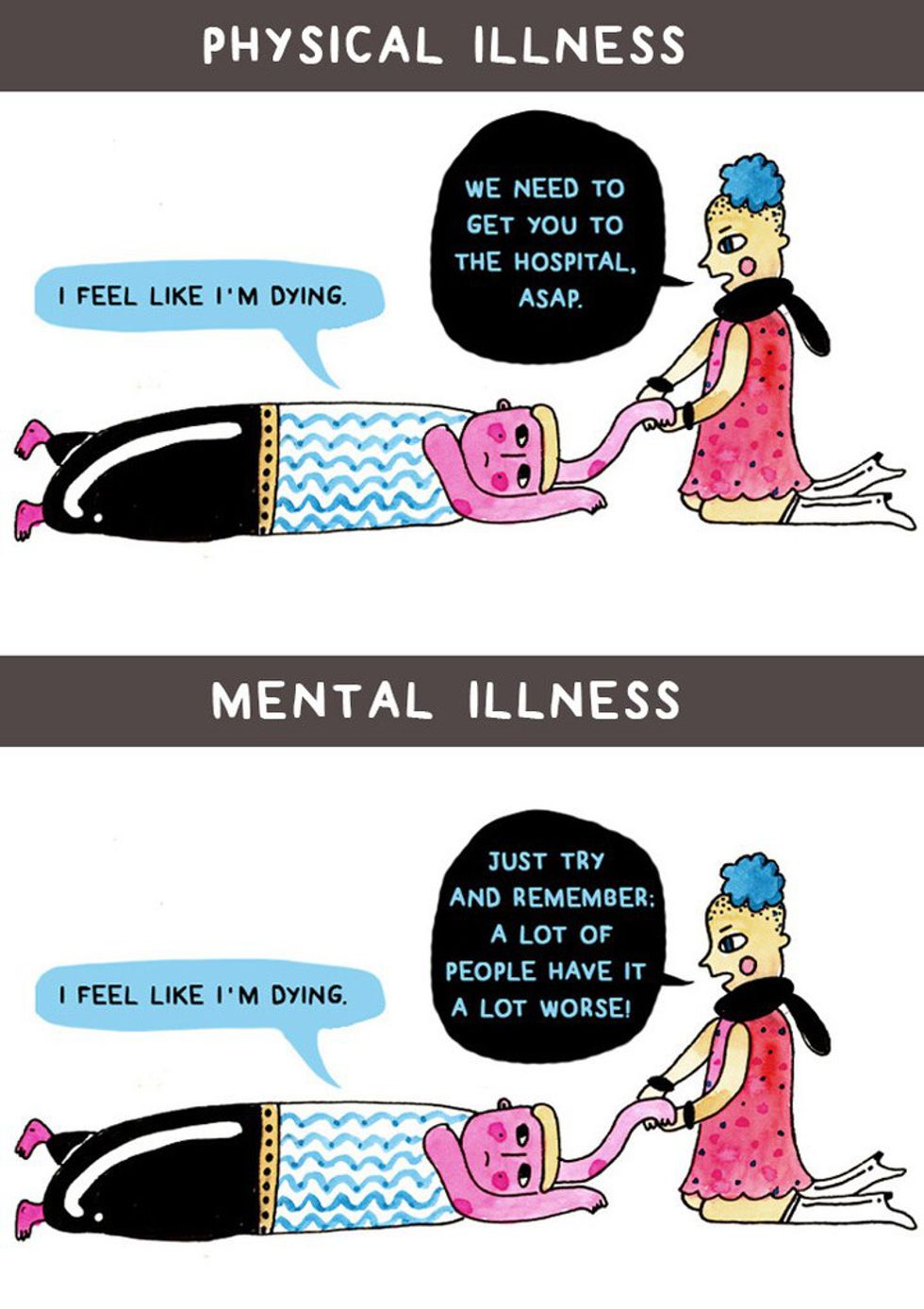 Mental health is as real and important as other medical conditions; depression is not something you just "snap out of." When someone has an anxiety attack, there is a physical reaction going on in her/his body. Doctors should treat mental illness the same as they would any other ailment or symptom—seriously and with your health in mind.
Share your story.
One in three college students in a recent survey reported prolonged periods of depression. Depression is more than feeling sad or down in the dumps on occasion. It is more than having a bad day today. Depression can mean feeling empty or hopeless, fatigued or irritable, being physically unable to get out of bed in the morning or having thoughts of severe helplessness or suicide. Imagine you're in a class of 30 students—ten of the people around you (maybe even you) have likely experienced prolonged depression. It is not something to be ashamed of or embarrassed about. If you're comfortable sharing your story, it could help another person who feels the same as you but doesn't know what to do about it. The more we talk about mental illness, the more people will understand the struggle and the courage it takes to deal with and conquer things like depression, bipolar disorder or anxiety.
Listen and break the silence.

Listen when someone is telling you about recent struggles or bouts with mental illness. Don't ignore what is being said and don't brush it under the rug. Actively listen and respond. Offer help, encouragement, love or a shoulder to cry on. Don't get trapped in the big bubble of silence after a friend or someone you know tells you about something going on in her/his life.
Take the Stigmafree Pledge!
Think about the words you use and how you're describing things, people or places. See the person and not the illness. Promote acceptance and actively challenge stereotypes (i.e. people with mental illness are lazy, crazy, or psycho). Words have power and meaning and by taking the Stigmafree Pledge, we encourage acceptance and understanding of those living with mental illness.
Spend this month of May learning more about mental health for you or a friend in need. Keep in mind, you could make a difference in what seems like the smallest way by just asking how someone's day is going and not taking "fine" for an answer.