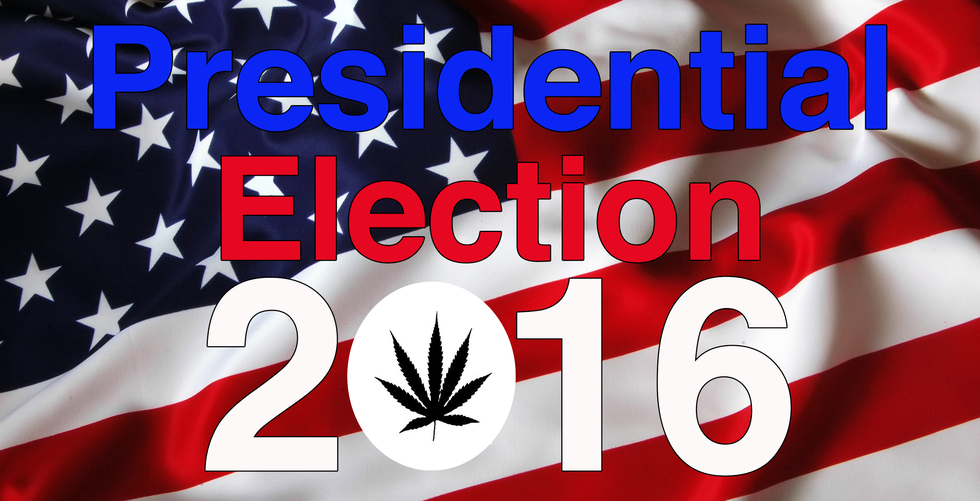
This upcoming election is filled with questions and debated
platforms that, if unfitting to the candidate’s agenda, can be skewed one way
or another, answered with an empty promise, or simply dodged altogether. Amid
these redundant talking points and disappointing responses that viewers and
voters are sick and tired of hearing, there is also a policy up for debate that
candidates have no choice but to tackle head on due to its rising popularity in
the medical world, its positively projected impact on the economy, and its
steady demand from recreational users. Marijuana, whether for medicinal
purposes or for personal recreation, is going to be rebranded and redefined in
its uses, benefits, and downsides, as this election is a turning point for the industry,
whether you are for or against its use. No longer is there a taboo connotation
that lingers with the topic of marijuana, and this election will go to show that
as times and beliefs change and medical research grows, so do political plans
and public demands to fuel those agendas. The conversation of marijuana is not
one that is reflected specifically by democrats or republicans, but by all
involved in the political and world policy making on all levels. Not every
political figure or presidential candidate is on board with the growing
interest in marijuana, but nonetheless this upcoming election will make a great
impact on the marijuana industry, whether for medicinal use or full
legalization.
Medicinal marijuana use on the ballot
With the growing interest in the benefits that medicinal
marijuana can have and the rapidly improving research and medical knowledge of
marijuana, more states are gearing up to vote to legalize. Florida, Arkansas,
North Dakota, and Montana will be on the ballot in November for legalizing
marijuana for medicinal use. In Florida, Amendment 2 will be the deciding
factor as to whether there will be dispensaries that are regulated by the State
to provide medicinal marijuana to those with specific medical conditions;
conditions such as HIV/AIDS, epilepsy, multiple sclerosis, PTSD and Crohn’s
would be monitored more closely in regards to receiving treatment. In Arkansas,
the Arkansas Medical Marijuana Amendment is a proposed constitutional amendment
that would allow an independent contract to award licenses for up to eight facilities
for growing and up to 40 dispensaries statewide, with the same regulations and
medical intuition that is prosed in Florida. Montana proposed Initiative 182,
that was filed as a means of expanding legal access to medical marijuana and
would also include vast benefits to those with conditions such as PTSD and
Crohn’s. The last state on the ballot to propose medicinal marijuana is North
Dakota with the North Dakota Compassionate Care Act, that would permit the
possession of up to 3 ounces of marijuana for the same conditions as the previously
mentioned states, including HIV/AIDS, epilepsy, multiple sclerosis, PTSD and
Crohn’s, and glaucoma. It also allows for people who live more than 40 miles
from a licensed dispensary to possess up to eight individually grown plants.
Full legalization of marijuana on the ballot
In Arizona, Nevada, Massachusetts, Maine, and California, marijuana is on the ballot for more than just medicinal use, although this is a step that a substantial number of Americans are not quite yet on board with. In Arizona, Proposition 205 would allow adults to possess up to an ounce of marijuana, grow up to six plants, and consume marijuana in private spaces. Nevada’s ballot will include Question 2, which has been on the ballot for 18 months, proposing to make it legal for adults 21 and older to buy marijuana for recreational use, possess up to an ounce, and grow up to six plants at their home. In Massachusetts, under Question 4, adults 21 and older can possess up to an ounce of marijuana, while keeping up to 10 ounces of marijuana at home, and the ability to grow up to 6 plants. Question 1, Maine’s proposal, was not an easy one to get on the ballot, but if successful will allow simple recreational use for adults 21 and older and the freedom to grow up to 6 plants. Lastly, California is on the ballot with Proposition 64, which would allow those 21 and older to possess up to an ounce of marijuana, purchase cannabis products from licensed retailers, and grow up to 6 plants for personal use.
With these states deciding in a few weeks how they will reevaluate their look on marijuana, personal opinions no longer take reign as to if it should be legalized. Whether for medicinal or recreational use, the likelihood of legalization is rapidly growing, and it is up to the voters, policy makers, and politicians we elect to voice our opinions, and to open the door to the opportunities that these amendments and propositions hope to be a catalyst for.