
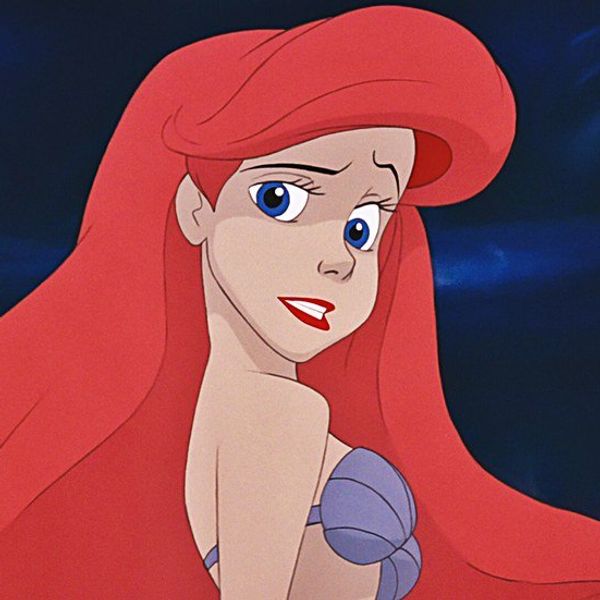
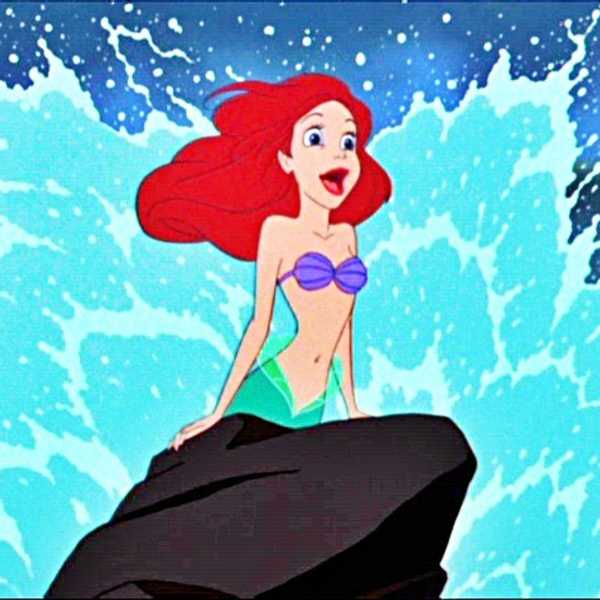
Like most 90’s children in America, I grew up watching a lot of Disney and Pixar movies. I still remember falling in love with the magical stories of the Disney princesses as I was introduced to the world of Disney animation. Though I could not relate to any of the dainty blonde-haired, blue-eyed beauties on screen, their stories started to define some of my own expectations and standards for myself. The way I saw the world was shaped to adhere to what I saw on screen, and this included how I saw myself. I started to dislike how dark my hair was, longing instead for Ariel’s flowing scarlet locks or Aurora’s golden tresses. I felt ashamed of the shape and color of my eyes, coveting the long lashes and elegant brow bones of my non-Asian friends. Even my elementary school crushes fell into the typical “prince charming” category of white boys with blonde hair and blue eyes. At that time, I was too young to understand how the sexist cliches and stereotypes embedded within these movies were altering my perceptions of the world, and so I continued to be enthralled by these stories of “happily ever afters.”
In my late elementary/early middle school years, I came across "Aladdin" (1992) and Jasmine became my new heroine. I adored her spunky, defiant personality as well as her love for adventure and exploring the unknown, identifying with these traits far more than the demure, soft-spoken ways of the other princesses. Furthermore, Jasmine was the first Disney princess with dark hair, dark eyes and skin that was not "white as snow", yet was still considered to be beautiful. It was a pretty earth-shattering moment for me.
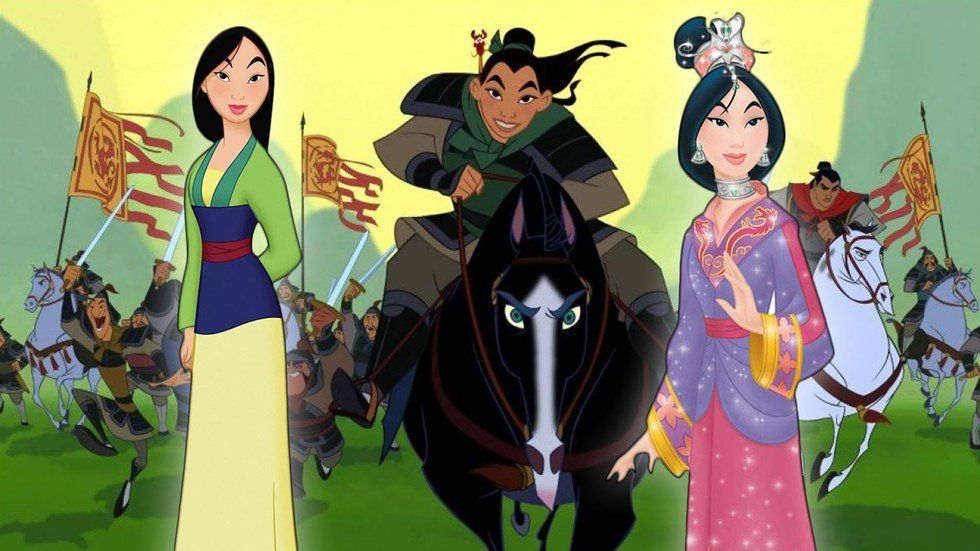
However, it wasn’t until I watched 'Mulan" (1998) that I truly found a role model I could identify with and look up to. Not only did she look like me, speak like me, have similar family values as me and share a native culture with me, but so much of her personality and passion resonated with me. Seeing Mulan made me realize that I could do great things and still be myself. I didn’t need golden hair to be beautiful, I didn’t need a prince to be valued, and more so, I could be my own hero. I can be a part of the fight, not just “sit still, look pretty” (yaaas Daya) in the background.
Mulan opened my eyes to who I could be, setting me free of the invisible limitations I had subconsciously placed on myself from the influences of other Disney princesses. While Ariel spent half her movie mute, Mulan taught me that I had a voice and I should use it to fight for the things I can about. Aurora sleeps through half her movie and is literally just a “sleeping beauty,” while Mulan freaking saved the entire country of China. Snow White, Aurora, Cinderella… they were all saved by their heroic prince figures, yet Mulan was always on equal footing with Shang. Actually, she saved him! Honestly, that scene where everyone bows down to her amidst epic music is, in my opinion, one of the most iconic Disney scenes of all time. She is the OG YISAW. And for those of you who don’t know what YISAW means, get ready to drill this acronym into your head because us Young Independent Strong Asian Women are on the rise.
Not only do I love that Mulan is a YISAW through and through, but the movie soundtrack still hits me in the feels to this day. The song “Reflection” is a hugely relatable song for me, and I think that goes for many young Asian Americans. The idea that “if I were truly to be myself, I would break my family’s heart” speaks to the Asian American experience of having a foot in two worlds, living under the expectation of conforming to American norms while also adhering to familial and cultural expectations. I understood the pain that Mulan felt when she chose to go against her family’s wishes in order to protect them. Her betrayal was an act of love, and that is something that shakes me to the core even to this day.
Despite being an old 90’s Disney animation, Mulan still has present day influences, which is why I felt inspired to write this piece. Recently, there has been lots of debate over Disney’s recent statement on producing a live-action Mulan. There was a burst of excitement from lovers of Disney, especially in the Asian American community. However, there was also a lot of uneasiness towards how Disney would go about this, in light of the recent whitewashing incidents of many Asian roles in Hollywood and mainstream media. In an attempt to push Disney to stay true to the Mulan that we know and love, many people, Asian Americans and non-Asian Americans alike, have been fighting for accurate representation and portrayal of our beloved heroine. With the growing demand for Asian American representation in media, it is no surprise that there is a petition going around to ensure that the actress for Mulan will be Asian and even a hashtag of #MakeMulanRight being used all over social media. In general, the Asian American audience is making a point to hold Disney accountable for this upcoming film.
So who knows! Maybe Disney will screw this up with some classic whitewashing, white savior complex, and all that good stuff that Hollywood’s been doing lately, dashing the hopes of millions of Disney fans. Or maybe—just maybe—they’ll get it right.

















