
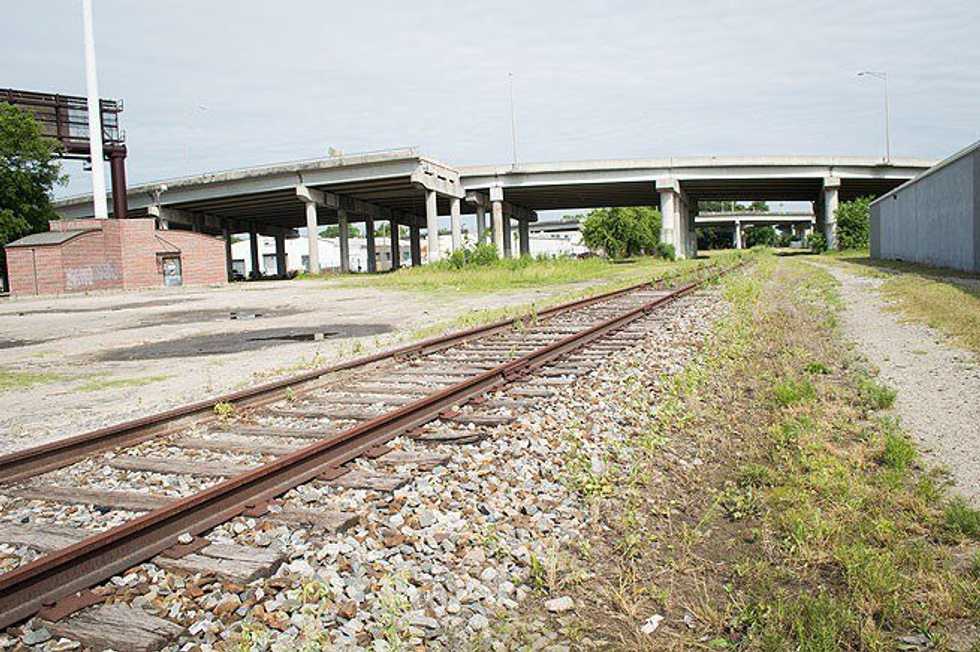
The scene is a bleak one: there is disintegrated, decades-old gravel beneath your feet. Perhaps for the first time as a pedestrian in the city of Charleston, you look around and you are not surrounded by elegant steeples nor blocks upon blocks of boutique shops. Instead, you take in an expansive, elongated clearing. From here, you can see the unsightly building-backs of the Post and Courier, U-Haul and Barsa Lounge. You walk a few steps forward and beneath tufts of dying tawny weeds, you see the railway. A mess of splintering wood and rusted rods stretches on for miles in this linear clearing and, scattered about, the homeless rest on its outskirts. These tracks have not been used by a train in at least 10 years. Since its last train, the railway has been left to rot. From the tracks, the motorists and pedestrians of King Street can still be heard in the distance. Combustion engines and indistinct voices hum to the banging rhythm of some nearby piece of construction equipment. This space is what some in the community have nicknamed the “Lowcountry Lowline": two miles of derelict railroad tracks that a nonprofit group called Friends of the Lowcountry Lowline is trying to transform. The group’s plan is to gather the funds needed to purchase the property from Norfolk Southern and to construct a linear public park in the old railway’s place.
According to Ginny Deerin, the Lowcountry Lowline Project’s director, the railway itself has an interesting history. When still in use, the track carried a single freight car full of newsprint to the Post and Courier every so often. "That was its sole purpose about ten years ago," said Deerin in an interview. Apparently the track's pre-newsprint delivery history is largely a mystery, though the railway is thought to be one of the oldest sets of tracks in the region. The first step for the Friends of the Lowcountry Lowline is to raise the funds needed to purchase the land. Until an adequate sum of money is raised by the team, the future of Charleston's first linear park is uncertain.
As the unfortunate facts of climate change, rapid industrialization and human health issues become increasingly apparent to U.S. residents, municipalities like Charleston are becoming more aware of their roles in abating these problems. Under the umbrella of environmental problems fall numerous issues – some of which are natural, but most of which are induced by human civilization. Three of the most impactful of these human-created issues are decreased mental well-being as a result of stressful urban lifestyles, increase in obesity due to spending less time performing physical activities, and the destruction of oxygen-producing plants: the building blocks of all animal and human sanctuaries. Ultimately, for people who live in cities like Charleston, the combined presence of accessible plants, physical activity and fresh air ultimately serve as antidotes for the physical and mental stress that manifests in people as a result of living in an urban environment. With the possible construction of a new landscaped linear park, the city of Charleston will be well on its way to promoting a "greener" urban lifestyle. Especially in the densely populated peninsula region of the city, shared "green space" can be highly beneficial.
The people-oriented and environmental motives behind the Lowcountry Lowline Project show that the city of Charleston is willing to evolve. Those involved in the project are focusing on the benefits of the proposed green space in terms of Charleston residents’ general well-being, not just in terms of gentrification. According to Deerin, the linear park will hopefully be family-oriented and enjoyable for all residents of the city.
“Whatever we do here, it will be a safe, beautiful way to walk or ride your bike up and down the spine of the city,” said Deerin. “Of course, it will be a big plus for parents to know that their kids have a safe route to walk or ride to school."
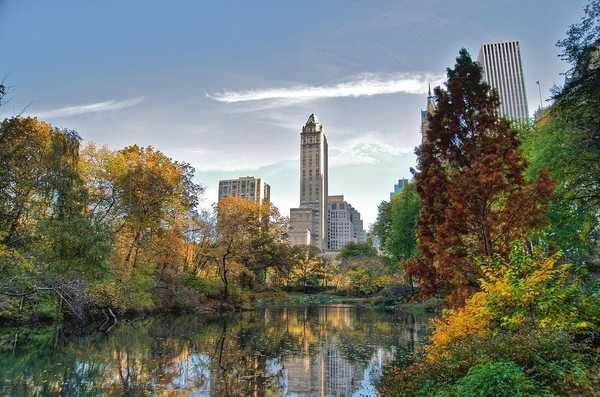
The development team envisions the proposed linear park as Charleston’s own version of New York City’s High Line, a park very similar to the Lowline in origin and size. The High Line stretches 1.5 miles and was also built along an abandoned rail line; the obvious difference between the two is that the High Line rises above Manhattan’s lower west side, offering visitors a distant escape from the city’s busy urban environment. The Lowline will sit at ground level, but will play a special role in connecting older neighborhoods that were severed from the rest of the peninsula by the construction of Interstate 26 to newer neighborhoods. Moreover, the Lowline will offer almost two full miles of green space in the middle of the city for Charleston residents to ride their bikes, take walks and bring their children to play.
It is no myth that fresh air and natural environments like grassy public parks, beaches and mountain trails have a direct positive impact on both mental and physical health. According to the results of Beyer's quantitative cross-sectional study entitled, Exposure to Neighborhood Green Space,” which was performed on both urban and rural residents of Wisconsin neighborhoods, “higher levels of neighborhood green space were associated with significantly lower levels of symptomology for depression, anxiety and stress." To ensure the reliability of the study’s results, the researchers controlled for a wide range of confounding variables such as inheritance and time participants spent as residents in their neighborhood.
In addition to funding, the developers behind the Lowcountry Lowline Project are seeking community support.
"Now's the time," said Deerin. She also stressed the importance of millennial voices -- more specifically, College of Charleston student opinions -- in making the park a reality. The Friends of the Lowcountry Lowline can be "liked" on Facebook and donations may be mailed to the group's headquarters (listed on their Facebook page).