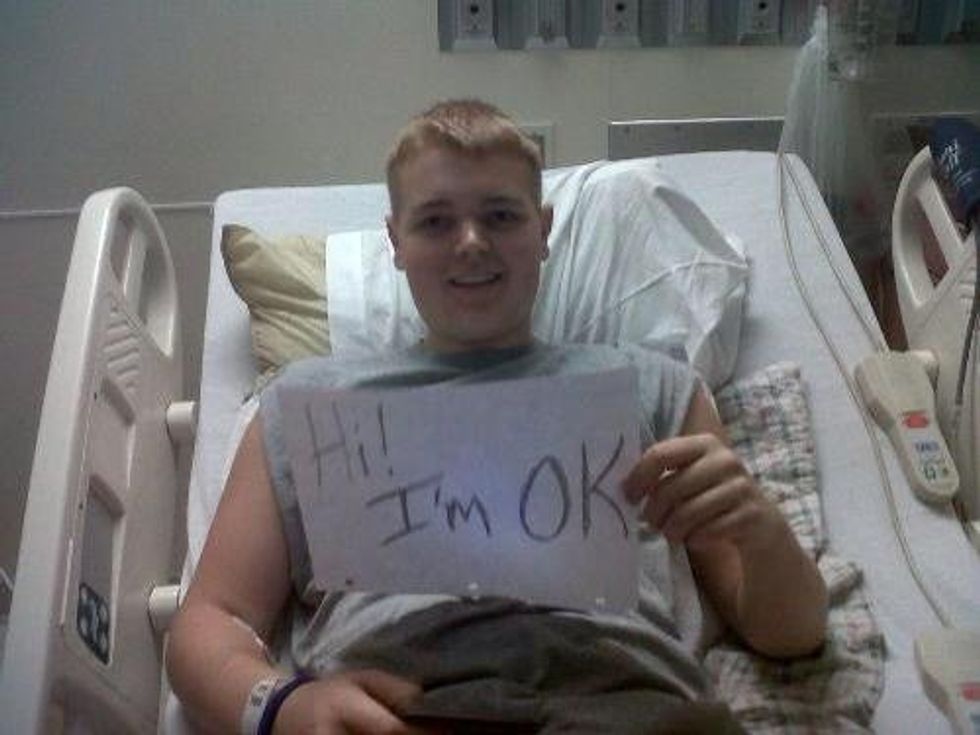
Life Lesson 1: “Today is going to seem like the darkest day of your lives, but I promise you, things will get better.”
These were the words spoken to me several years ago by my doctor as she told me I had cancer. She was absolutely right, no day lasts forever. When it seems like the world can't get any darker, you know the only option left is for a little light to start shining. These words became the first of many life lessons that I would soon learn throughout my journey.
I was diagnosed with Acute Lymphoblastic Leukemia on April 22, 2011. Leukemia is the most common type of cancer found in children, making up around 25 percent of all diagnoses in patients with ages ranging from zero to 19 years old. The disease begins with the mutation of a white blood cell, which causes it to begin multiplying rapidly and uncontrollably. These leukemia cells don’t really do anything except take up space, crowding out the healthy cells in the blood stream. As healthy white blood cells are replaced by the ineffective ones, the body loses its ability to fight off infections. When the platelets and red blood cells begin to be crowded out as well, it becomes unable to form blood clots or transport oxygen throughout the body as effectively. As a result, there are several symptoms that generally present themselves to give some warnings of this disease. You might get sick easily, or your illnesses may take longer to cure than normal. One of the more obvious symptoms is excessive bleeding. You might get nose bleeds for no reason. You can also bruise excessively from the slightest of bumps; these bruises will look gruesome, and they won’t go away for weeks. If oxygen isn’t being transported throughout the body, you will begin to feel sluggish and fatigued. You might be thinking, “This sounds kind of depressing, Eddie. Why would I want to read this?” Bear with me, I promise that’s not what I’m going for here.
Life Lesson 2: If you look for blessings in life, you’ll find them. If you’re busy looking for darkness, you’ll find that instead.
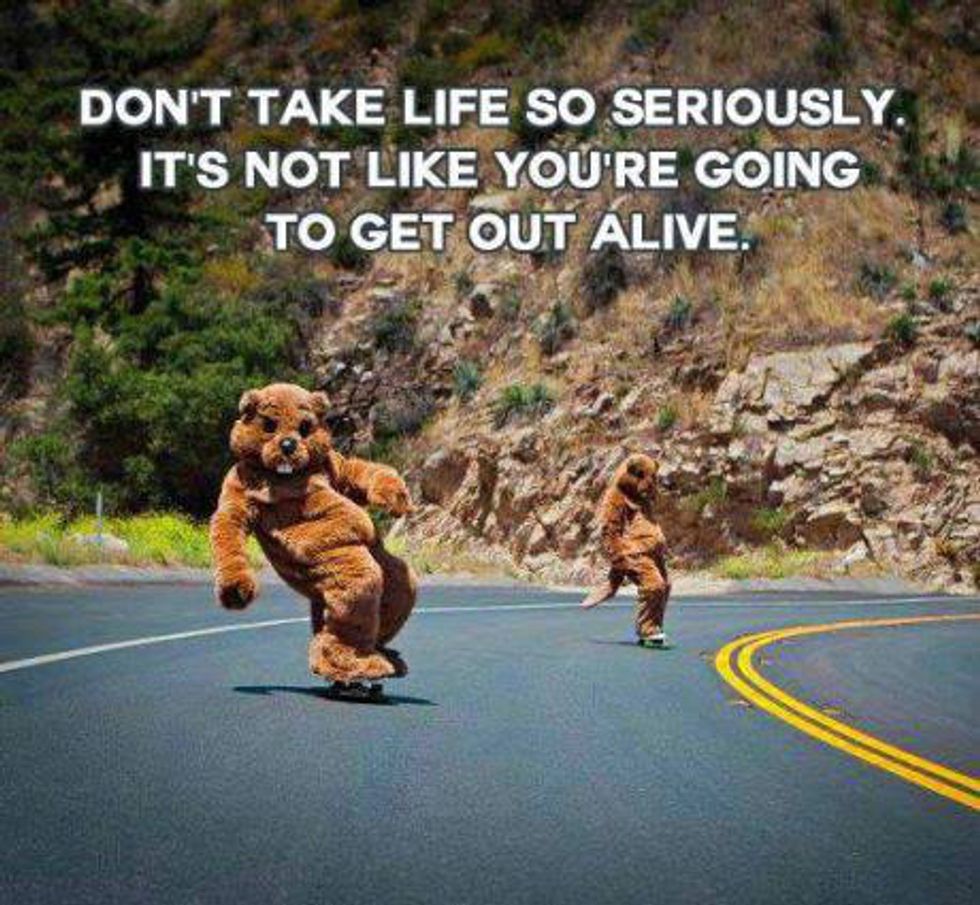
Like I said, I learned several life lessons through the duration of my treatments, and one of the most important ones was the importance of maintaining a positive attitude. Sure, cancer sucks, but that doesn’t change the fact that it affects millions upon millions of people around the world every year. It doesn’t really matter how we feel about the disease; it is here to stay, at least for the foreseeable future, and there’s not much we can do to change that. If you’re one of the people unlucky enough to be challenged by a cancer diagnosis, you are faced with essentially two options. Your first choice is to take the easy way out: go into depression and complain to everyone you meet about your poor run of luck, which will effectively suck all of the joy from the atmosphere. Your second option is slightly more difficult for most people: keep your head up, and make the best of a bad situation. They say that there’s a silver lining behind every cloud, and I’m a firm believer that this is true. My cancer diagnosis provided me with several wonderful opportunities, and it allowed me to meet many new friends in the hospital. This mentality doesn’t just apply to those with cancer, either; it can be used interchangeably with nearly any problem encountered throughout life. Did someone back into your car? Getting angry won’t fix the dent. Did you fail your last chemistry test? Crying about it won’t raise your grade any higher. To paraphrase writer Elbert Hubble, “Don’t take life too seriously; it’s not like we're going to make it out alive.”
Life Lesson 3: It’s only hair…
It’s no secret that the treatments for cancer aren’t exactly what you would call “fun.” The side effects vary from person to person, but there are several that remain fairly constant. The first one that comes to mind for most people is the hair loss, which occurs fairly quickly after beginning treatments. I was warned that it would happen, of course. One nurse even tried telling me that she once had a patient who went to an amusement park shortly after he began receiving chemo treatments. She said that he got in line for a roller coaster with a full head of hair, but when he came off of the ride, it was completely gone. After my initial month-long hospital stay, I remember going home and waking up one morning with clumps of my beautiful blonde locks on the pillow. I would reach up to scratch my head, only to be met with yet another handful. At one point though, I decided to get rid of my hair on MY terms. It’s only hair, after all. When it was falling out, it was a constant reminder that I had cancer. I was able to have some fun with it in the meantime, too. In the weeks before it all fell out, my hair was dyed, bleached, shaved into a Mohawk and eventually dyed again (this time with my high school team’s colors). Throughout the process, I had some control. When life deals you a bad hand, all you can really do is find what you can do about the situation and take back that control. It’s only hair.
Life Lesson 4: You’re going to have a bad day every once in a while.
Chemotherapy drugs consist of chemicals that definitely do not belong in the human body. When they pump you full of the stuff, it doesn’t always react well. I remember being on a regimen of one chemo drug in particular, called methotrexate. It came in approximately five-liter bags of a neon-yellow liquid. To paint a picture in your mind, it looked like someone removed the bag from a box of Franzia, emptied out the shitty wine, and refilled it with Mountain Dew. Does that really sound like something that belongs in a person’s bloodstream? The drug was given over the course of around four days, during which I was confined to the hospital. I was relatively lucky with most of the medicines that I was given. For the most part, I didn’t experience any of the nausea or vomiting that normally accompanies many chemotherapy drugs. I wasn’t so fortunate with methotrexate. The only thing that might have made me throw up more than I did during those four-day stays would be if I had walked in on Danny DeVito having a three-way with Betty White and Rosie O’Donnell. The point I’m trying to make here is that you’re going to have a bad day every once in a while. The key to this lesson is that you can’t let them get you down. When I was finally released from the hospital after those four days, I was one of the happiest guys on the planet. I imagine that it’s similar to how the main character in “The Shawshank Redemption” felt when he finally emerged outside of prison walls, covered in human waste, after crawling through miles of sewage pipe. Bad days are blessings in disguise; they make even the most average days seem fantastic.
Life Lesson #5: Good deeds have an enormous impact on the world.
My diagnosis took place during Easter weekend. While I was in the hospital, I woke up on Sunday to see an Easter basket sitting next to my bed. It wasn’t from friends or family; it was from a group of people who I had never even met, an organization called Basket of Hope. The group was created by a family whose child had also been diagnosed with cancer. They understood how boring it was to lay in a hospital bed for days on end, so they decided to take action. Their mission was to put together baskets filled with games, movies, puzzles, etc. which they would then deliver to patients stuck in local hospitals. I began to think more and more about the group, and how amazing it was that anybody would go so far out of their way to make life better for complete strangers. It struck a chord in me, and it was at that moment that I learned yet another life lesson: Good deeds have an enormous impact on the world. One of the coolest experiences that I ever encountered was being contacted by the Make a Wish Foundation, who asked me the same question they ask all of their wish kids: “If you could have one wish, no matter how impossible it might seem, what would it be?” I would eventually answer that I wanted to travel across the Atlantic to visit Ireland, but that’s a story for another time. My family and I were touched by more of these types of organizations than I can count, and I have to say that it was a truly humbling experience. I found myself wanting to give back at least a little of the kindness that I was shown. When I came to college, I eventually became heavily involved in the philanthropic aspect of Fraternity and Sorority life, helping to raise money for Make a Wish and the Cystic Fibrosis Foundation, as well as several local food pantries. It’s not all about money though; good deeds can just as easily be actions or words. Simply being nice to other people can have an enormous effect on their day. I’ve seen people’s moods change drastically when met with even the smallest acts of kindness. It’s not a hard thing to do either; compliment someone who’s having a bad day. Smile at them. Tell them something that you appreciate about them. You’d be surprised at how big of a difference it can make.
Life is guaranteed to throw you punches. It’s inevitable. The question becomes, “How can you turn the tables and make your life count in the face of adversity?” Whatever that punch is, you have the power to make your life the best it can be; it sounds cliché, but that’s because it’s the truth. Cancer (or any other obstacle you might encounter) only truly defeats us when we give up our hope and happiness, and that may be the most important life lesson of all.