Since announcing his campaign for the U.S. presidency, Bernie Sanders had my support and attention. His liberal, socially accepting beliefs and his authentic, loving personality appealed to me, causing me to attend his rallies in Los Angeles and in Seattle. After Bernie endorsed Hillary Clinton, I was somewhat disillusioned. I didn’t think Bernie was a “sell-out,” but I was skeptical of the electoral process and I wanted to look at the situation for what it was. Bernie endorsed Hillary Clinton, effectively stepping down after losing the official nomination at the Democratic National Convention. I had a shock. Bernie shifted the focus of his campaign on continuing his “political revolution” outside of his campaign as well as making sure that Hillary Clinton is elected (so that Donald Trump will not be). As Bernie shifted his focus, so did I, and that’s okay. I began to look at third-party candidates and wondered reflectively why I had not considered them more before. They hadn’t had much publicity. Also, I had been laser-focused on a “President Bernie Sanders.”
Why have I said all of this? Because: I believe in free and fair elections. That doesn’t actually follow logically; there is a lot implicit, so I’ll try to explain my perspective.
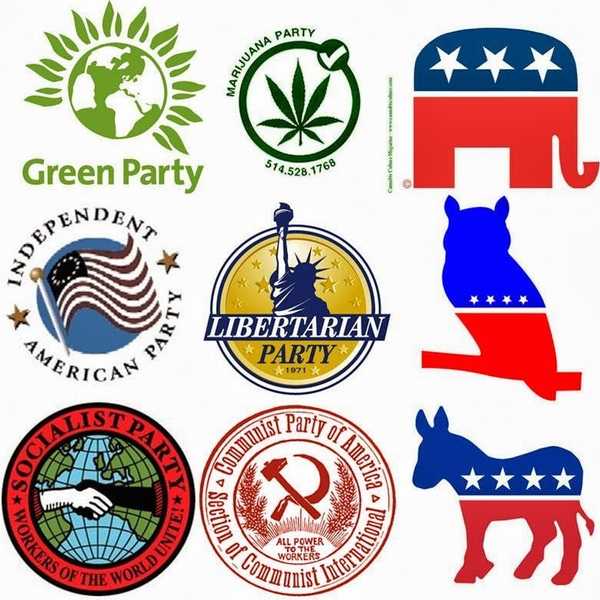
Many Bernie Sanders supporters have been agitated by the alleged rigging and sabotage during the Democratic primary season, leading to a divide within the democratic party between Bernie-or-Bust voters and voters who cry for the “lesser of two evils.” Donald Trump now uses the same line of accusation to assert that he might lose the presidential election unfairly. It is clear that many people are disillusioned with the political process. At the same time, there seems to be an unprecedented degree of millennial political participation and arguably a greater stake in the results of the presidential election than there has ever been in U.S. history. It is clear then that there is both an expressed need for and a corresponding opportunity for increased fairness in our electoral process; fairness, that is, toward the American people. It is my belief that one place to do that at this time, to ensure that one aspect of the electoral system during our present electoral cycle is free and fair, is that we ensure that third-party candidates are allowed the stage for the upcoming presidential debates.
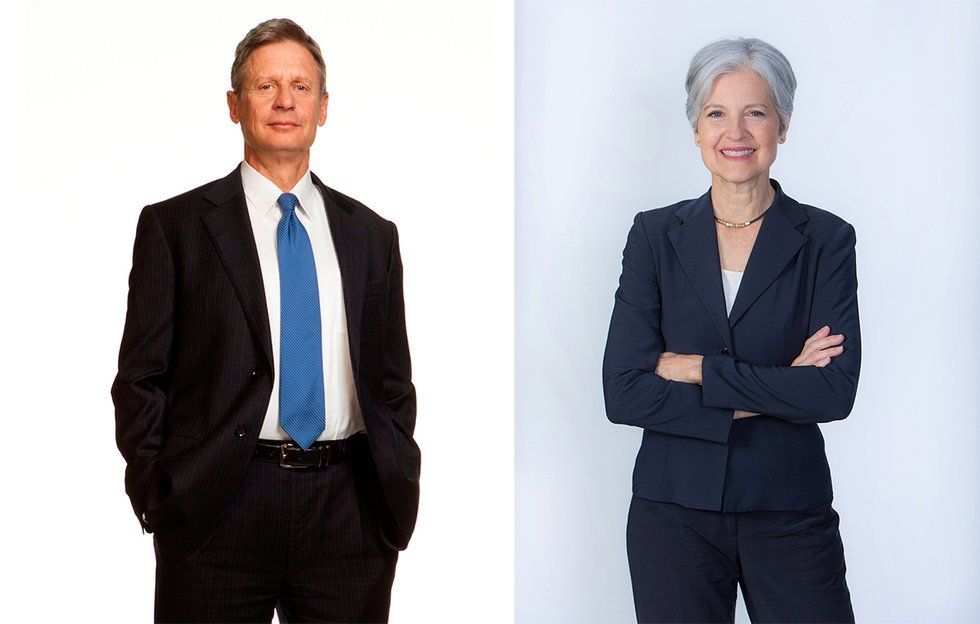
Former governor of New Mexico Gary Johnson has repeatedly remarked that in order for his message to be received and in order for him or Green Party Candidate Jill Stein to have a chance at winning the election, they must be polling at 15% nationally, according to the rules laid out by the Commission on Presidential Debates.
To be brief and earnest, I am very interested in Former governor of New Mexico and Libertarian Presidential Candidate Gary Johnson. Like many (but not all) Bernie supporters have done, I have quickly discredited economic conservatism, conflating it with crony-capitalism, capitalism (with all the negative connotations promoted by the far-left), an economics of selfishness, and an economics necessarily tied to social conservatism. I was once a hardcore liberal, and now I have developed a skepticism about the American economic Left. Maybe, just maybe, economic conservatism and social liberalism can be married.
I want to hear Gary Johnson on the debate stage and I want to hear how he matches up against other candidates. It would also be desirable to have Jill Stein on the debate stage, as she is picking up a lot of momentum any seems to represent the voices and expressed interests of fellow Americans. For the sake of our dignity, we owe it to ourselves to challenge ourselves and hear the grounds for all our possible futures.
What can we do?
What can we do about getting third-party candidates into the upcoming presidential debates? What can we do to promote free and fair elections? What can we do in the hopes of educating ourselves and in the hopes of educating others about the realm of possibility too often dismissed by political ideologues on both ends on the political spectrum.
Here are my suggestions for a start:
We can call the news outlets that only include Donald Trump and Hillary Clinton in their polls. Insist that they include Gary Johnson and Jill Stein in their polls because we the people deserve to hear them at the upcoming presidential debates. After doing this, we need to educate ourselves. Take the quiz at www.isidewith.com to see who you side with on the big issues relevant to the presidential election. Do not take the reports of major news sources at face value, especially not the reports of sensationalist news sources whose ideology is “ratings” and ideology-driven news sources whose opinions are "the only things that make sense.”
If you are extremely certain of your political position, or if you are indifferent to politics (I applaud you for getting this far in the article), it is all the more important that you reexamine your position. Politics and political discourse, like most things in life, are complex, and I speak from the perspective of a 20-year old man who has a lot of experience with books and theories and little experience with life. And nonetheless, I know that politics is complicated. There are reasons we think the ways we do. There is a reason we differ on some issues and come together on others. There is a reason someone who you completely disagree with holds the views they do. It is up to you to understand that their position is not a position of just plain wrongness. When we realize this, we will collectively move closer to making the best political decision for our nation’s people, for ourselves.
Good luck on this journey, one of many we all walk together.