
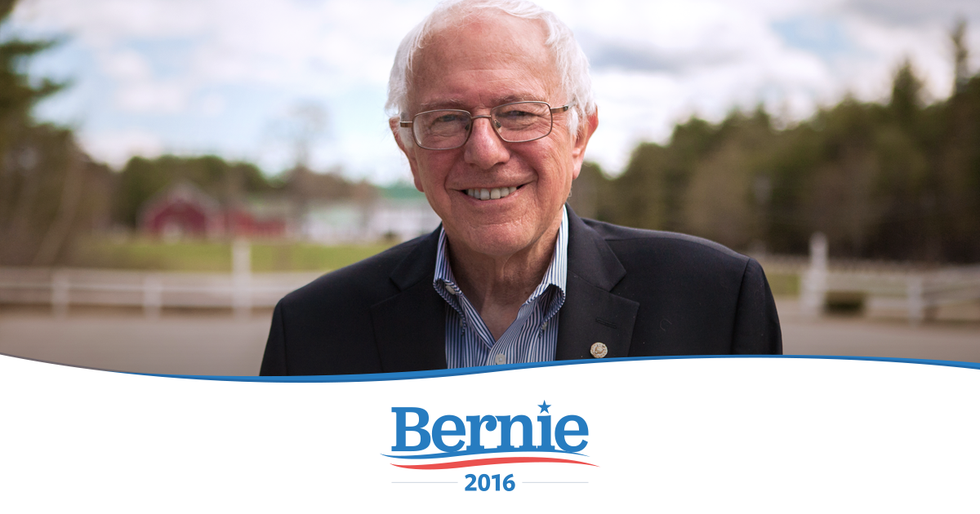
Throughout the current presidential election, it seems as though the millennials are bernin' up for Bernie Sanders. If you don't know who he is, then here is a little bit about him. Brooklyn born and raised, Bernie Sanders is a passionate people person. He has been fighting for working class families, with a concentration on the shrinking middle class and the growing gap between the rich and everyone else. He has been a U.S. Senator since 2006, after being Vermont's sole congressman for 16 years. He is now serving in his second term in the Senate after winning reelection in 2012 with 71 percent of the vote.
Bernie has taken pride in the fact that he has not accepted donations from any major companies like his competitor Hillary Clinton has. Bernie feels that he will do better than Hillary in the remaining primaries, although his poll numbers have not yet surpassed hers, though he is catching up. When asked about how he thinks he will do in the upcoming caucuses, he states, “I think the American people know it is not what a candidate says during a campaign.
What is important is what your record is and what your history is. Right now, Hillary Clinton has super PACs that are raising huge amounts of money from Wall Street, fossil fuel industries and drug companies. I think most Americans understand that somebody cannot be a serious agent for change when they are so close to some of the most powerful special interests in this country. We have raised money through 5 million individual contributions, averaging about $27 a piece.
I have spent my entire political life taking on Wall Street, taking on the drug companies, taking on the fossil fuel industry. That is the kind of record I think the American people and Democrats will look at, and that’s why I am confident that we are going to do better and better as this campaign proceeds.”
What I find to be so enticing about Bernie is how truly passionate he is about being the catalyst for change in this country. He has such a pure and honest track record, which is something that I really value in a politician. There is a sense of false hope and dishonesty coming from the other candidates, but Bernie is truly different than them.
So why is it that the millennials have grown such an attraction to Bernie? Is it his charm or his true passion for the people of this country? I interviewed three different millennials on why Bernie Sanders has their vote. Here is what they had to say.
Q: What drew you to Bernie?
Dan Janis: The first time I heard of Bernie was in a post online about his plan to eliminate college tuition. My first thought was that it was a radical, unobtainable goal, but after I decided to look further into it, I realized that his ideas and plans for the future were comprehensive, fair and almost common sense (to me).
Martyna Bednarz: A close friend of mine told me about a website called “I Side With...” Where I was able to answer a few questions about my social and political beliefs and instantly get matched with the candidate whose beliefs most closely reflected mine. At the time (August 2015) I was expecting to score highest with Hilary Clinton, but I ended up being a 99 percent match with Bernie Sanders, so I read about him and fell in love.
Zack Cummings: I think the big thing that draws me to Bernie, even beyond supporting just about all of his proposed policies, is the incredible consistency of his record. He isn’t just addressing the major issues with this country today, he’s been fighting for the same things he is today for the entirety of his career, with a certain degree of passion and strength that I fail to see from any of the other candidates. He’s not just talking the talk because he thinks it's what the voters want to hear. There is a certain level of trust that that level of consistency instills.
Q: Have you ever followed other presidential elections? How do you feel this one is different than the others?
Dan: This is the first election I am eligible to vote in, so it holds a special significance in my mind. I have loosely followed previous elections, but since I couldn't vote, I didn't feel as invested as I do this year.
Martyna: Yes, I’ve always followed presidential elections. Recently John Oliver (the host of "Last Week Tonight") referred to politics as an alternative to sports for nerds, and I can relate to that. This election is far more terrifying than any other one I have seen play out in the past, just because of Donald Trump. The fact that we have managed to merge pop culture and politics shows a lot about our cultural value systems.
Zack: I vaguely followed the 2008 election when I was in middle school, but not nearly to the degree of this on, especially considering how young I was back then. I knew I supported Obama and wanted him to win, but didn’t really involve myself to the degree I have been with this one. I feel this one is so different from the others because as a whole, while extremely different in ideology, the general idea is that a large percentage of people are fed up with the system as it is and feel the need to radically reinvent it.
Q: If Bernie does not receive the democratic nomination, will you vote for Hilary?
Dan: I will vote for Hilary if Bernie doesn't win the nomination. It is my duty to vote as an American, and I will vote for who I believe is the best candidate available. A vote that is not cast is a vote for the opposing party's candidate.
Martyna: Yes, I’d die before voting Republican. Just kidding. I know that sounds relatively closed-minded, but I can’t be associated with a party that consistently opposes the rights of the LGBTQ community, and uses “God” as an excuse to deny women rights (such as the right to have an abortion). What ever happened to the separation of church and state?
Zack: If it comes down to it, probably, but only as a lesser of two evils option, because should it come down to it, Hillary vs. Trump is far too close for comfort, and not voting is practically the same thing as a vote for Trump, and I never will ever do anything that would benefit such a incredibly hateful fear monger.
Q: How do you think he (Bernie Sanders) will benefit our future (and other generations) as college students?
Dan: His plan to introduce affordable or free college tuition will provide a level playing field for future generations to have access to higher education.
Martyna: Since Bernie is such an advocate for free public college education, it is clear that he has our backs as college students. He acknowledges the fact that we are starting off our adult lives with unprecedented amounts of debt, and he wants to eliminate this disadvantage. Most of us can agree this is a very useful allocation of tax dollars.
Zack: I think the benefits of Bernie’s proposed policies are obvious. Lowering the cost of education in this country clearly helps to address the huge issue all students are currently struggling with — crippling debt. Getting big money out of politics and realigning the system to be better suited to the needs of the general population helps to get the voices of students and young people, people who are so often ignored, heard, something necessary for a thriving economy and society. Things like universal health care and affordable education are not “socialist pipe dreams,” they are benefits that almost every other first world country has successfully integrated into their society in some degree, and something completely necessary to truly bring America into the 21st century. These benefits will extend so far beyond just students, and really positively impact our society as a whole. Bernie’s plan to redistribute our nation's wealth will help strengthen and reinstate the weakening middle class, making it even easier for newly graduated students to thrive. The status quo needs to be evened, and Bernie absolutely has the right idea of how to approach doing that. His economic plans will even things out. Sure, the rich will end up paying more taxes (because they can afford it), but it will benefit the American people as a whole.The rich will stay rich, and the lower classes will be able to grow. The costs of healthcare and education in this country are absolutely outrageous, and Bernie’s plans will help to make these things attainable for all people, not just the nation's wealthiest.Q: What do you think he will do to fix the current corruption in America?
Dan: The first step to recovery is admitting you have a problem. He is the most outspoken candidate about political corruption, and his current policy of not accepting super-PACs and corporate donations is a huge step in the right direction and will help set the precedent for future candidates.
Martyna: Bernie will make decisions that benefit the majority of Americans, as opposed to catering to a select group of the wealthiest and most influential people. He will help redistribute wealth because there is a massive disconnect between the top 1% and the average working American, among other things.
Zack: This is kinda a huge question, but I think a simple answer is by addressing it, something that most other politicians really aren’t doing. But, more specifically, the biggest first step to fixing this broken system is to get big money out of politics. Politics should be for the people, not the corporations. His refusal to even be complicit in a broken and corrupt system, even now as a senator, speaks volumes about his character and the lengths he will go to improve our country.
Q: Why do you think that Bernie is so popular among the millennial generation?
Dan: Bernie's ideas are progressive, and some may consider him radical, but he is the only candidate to openly challenge the internalized corruption in Washington and recognize the wants and needs of millennial-aged citizens. His success thus far in campaigning via social media is a trait that appeals to social media's most frequent users.
Martyna: Millennials love Bernie because he is progressive and acknowledges the fact that America has changed a lot in the past few decades. College education is increasingly more necessary, but also increasingly more expensive. We need someone to speak up for us and help us thrive as we try to get on our feet financially in our early adulthood.
Zack: I think as a whole, younger generations are becoming more and more socially and politically aware, and as a result of this, millennials care enough about the things that affect themselves and those around them that they feel the need to get involved. Millennials feel so strongly about so many of the issues he wants to address: Systematic racism, the rising cost of higher education in this country, legalization of marijuana and steps to end the ridiculous and racist farce that the “war on drugs” has become, affordable healthcare, etc. We feel strongly about these things because so many of these things directly impact us and the people around us.
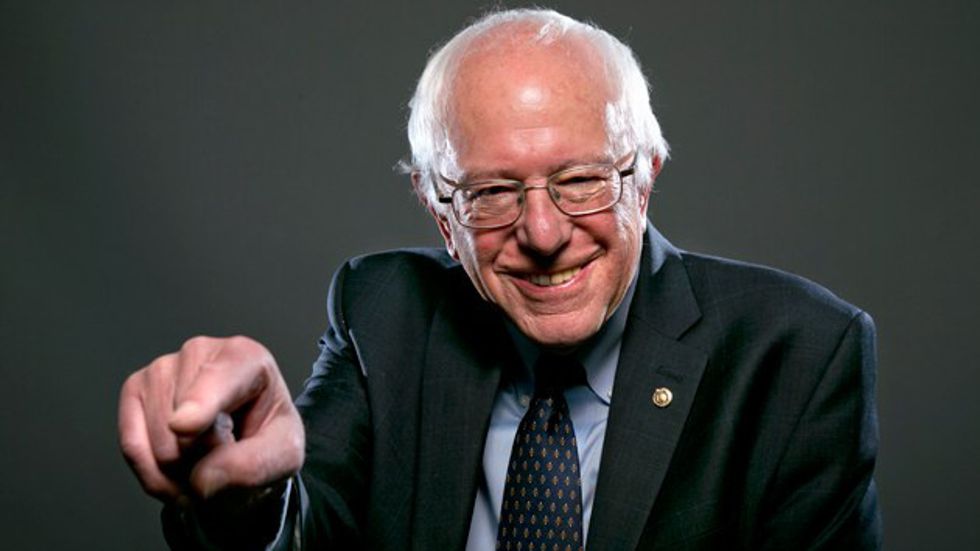
"I am not a quitter. I am going to fight this until the last vote."
-Bernie Sanders
Lots of love and huge thank you to those who were interviewed:
Dan Janis
Jazz Studies and Music Education
University of Maryland, College Park
Martyna Bednarz
Psychology
Purchase College, State University of New York
Zack Cummings
Studio Production
Purchase College, State University of New York