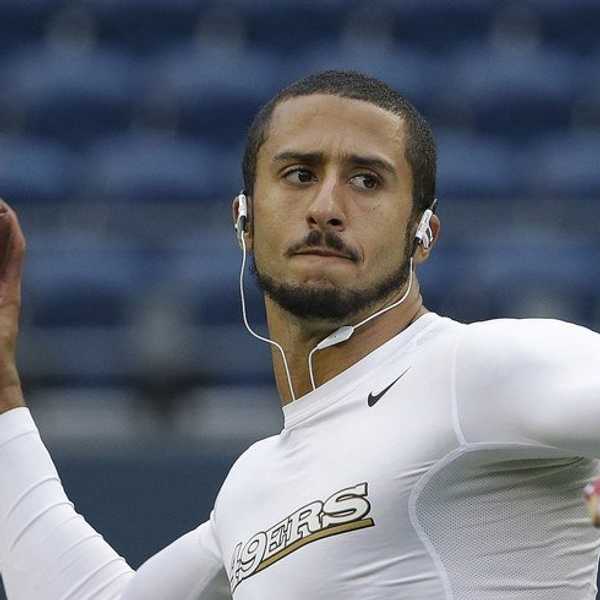
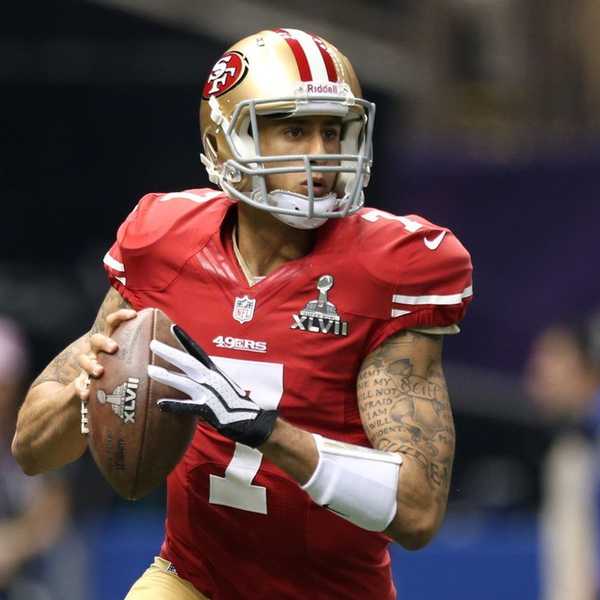
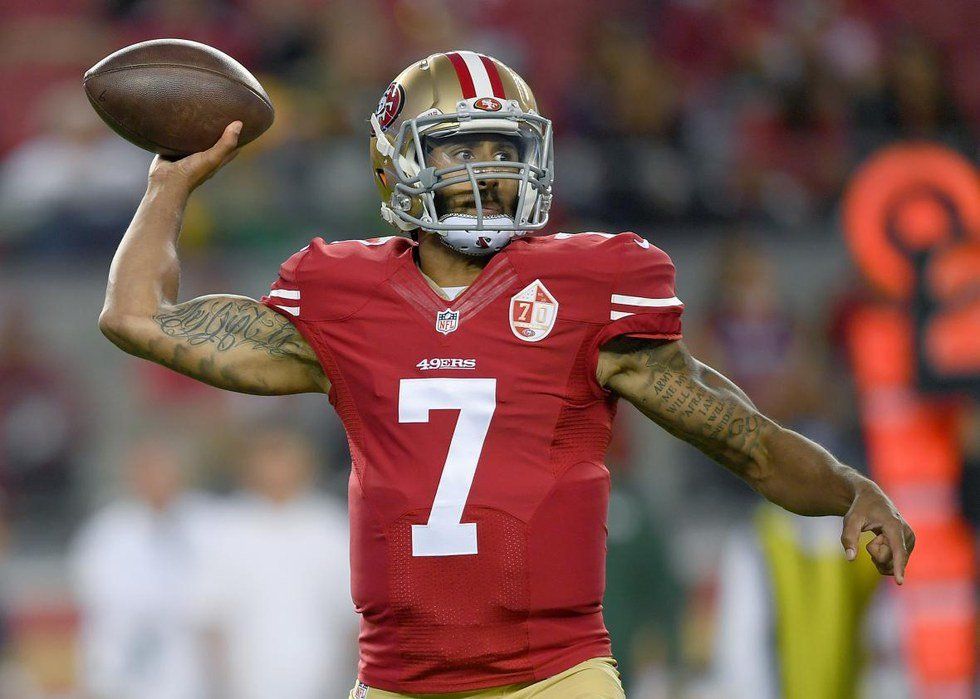
Colin Kaepernick refused to stand for the national anthem during Friday night’s preseason game against the Green Bay Packers to protest racism in America.
"I am not going to stand up to show pride in a flag for a country that oppresses black people and people of color," the 49ers quarterback told Steve Wyche of NFL.com after the game.
"To me, this is bigger than football and it would be selfish on my part to look the other way. There are bodies in the street and people getting paid leave and getting away with murder."
Kaepernick's stance is already creating a national discussion about racism and police brutality in American culture, an important conversation to have, but many question his method of protest.
Do I personally think protesting the national anthem is the most efficient way to deal with racial oppression? Probably not. But then again, who am I to judge? All I know is, historically speaking, athletes who have protested the american flag have publicly and financially suffered for their political statement, loosing their fans, job, and endorsement deals.
Professional athletes like Mahmoud Abdul-Rauf (NBA) and Carlos Delgado (MLB), as well as amateur athletes like Toni Smith (NCAA D3 Women’s Basketball) have all paid the price for resisting the stars and stripes.
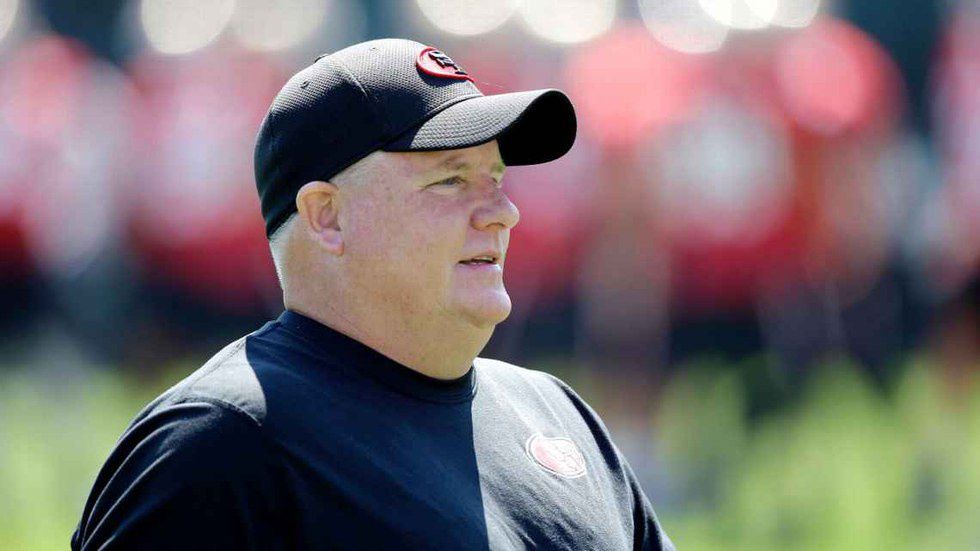
Legally speaking, Kaepernick has every right to sit for the national anthem, but the political statement may cost him, literally. Sponsors like Jaguar, MusclePharm, and MoGo Sport could pull out of their deals with the quarterback. But for Kaepernick, this is a risk he is willing to take.
"I am not looking for approval,” he told Wyche, “I have to stand up for people that are oppressed... If they take football away, my endorsements from me, I know that I stood up for what is right."
The San Francisco 49ers, on the other hand, will not condemn Kaepernick’s stance. In a statement written after the game, the team wrote, "The national anthem is and always will be a special part of the pre-game ceremony. It is an opportunity to honor our country and reflect on the great liberties we are afforded as its citizens. In respecting such American principles as freedom of religion and freedom of expression, we recognize the right of an individual to choose and participate, or not, in our celebration of the national anthem."
Kaepernick’s resistance comes as wave of sports figures like Carmelo Anthony, Tina Charles, and many others, who have encouraged pro athletes to use their celebrity platform to discuss issues involving race in America.
The Pro-Bowl quarterback has also kept a very active social media account as well, often tweeting about #blacklivesmatter or responding to the latest police brutality case.
With this highly politicized stance, Kaepernick will surely face some backlash weather that be from the league, fans, or sponsors, but that won’t stop him from speaking out for what he believes in.
I often criticize athletes for not using their platform to speak on larger, social issues. Although I don't fully understand his method of protest, I want to thank Colin Kaepernick for instigating a much needed conversation.