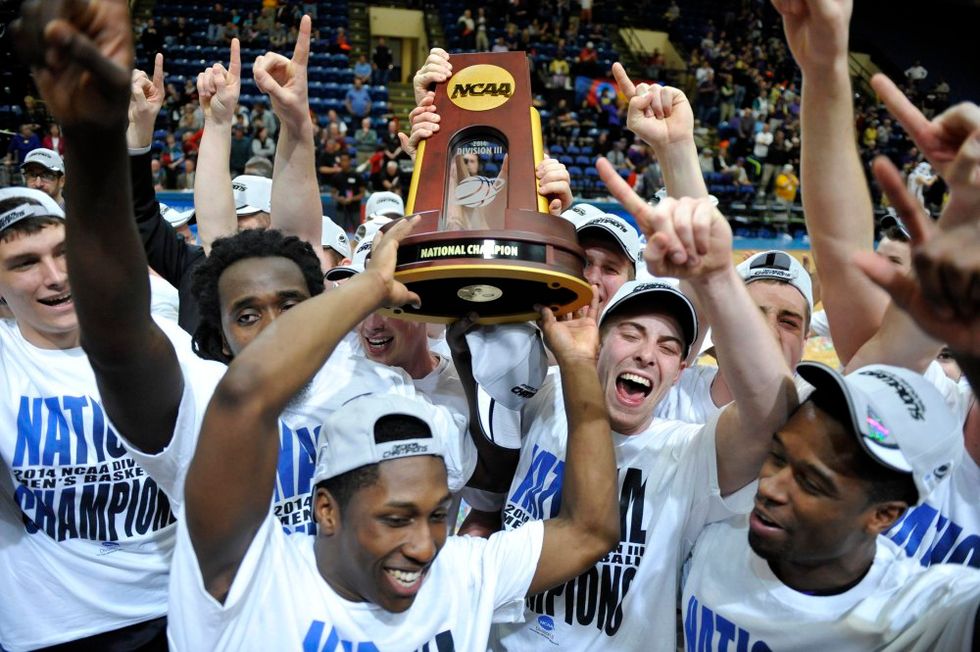
Last Monday, millions of Americans tuned into the NCAA Men’s Basketball National Championship game. A culmination of all the hard work and dedication these young men have put into the game they love; this game served as the payoff to the slow crescendo of the athletes’ entire lives. They’ve done things that few could ever say they’ve done, and it’s time to start recognizing them for that. College sports in the US is a multi-billion-dollar industry, and the only one where its workers receive no compensation. It’s time for the NCAA to start paying its athletes.
The idea that a scholarship is enough payment is in itself disrespectful to the kinds of dangers that college athletes face every time they step on a court. Not to mention the fact that many colligate athletes (particularly men’s basketball and football players) would have to risk a million-dollar contract and a chance to play professionally in order to get full use of the scholarship. If a prospect for professional sports gets injured during their tenure in college, there’s no compensation they can receive; leaving them as just another poor, broke college student. Many athletes who come from less affluent backgrounds have noted enduring financial struggles while the NCAA makes millions of dollars off their likeness. Recently, former Wisconsin University basketball star Frank Kaminsky, during a heated exchange with a critic on twitter, revealed that while leaving Wisconsin to declare for the NBA draft, he left school with no many, and actually still owed rent for his off-campus housing. He claimed that during his tenure at Wisconsin, he ended up losing more money than he made. This is not an isolated incident, either, as many collegiate athletes are forced to face the harsh reality that they may have to sacrifice financial security in order to chase their dreams.
These athletes don’t train like amateurs, either. According to an NCAA survey in 2011, some collegiate athletes reported spending upwards of 40 hours per week in practice. Aside from being well above the NCAA guideline of 20 hours’ maximum per week, this is also detrimental to the athlete’s ability to put full effort into schoolwork. However, the NCAA also has academic standards that athletes must adhere to in order to be eligible to participate. However, many larger universities skirt this rule by enrolling students in faux classes, or classes that only required final papers (in the case of the University of North Carolina). So not only are college athletes being denied the fruits of their labor, they are also being prevented from receiving the actual full education that they were promised in the first place. And don’t forget, these hellish work weeks aren’t limited to large programs at large universities. According to a different NCAA survey conducted in 2006, nearly one third of all women athlete’s reported spending more than six hours every day. The issue of payment for players is one that affects players such a diverse grouping of people, it’s no wonder that more and more athletes are choosing to bypass their final years in college in order to pursue a professional career as early as possible.