In this day and age, mental disorders seem to be running everyone's lives. Either that, or they are just gaining more recognition. In either scenario, the most common ones appear to be O.C.D., depression, and of course, anxiety, in which people allow these disorders to control them.
Now, I know what you're thinking. We have no control over it.
But what if you did? What if I were to tell you that it is very possible to overcome a "disorder" like one of the ones stated above without medication.
Wait, what?
You heard me. Take it from somebody (me) who has had all three of these, and has been able to combat them all without any prescription drugs or therapy sessions (though therapy is super helpful for anyone).
I faced depression for a good three years of my life, was incredibly anxious, and had extreme O.C.D. Let me tell you right now: these three disorders are a horrifying combination. My overwhelmed mind felt like it was going to explode. I, quite literally, felt like I was going mad.
I asked my mom, one day, if she would take me to therapy so I could get some medication for my anxiety because at this point, I thought I would flip a lid. My mom rejected such an idea. She did not want to get me started on medication for anxiety and depression at such a young age (I was 14 or so). I completely understood her rationale, and decided I would just pray like crazy, asking if God would help heal me.
Thanks to my faith in Him, I have been able to successfully overcome my depression, lose virtually all of my anxiety, and almost completely relieve myself of O.C.D., all within a couple of years.
That's why I think you can do it too. I don't think you need medication to get the job done. I believe if the disorder starts in the brain without any prescription drugs (although it can happen that way), it can end there the same way.
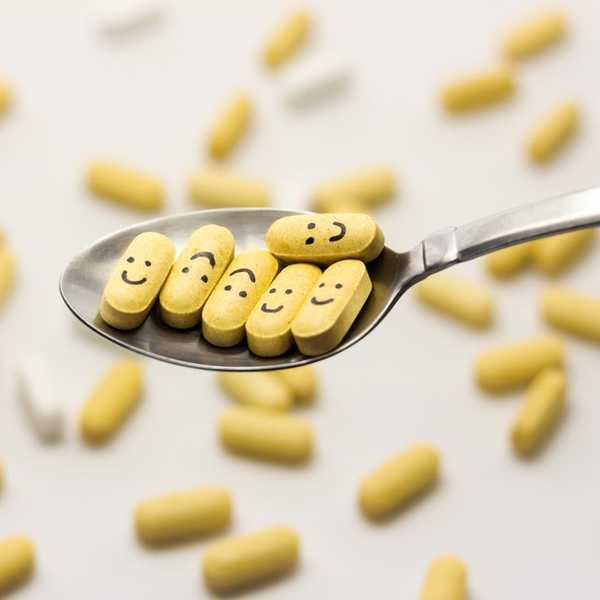
There have been studies that demonstrate the power of the mind vs. that of the medication. And by this, I am talking about the placebo effect. In an experiment done by Irving Kirsch, a scientist at Harvard Medical School, he proved how strong the placebo effect really is, particularly with antidepressants. In this, he replicated a clinical trial done by the FDA, because he was intrigued with the data the FDA sent over. Only 43% of the drug-or-placebo trials showed a statistically significant benefit of drug over placebo, meaning the remaining 57% were failed or negative trials. Honing in on a certain trial the FDA did, the administration had a large group individuals randomly assigned into two separate groups: the first group received the actual prescription drug; the second, the placebo. Both groups were told they were taking the real antidepressant. In this, they found that 82% of the subjects who felt happier after taking their medication were from the placebo group. When duplicated by Kirsch and his colleagues, they retrieved the same data of 82%.
The evidence of studies showing how much the placebo effect really plays into day-to-day life is intriguing. Because the people going into taking the drug (which was actually the placebo) believed they would get better because of it, they did due to their positive outlook. The same thing cannot be said of those who took the actual drug because rather than their mind doing the fixing, it was the medicine, and it clearly didn't work very well.
What I am trying to say is it's all in your head--but not in a bad way. Your mind is so much more powerful than you believe it to be. Just by bettering your mindset and genuinely having faith in yourself, I believe you can overcome any disorder.