


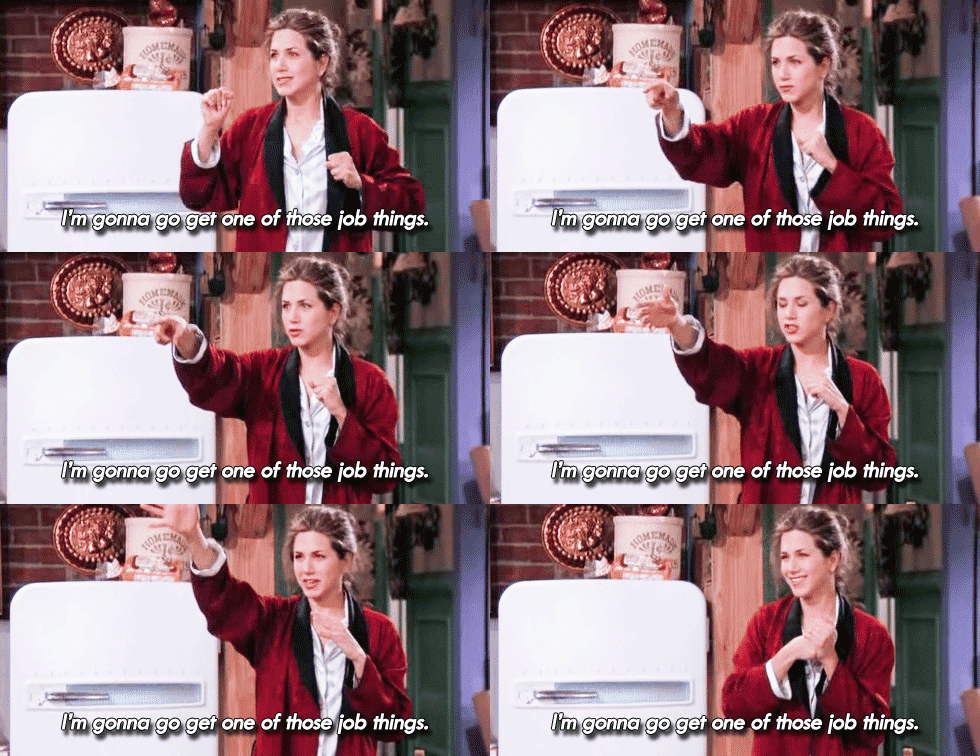
We’ve all been thrown plenty of helpful tips and tricks for landing the perfect job, but maybe it’s the night before your interview and you’re drawing a blank at what to do and what not to do. If that’s the case, or you simply would like a refresher, here's my top 8 pieces of advice:
1. Be cautious.
No matter to whom you’re talking, if you’re underdressed when you ask for an application, know that the HR will hear about it. Always make sure that you’re presented in a way you’d be comfortable with your potential-future-boss seeing. Additionally, be friendly to the person who attains the application for you. They could be the same person who interviews you, and at the very least, they’re a potential workplace friend. Also, if your social media is public, go through your accounts (be it Facebook, Instagram, Twitter, or even MySpace) and delete any content that may be inappropriate. I know what you’re thinking, and yes, they will stalk you. Even if it doesn’t necessarily strike you as improper, try to see it from a stranger’s perspective. Chances are, if you have to question the picture or tweet, it shouldn’t be up.
2. Be thorough.
Before you send in your resume, make sure that it’s spotless. There shouldn’t be a single grammatical error, lapse of chronological order, or switch between Times New Roman to Cambria (trust me, it’s noticeable). On a general note, resumes are universally formatted in a similar way for a reason; don’t stray too far from what’s deemed “professional.” Sure, you can switch up your color scheme— to an extent— or even align your contact info at the top of your resume in a format other than center. You can be creative in other ways, but usually, a “creative” resume is not a good resume. That being said, you can be creative in an alternative resume.
3. Be thankful.
You can call, write a thank-you note, or even send a thank-you email after an interview. I’ve always been told that this is a necessary step in the job process, and you can do it up to three days after your interview, but don’t wait any longer to reach out. Also, after your interview be sure to thank your interviewer for their time, for the opportunity to talk to them, and state that it was nice to meet them. People want to hire friendly, personable prospects—they’ll be working with you, after all.
4. Be aggressive (... to an extent).
If you haven’t heard from a company or business after sending in your application, wait a week or so and then leave them a voicemail or send them another email, asking if they received your resume, and stating that you look forward to hearing back from them soon. Sometimes persistence is the only thing that may mark you as different from another candidate, so use this fact to your advantage. By implying that you’ll be anticipating their response, your potential employer is more apt to take action.
5. Be bold.
Body language can tell a lot about how confident you are both in yourself and in your abilities. Make sure to shake hands with your interviewer, be conscientious about keeping eye contact, and try to use only active verbs. Resort from saying “um”, “like”, or any other language that plagues us millenials. They know our age— sure— but that doesn’t mean that we need to act our age. Our generation gets a bad rep for being self-absorbed, unreliable, and lazy. Keep this stereotype in mind so that you can exceed others’ expectations of you.
6. Be prepared.
Before your interview, think of different questions that you could be asked. For example, “What is your biggest weakness?” is often used in order to try to throw a wrench in your composure; you’re there to sell yourself, not sell yourself short, after all. If you are prepared for this question, though, and think of a genuine weakness of yours that can also be considered a strength, you show that you’re a solid candidate. You could also ask friends and family to test out how ready you are for your interview by doing a mock trial—they may come up with questions that you couldn’t think of yourself.
7. Be "put together".
When it comes to what you should wear while being interviewed, dress conservatively. If you wear a skirt, make sure it hits your knee. If you wear pants, make sure they’re neither too long nor too short. Stay away from strappy tops. Your sleeves should be at least cap-length, especially if you aren’t wearing a blazer. Depending on the type of position for which you’re applying, you may have to dress either more or less formal than a blazer. Of course, if you’re applying to write for a fashion magazine, wear wide-legged pants. Be trendy and push the envelope a little. If you’re interviewing to be an intern at a law firm, don’t be trendy. Or do, if you’re a risk-taker.
8. Just be yourself!
Most importantly, be yourself. Be genuine. Be real. You have great qualities that would make you a wonderful attribute for wherever you apply, so know that everything will work out!
Good luck y'all, and happy job hunting!
















